In 2021, Continence Health Australia launched BINS4Blokes, a national advocacy and awareness campaign to promote the installation of incontinence product disposal bins in male public toilets and encourage men to seek help for incontinence.
In addition to the millions of men with incontinence, continence bins also benefit those living with Crohn’s or Colitis who wear stoma bags, and trans men who need to dispose of sanitary products.
BINS4Blokes project officer Vicky Pentney says unlike women’s bathrooms, men’s bathrooms often lack any kind of bin – even outside cubicles. The fact that hand dryers are increasingly common have further reduced their availability. Urinals also often mean fewer cubicles to dispose of pads privately.
But a lack of proper disposal facilities can contribute to poor mental health.
“Some men might leave the workforce prematurely because of lack facilities. Sometimes they don’t go out into the community [because of this] and experience social isolation,” she says.
Indeed, men with incontinence are more likely to experience depression and a lower quality of life.
“We’re advocating for more bins in male public toilets, to help men get out and live normal lives freely and fully,” says Pentney. “The prevalence of incontinence is often under-reported because of the stigma attached to it – many people don’t talk about it.”
Dr Shan Morrison, director of Women’s and Men’s Health Physiotherapy in Melbourne, says lack of bins is one of many reasons men with incontinence might withdraw into themselves.
“There’s so many barriers to them leaving the house,” she says adding that even using a handbag to carry pads is something many men need to adjust to.
As a physio, she says her biggest priority is getting patients out socialising and exercising – the latter of which plays an important role in improving continence health. But she says many clients are discouraged from doing so due to a lack of facilities at sporting grounds.
“The most important thing is that it doesn’t get in the way of them living their life, and their relationships, socialising, exercising, whatever it is that they enjoy doing.”
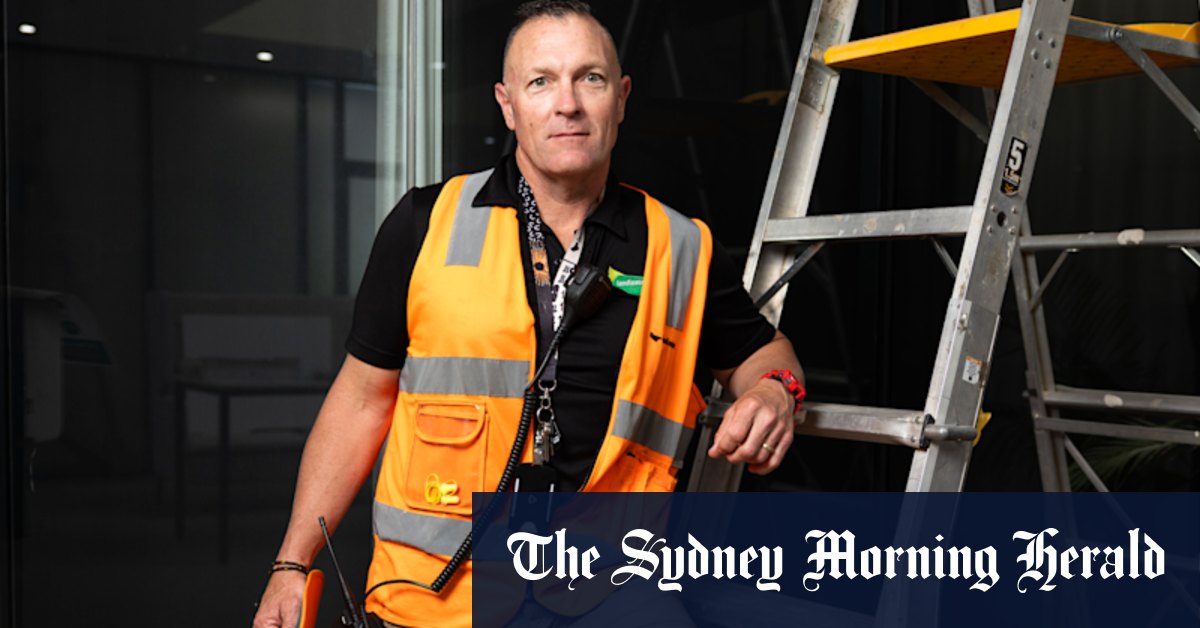
Alan White says incontinence was a “wake-up call” to having no control over one’s body.Credit: Paul Jeffers
In 2011, Alan White was diagnosed with aggressive prostate cancer. When his catheter was removed following surgery, he developed incontinence.
Loading
He recalls going to a café with his wife to celebrate being cancer-free, only to find he had leaked through a pad onto a pair of light-coloured pants he was wearing.
The experience fundamentally changed how he went about his daily life (from what he wore, to how much fluid he consumed, and when), and how he saw public spaces.
“It was a wake-up call to that. Just having no control of one’s body for a period of some months.”
White has now been a passionate men’s health advocate for more than a decade, including working with BINS4Blokes.
Since 2021, the campaign has successfully advocated for the placement of a number of continence bins in public toilets around Australia, including at major hubs like Melbourne Cricket Ground and Perth Airport, and through partnerships with local councils. But there is still a way to go.
Guest wants to see more sporting organisations in particular come on board, and says golf clubs have been especially resistant to change. Some organisations are put off by the financial cost of adding and maintaining bins, says Pentney.
She says larger 42 litre bins cost between $20 to $40 per bin per service, with estimated yearly costs for servicing sitting around $1000.
Loading
To this argument, Guest says: “Well, if you put one [a continence bin] here and you promote it, then you might get more members back here to spend money, so there’s long-term financial gain for you.”
For others, it simply comes down to a lack of awareness and education.
Guest says the long-term goal is to have more all gender bathrooms available, which would solve the problem of a lack of continence bins, but until then, getting bins into men’s bathrooms is the priority. Signage on cubicles indicating continence bins is also important.
He would also like to see greater education and awareness in culturally and linguistically diverse (CALD) communities, where conversations around men’s health are often quite stigmatised.
For free and confidential help, call the National Continence Helpline, 1800 33 00 66
Make the most of your health, relationships, fitness and nutrition with our Live Well newsletter. Get it in your inbox every Monday.