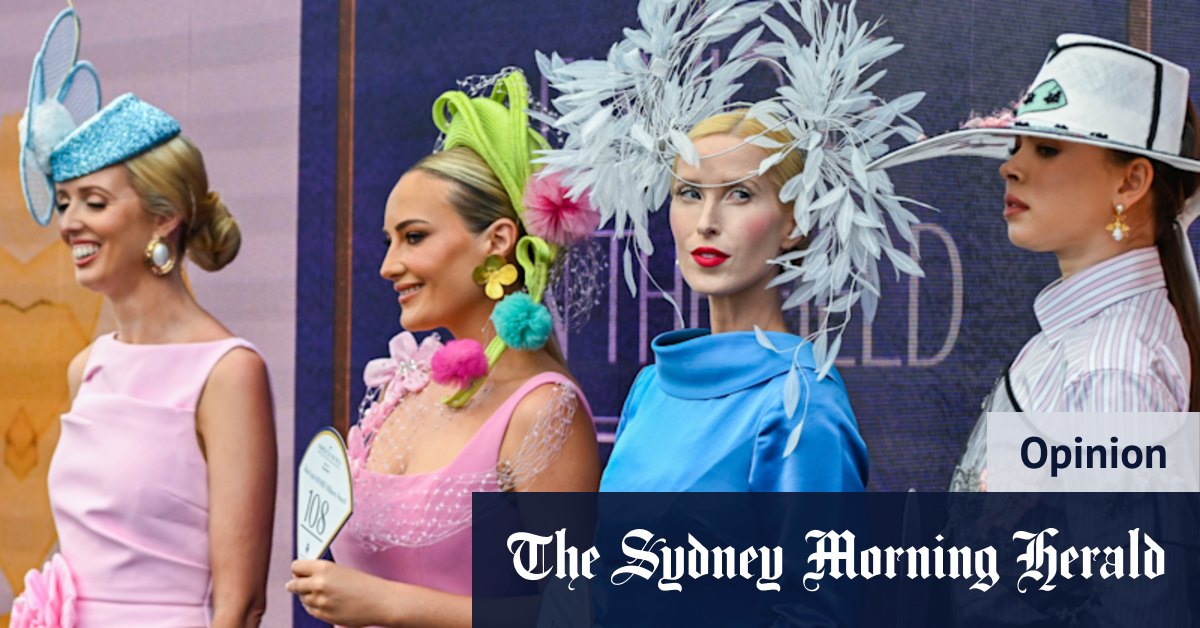
I know what it feels like to be jockey Jamie Melham. The Melbourne Cup winner trained for a lifetime to pass the post first on Half Yours, and since rolling my eyes at my classmates’ off-white First Communion dresses at St Damian’s in Bundoora in the seventies, I have been preparing to decide the winners of the Fashions on the Field finals on Oaks Day.
It takes more than being able to assess the fashionability and fit of an outfit before someone fully enters a room to feel confident in handing over sashes for the Best Dressed and Best Suited categories, and prizes from a pool valued at $300,000.
Years of judging racewear competitions at Flemington, Randwick, Wagga Wagga and Nyngan’s surprisingly strict Duck Creek Races have helped fashion a formula that sends the man dressed like Colonel Sanders from KFC commercials to the back of the pack and has the woman unable to walk in a voluminous ballgown holding back tears in the elimination heats.
Fashion editor Damien Woolnough judging the Lillian Frank Millinery Award on Melbourne Cup Day with milliner Melissa Jackson.Credit: Eddie Jim
My philosophy? Smile, score and take no prisoners.
Loading
The racewear rules
1. Tap into trends
It may be the only fashion category with a direct relationship to a specific sport but most people have difficulty describing what racewear actually is.
For me, it’s more than following the codes of wearing black and white on Derby Day, bright colours for the Melbourne Cup and feminine frippery of Oaks Day. Racewear is elevated day wear that occasionally nods to tradition while engaging with the current trends.
Pay attention to the day wear part. This is for the front lawn, not the red carpet.