

Nomi Kaltmann
You have reached your maximum number of saved items.
Remove items from your saved list to add more.
Save this article for later
Add articles to your saved list and come back to them anytime.
I pray every single day.
I know that in the 21st century that probably sounds unusual. I assume that for most people prayer feels like something from the past, or something only for the very religious. But for me, it has become part of the way I live.
I’m an Orthodox Jewish woman, a mother of several young children, I work as a lawyer and yet prayer is still how I choose to start each morning.
As I get my children ready for school, we sing the prayers together. In orthodox Jewish tradition, prayer in the synagogue requires a quorum of 10 men over the age of 13. While women do not count towards the prayer quorum, we are still required to pray.
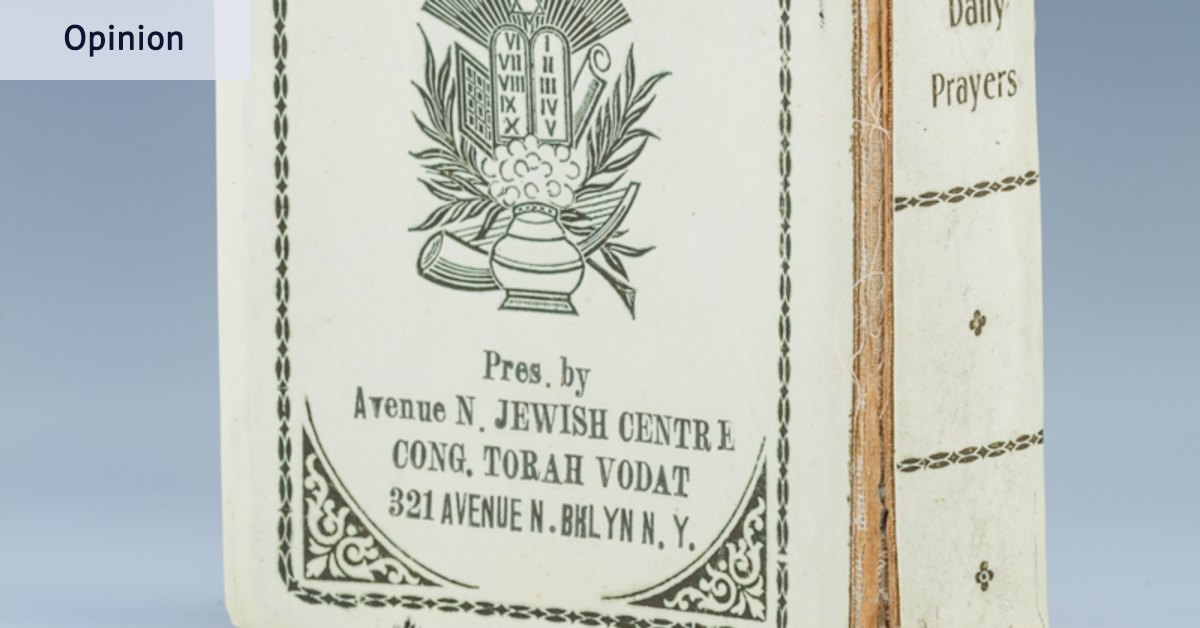
When I pray, I use a siddur, a Hebrew prayer book compiled almost 2000 years ago by the rabbis after the destruction of the Jewish Temple in Jerusalem. My siddur is worn from years of use, the cover frayed, the pages soft at the edges. My siddur is so well used it falls open to the prayers I say each day. There is comfort in holding something that has accompanied me through so many stages of life.
Prayer, for me, is both deeply personal and part of something much larger. It gives me a few quiet moments before the day takes over. It reminds me that life is not only about my own plans or frustrations.
The words in my siddur are ancient. I learnt them when I was five years old and can recite them with my eyes closed. Some of the prayers I recite have specific requirements, like whispering a verse that Moses heard the angels repeating in heaven, to covering my eyes with my right hand for the holy Shema, the Jewish prayer expressing the oneness of God.
These melodies have carried my people through centuries of joy, sorrow and survival. To me, they are a living link with the past.
Much of Jewish prayer is gratitude. I thank God each morning for returning my soul to my body. I thank God that my body works as it should. I thank God for clothing, for freedom, for shelter. These are simple words, but they change how I move through the day. When you begin with thank you, it sets you up for a better day.
Some prayers remind me of my obligations to others, to care, to act justly. Other prayers bring humility, the knowledge that I am part of something beyond myself. In a world that often feels noisy and self-centred, these prayers are a reminder to step outside my own concerns and into something higher.
Jewish people have held on to rituals like this for thousands of years. The strength to endure has come, in part, from these repeated acts of devotion. Personally, I do not worry if prayer is considered old-fashioned. For me, it’s meaningful. It grounds me, fills me with gratitude, and connects me to the sacred before the day begins.
Nomi Kaltmann is an Orthodox rabbi.
You have reached your maximum number of saved items.
Remove items from your saved list to add more.