

You have reached your maximum number of saved items.
Remove items from your saved list to add more.
Save this article for later
Add articles to your saved list and come back to them anytime.
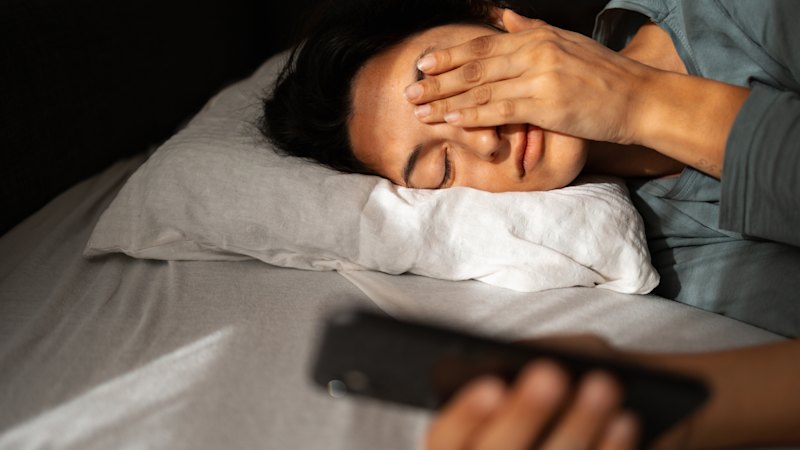
We all have those nights. You’re lying in bed and for whatever reason – kids, stress, travel or the day-to-day realities of a busy life – you just can’t fall asleep. Knowing the importance of a good night’s sleep for our overall health and wellbeing can exacerbate anxiety in these moments.
We know we should be sleeping, but that doesn’t make it any easier to doze off.
Even people who study sleep aren’t immune from restless evenings. This is what professors, sleep scientists and experts do when they’re struggling to get a good night’s snooze.
1. Don’t overthink it
“Of course, I struggle to get to sleep sometimes – I am a parent with a busy job. Plus, I’m a woman who finds herself in the perimenopause/menopause phase of life, which can challenge sleep.
The biggest tip is not overthinking sleep and having a philosophical acceptance of wakefulness. It’s not a ‘failure’ or an enormous frustration if I can’t sleep well. I know the next night will be better, and I shrug it off.
My trick to healthy sleep starts at the beginning of my day with a morning walk in the daylight without sunglasses on. This helps me to get rid of any melatonin, it helps me be alert for my working day, and it anchors my sleep patterns as I have this routine.” –Dr Moira Junge, chief executive of the Sleep Health Foundation and adjunct clinical associate professor at Monash University
2. Don’t try to force sleep
“If I find myself awake at night – everyone has those random nights – or I am having trouble getting to sleep, I simply don’t try. You can’t force sleep to happen by effort. Instead, I accept that my body is telling me it isn’t sleepy, and so I just get on with being awake.
I know from science and clinical experience, trying to force sleep to happen is what makes insomnia, anxiety and frustration worse. After a shorter night, the sleep-wake system will be primed for recovery sleep over the following nights, so there’s nothing to stress about.” – Dan Ford, sleep psychologist at the Better Sleep Clinic
3. Get out of bed for a glass of water
“Even people who study sleep have the occasional night where the brain just doesn’t want to switch off. When that happens, I try not to fight it in bed. If I’m lying there, and it’s clear sleep isn’t happening for a while, I’ll get up briefly rather than stay there getting frustrated.
For me, that might be something simple like walking to the kitchen, having a small gulp of water, and then heading back to bed once I feel a bit sleepier. Sleep isn’t like a light switch that you can just flick on and off. It’s more like a dimmer switch. Sometimes stepping away for a few minutes helps your body wind down, so sleep can come more naturally.” – Associate professor Grace Vincent, School of Health Medical and Applied Sciences at CQUniversity
4. Try progressive muscle relaxation
“Most commonly, I’ll struggle to fall asleep when my mind is still cognitively ‘active’ from the day – after a late evening of clinical work, writing reports or dealing with complex problems.
Two techniques I come back to consistently are progressive muscle relaxation and listening to podcasts or other quiet spoken audio. Progressive relaxation helps shift the body out of a state of tension and sympathetic activation. Gradually tensing and releasing muscle groups tends to slow breathing and heart rate, which makes sleep more likely.” – Dr Matthew Warden, psychiatrist and chief medical officer of Clarity Health Care
5. Read a few pages of a book
“Our brain health – how we feel and function during the day – really benefits from a regular rhythm of going to bed and waking up at roughly the same time most days. With a busy life, though, that’s not always possible. Especially during more stressful periods or when a lot is on my mind, there are nights when I find it harder to fall asleep.
Rather than forcing it, I usually do something calming, like reading a few pages of a book, which often helps me drift off fairly quickly.” – Associate professor Susanne Roehr, Centre for Healthy Brain Ageing (CHeBA), UNSW Sydney
6. Listen to something calming
“I do occasionally struggle to fall asleep. I like to use audio to help me wind down and calm my mind when my thoughts are racing.
I listen to podcasts, audiobooks, sleep stories and the occasional meditation. This helps me fall asleep, even when I wake up overnight. I look completely absurd – with a huge eye mask headband with built-in Bluetooth headphones – but it works for me.” – Dr Vanessa Hill, sleep scientist and adjunct research fellow with The Appleton Institute
7. And avoid scrolling your phone
“Generally, you want to fall asleep within about 10 to 20 minutes of trying. If you’re asleep almost instantly, it can be a sign you’re sleep-deprived; if it regularly takes much longer, that can point toward insomnia.
For me, my bedtime routine is the biggest factor. When I read before bed, my sleep latency – how quickly you fall asleep – usually stays in a healthy range. If I watch TV or scroll on my phone instead, my mind takes longer to switch off, my sleep latency increases, and my sleep feels less restful, which I can see reflected in my Oura App.” – Mari Karsikas, Sleep Science lead at Oura
Make the most of your health, relationships, fitness and nutrition with our Live Well newsletter. Get it in your inbox every Monday.
You have reached your maximum number of saved items.
Remove items from your saved list to add more.


