

Anyone can now upload financial files to Claude for free financial analysis, including calculating growth rates and margins and creating budgets.
The catch: Your data is used for training Claude and retained for five years – although Anthropic gives even free users the option to opt out of training and scaled-down the retention period for 30 days. Those on a paid Claude sub have data privacy by default.
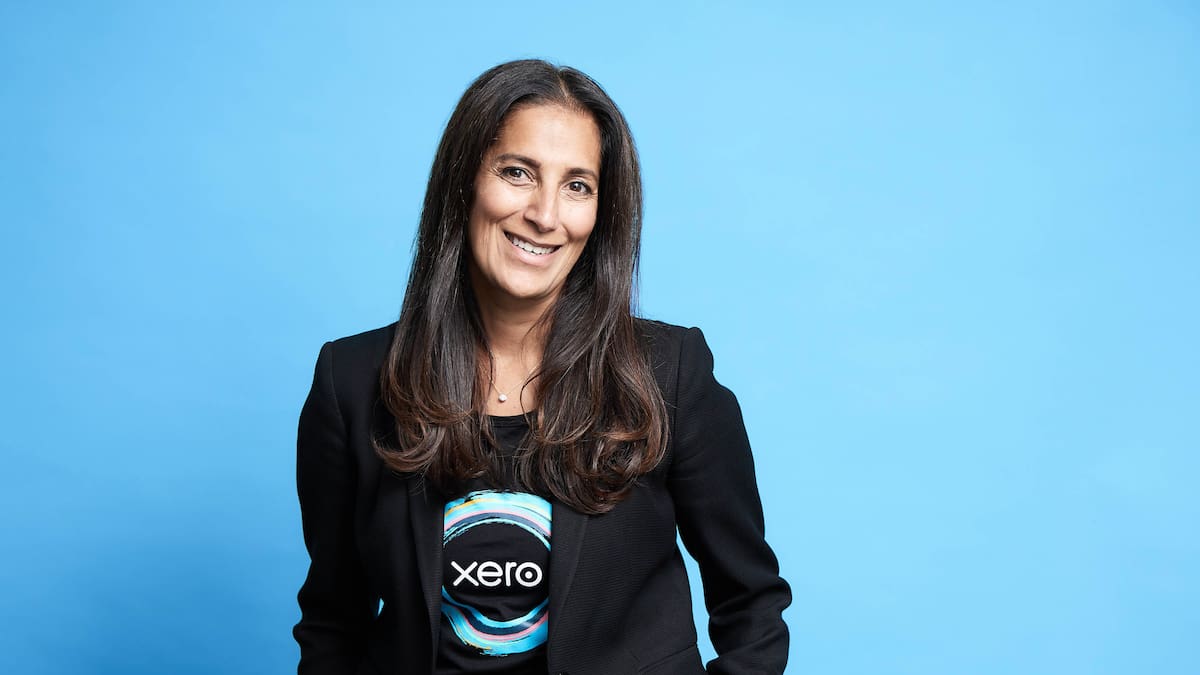
In her LinkedIn post, Singh Cassidy highlighted convenience and privacy.
“Moving Xero into agentic workflows, having AI do the heavy lifting from predicting cashflow gaps to executing complex financial tasks with customers in control,” she said.
“Our commitment to data responsibility is at the foundation of this partnership.
“Financial data shared between the platforms is used solely for the user’s specific session and proprietary business data is never used to train AI models.”
The Xero boss pitched the Anthropic partnership as turbocharging her firm’s in-house AI effort, Jax (Just ask Xero), rather than replacing it.
Xero says it will be able to embed Anthropic’s Claude model in its software to automate tasks like chasing unpaid invoices and preparing financial reports.
Founder on AI vs SaaS ‘meltdown’
Software companies face a twin threat from AI: New AI tools like Claude’s CoWork that will do business tasks for free or as part of a US$20-a-month subscription, or AI tools that let people “vibe code” or use natural language commands to create software.
“It’s been so interesting watching the SaaS-AI meltdown at the moment,” Xero founder Sir Rod Drury told the Herald last week.
SaaS or software-as-a-service means software that runs over the internet or cloud – which describes nearly all software these days.

“There’s definitely some big things going on. I’m hearing people have taken out Salesforce or got rid of Slack because they’re coding their own things.”
Drury resigned as Xero chief executive in 2018 and left its board in 2023. His holding has reduced from around 45% at the time of its IPO to under the 5% disclosure threshold today.
But Drury says those are corporates, whereas Xero operates in the sole trader and small business market.
And the founder is sceptical of vibe coding overall. While you might be able to take a screenshot of any software then get an AI to “vibe code” a copy of its features, Drury says: “It’s all about the data underneath. The big SaaS players have the best data sets ever.”
Xero had spent years building links with local accountants and adapting to regulations that varied by country or in the US, by state – features that would be difficult for an AI to replicate, and legally perilous to get wrong.
In his view, vibe coders are no threat, and Jax (now boosted by Anthropic) is a way for Xero to make AI useful for its customers.
‘World’s largest small business data set’
Xero New Zealand country manager Bridget Snelling said on Herald NOW Business: “We’ve got one of the world’s largest small business data sets so there’s real intelligence there; that’s what’s really important in AI, having a trusted data set, so we’re really excited about this”.
Asked about Xero’s recent share price dive, and a BusinessDesk report that New Zealand staff were being laid off in favour of moving roles to North America, Snelling said: “I can’t comment on the share price, but we are very focused on executing our strategy to create long-term shareholder value. And in this uncertain world, what that looks like is us investing where it matters.” The Anthropic deal was “huge.”
Xero shares closed yesterday at A$73.40.
The stock is down 54.5% over the past 12 months, despite strong financials (for its latest half-year to September 30, revenue was up 20% to $1.2b and net profit surged 42% $235m).
The ASX200 is up 7.0% over the same period.
Threat overbaked
Morningstar analyst Roy Van Keulen told the Herald the AI threat to Xero, and other SaaS firms, was overblown.
Last November, Van Keulen gave Xero a fair value of A$100, largely because he thought it had overpaid for Melio in yet another bid to crack the US, while he saw its energies better spent trying to crack easier targets.
And although he did not think AI could replace Xero, he did see it undermining the firm’s pricing power.
Xero had gone from price rises to effectively cutting prices by offering more features for less, he said.
At the time, Xero was trading at A$140 and Van Keulen’s valuation was effectively a “sell”. Now, with the stock halved and Van Keulen sticking by his A$100 valuation, given no material changes, it’s effectively swung to a “buy”.
What is Anthropic?
Anthropic was formed by a clutch of staff who defected from ChatGPT maker OpenAI.
Its largest single financial backer is Amazon, but it has also received multibillion-dollar backing from Google, Microsoft and Nvidia.
Anthropic hit headlines in February as the Pentagon dropped its software for being too “woke” and a “supply chain risk” and the Trump administration moved to block the AI maker from all Government contracts – a move that was this week ruled unlawful by a California judge.
February also saw Anthropic recruit New Zealander Chris Liddell as its new chairman.
Chris Keall is an Auckland-based member of the Herald’s business team. He joined the Herald in 2018 and is the technology editor and a senior business writer.


