You have reached your maximum number of saved items.
Remove items from your saved list to add more.
Save this article for later
Add articles to your saved list and come back to them anytime.
It starts small – a passing comment, an unread text message or an email that offers some constructive criticism.
This little something will trigger a physical sensation that grows from the gut, building heat throughout the body, as the thoughts compound: they hate me, I’ve said the wrong thing, I’m useless, I’m stupid, I need to do better next time.
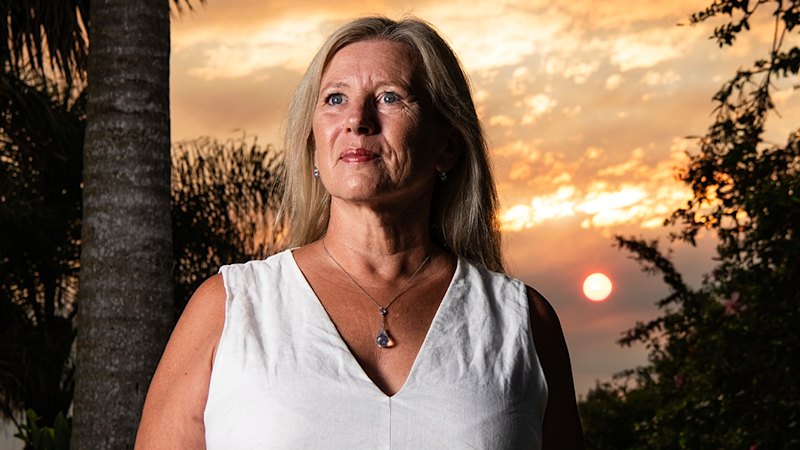
For Northern Beaches resident, Vivian Dunstan, 60, it was an imperfect score on an assessment at work. “I feel like I could have spiralled for days,” she says. “Just wanting to give up the whole thing and say, ‘I’m not doing this. This is too painful. It’s too hard.’”
As we learn more about attention deficit hyperactivity disorder (ADHD), researchers are slowly uncovering more about its unique characteristics, including emotional dysregulation. One aspect of that emotional dysregulation is rejection sensitive dysphoria (RSD), which is what Dunstan experienced after her assessment.
RSD is the term used to describe an extreme, intense emotional or physical feeling or dysphoria induced by a perceived or actual rejection, criticism or failure.
It’s recently made headlines thanks to celebrities, including Paris Hilton and Gemma Styles, talking openly about their RSD traits.
Now, it’s not difficult to encounter videos on social media platforms, like TikTok, or comment threads on Reddit, about the condition. There are also plenty of online support groups, in which people find community among people who resonate with their lived experience.
Who is most likely to experience RSD?
Most commonly, RSD comes up as an aspect of the emotional dysregulation experienced by 70 per cent of ADHD adults, though is not exclusive to them. It can also present in people with autism and generalised anxiety disorder.
“There isn’t strong empirical evidence that RSD is unique to ADHD,” says Dr Victoria Barclay-Timmis, a clinical psychologist and adjunct professor at the University of Queensland. “Similar patterns can appear with individuals that have trauma histories and definitely autistic individuals. Anyone who’s experienced chronic invalidation, perhaps in childhood or any time of their life really, can become really sensitised to that feeling of rejection.”
While everyone can experience rejection, it’s the dysphoric element that distinguishes RSD. For an RSD person, “there is no such thing as a flippant comment”, says Anita Missiha, a Coburg-based psychologist specialising in ADHD and RSD.
Whether it’s a piece of minor feedback at work, or a text message to the group chat that goes unanswered, they will take it as a negative reflection of themselves and fixate on it. “It clouds their ability to go about their day-to-day life, really, because they get hung up on any perceived, or rejection or whatever it is,” she says.
What does RSD feel like?
Rather than a fleeting emotional response, RSD people will experience feelings in an intense physical way, which will manifest differently for each person. In one recent study published in PLOS One, researchers spoke to one person who described it as “like a chair had been taken out from beneath you”, while another felt sensations in their heart and throat.
In this way, it’s similar to the highly sensitive person (HSP) phenomena, in which people experience heightened emotional responses, and are incredibly attuned to the surrounding environments. But the two differ in that RSD is due to intense feelings of shame and perceived rejection.
During an appearance on the podcast The Bossticks, Paris Hilton said she experienced RSD as “so extremely painful” and compared it to “a demon in your mind who’s saying negative self-talk to you”.
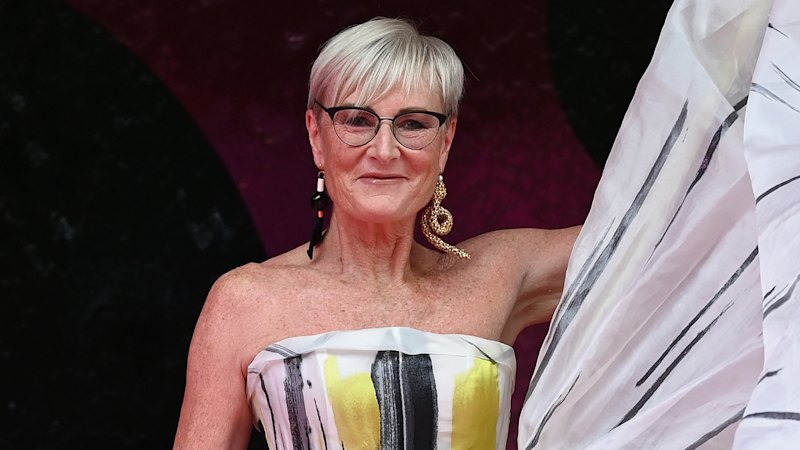
Tully Smyth, 38, a writer and creator from Armadale, describes it as “an emotional ambush”.
“There’s a physical drop in my stomach, a rush of anxiety, and then this very convincing narrative that I’ve done something wrong, or I’m in trouble,” Smyth says. “The wild part is how real it feels in the moment, even when, rationally, I know it probably isn’t.”
She gives a recent example in which her partner said the chicken pie she had made for dinner could use a little less salt next time. “But it felt like he had told me I was useless and couldn’t do anything right,” Smyth says.
RSD is still a largely under-researched area, so the exact causes and mechanisms are still being understood. However, some research has shown that early experiences with rejection can affect brain development. “What tends to really help is working on the underlying fear of rejection, and usually that comes from earlier experiences from childhood,” Missiha says.
“[Looking at things like] how was I handled by my caregivers or even earlier relationships when I did something wrong? What does it mean if I do something wrong? What am I really fearing? That’s some of the deeper psychological therapeutic work, which is really, really helpful for people.”
Living with RSD
Different life circumstances will inherently shape how someone experiences RSD. Aspects such as whether you work in a big team and your relationship status can dictate how severely RSD will impact you.
For instance, Dunstan has been with her husband since she was 18 and says it would be much more complicated for someone who was single.
“If you were in a series of romantic relationships and dating, that would be a lot worse,” she says, noting her husband is attuned to her signals and able to calmly address a flare up.
The person who you’ve been on a couple of dates with, however, won’t be concerned with how many emojis they use in texts, or know that their speed of response might make you catastrophise.
In fact, when you consider how much of our communication today takes place online, “it’s a minefield”, says Dunstan, who now runs social skills courses for ADHD people and has written a book for parents on how to navigate it with their children. Dunstan notes things like tone and meaning can be lost in messages, creating more opportunities for the RSD person to spiral and lead to further withdrawal.
“Over time, it leads to a bigger fear around socialising for them, making them avoid starting a conversation or reaching out to somebody. So it’s kind of self-reinforcing as well, that fear of rejection, leading to avoidance, and making social confidence a bit harder to build up.”
In a work context, where you’re required to take on feedback and be able to handle constructive criticism, understanding what might induce RSD is crucial.
“A lot of people with RSD, particularly women, tend to be very fearful of crying in the workplace, and that can be really hard when your emotions get the better of you,” says Missiha. In the moment of a flare-up, you should ask yourself, ‘Is this actually as big as it is, or am I feeling a lot of things right now?’”
It’s also just as important to know how to handle it.
If you’re in a meeting, Missiha recommends RSD people take in a notepad and pen to write things down. “It allows you to have some time to think,” she says. “It stops the flow of information for a little bit, gives you a pause. You write things down, your brain can catch up.” She adds that it’s OK to say things like “that’s interesting” and “I hear what you’re saying”, and to ask, “Can I get back to you?” These phrases give you space to think through a response rather than reacting in the moment.
Supporting someone with RSD
Being aware that a loved one or friend experiences RSD is the first step to being able to support them, says Barclay-Timmins.
“We can’t moderate everything we say and do – that would be exhausting,” she says. “But if they do pick up that their friend or loved one seems to be having a reaction to something they’ve said – maybe they can sense some shutting down or can see a change in body language or facial expressiveness – just be curious and inquire, ‘Are you OK?’”
Jen Lewis, an ADHD coach who specialises in RSD, says that for managers who might work with an RSD person, it’s important to acknowledge it. “If somebody’s experiencing a trigger of RSD, it’s important to validate it,” she says. “If we have somebody that can co-regulate with us and say, hey, that sounds so hard, you’re validating the intense emotion that comes with it.”
From there, she says it’s helpful to make feedback as specific and impersonal as possible.
More than anything, being able to recognise and put a name to the traits of RSD offers relief for those who experience it. “It didn’t magically fix it, but it gave me language, and language gives you distance,” Smyth says.
“Instead of ‘this is happening because I’m unlovable’, it becomes ‘this is my RSD flaring up’. That mindset shift helped me start being a bit kinder to myself.”
Make the most of your health, relationships, fitness and nutrition with our Live Well newsletter. Get it in your inbox every Monday.
You have reached your maximum number of saved items.
Remove items from your saved list to add more.