Opinion
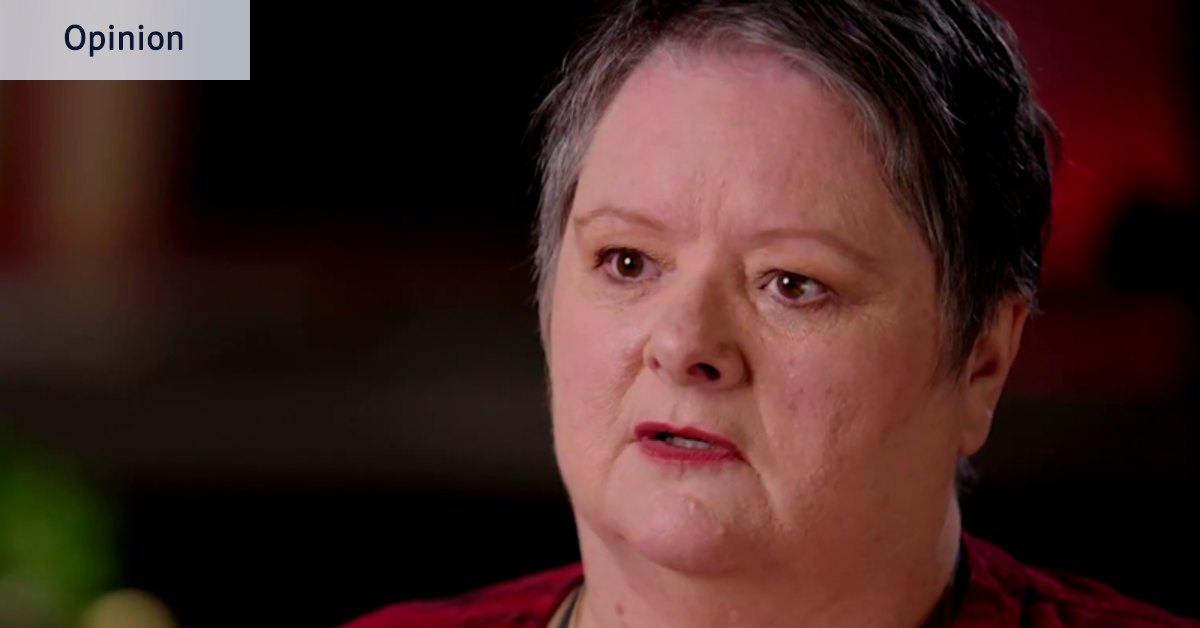
It would be extremely difficult not to love Magda Szubanski. With her impeccable comic delivery, she has been making Australians chortle and wheeze for decades, most memorably in the guise of a sports-obsessed netballer called Sharon Strzelecki. She is also honest, vulnerable and open-hearted. When you walk down the street with her, people clasp her arms, beam widely, tell her they adore her.
And they still remember the pluck and leadership she showed as a prominent lesbian during the debate around marriage equality in 2017.
Which is why, when she decided to write a book weaving together the story of her mother’s death, with her work for the marriage equality plebiscite almost a decade after Australians voted overwhelmingly in favour of it, I was curious to see what insights it might contain about leadership, at a time when we seem particularly hungry for it.
The kind of leadership that is not bombastic, selectively deaf or self-serving.
The kind of leadership that won’t pop up on an AI search when you ask for a list of Australia’s leaders. You’ll get mostly men, prime ministers and governors-general, not an eloquent comedian who fought for her community, for equality, for human rights.
The book – I Can’t Tell You But I Will –tells the story of Szubanski’s evolution from idealist extremist to “militant moderate”, from comedian to campaigner, from daughter to orphan, wrestling with religion and craving ritual, family and unconditional love, of the absurd grace of humour and the complexity of being a carer for her mother.
It also contains some important lessons about what we need from leaders during volatile community debates, and the ways in which we should talk to each other if we want to maintain the fabric of democracy.
I found three.
The first is to occasionally cede ground in the interests of maintaining allyships. In short – we don’t need to agree on everything to unite on important subjects. As Szubanski told Sarah Ferguson on ABC’s 7.30, she learned about the significance of social cohesion from those conducting the marriage equality debate in terms of “how to give ground, how to concede sometimes and find common ground”.
This precious common ground, which seems to be becoming more and more elusive. We too often search for and focus on, slivers of difference instead of plains of agreement.
The second is to try to understand people who disagree with you and not vilify them.
In order to prepare for a debate on the ABC’s Q+A program, she reveals her thinking: “I will have to climb into the skin of my opponents and imagine what it’s like to be them. What it’s like to mistrust or fear someone like me. Always meditate on what provokes resentment. And, honestly, how could anyone who has read All Quiet on the Western Front still believe the ‘enemy’ is not fully human?”
The third is to acknowledge the pain and rejection felt by large swathes of your community.
We must not forget how damaging the marriage equality debate was for the LGBTQ community, exposed to public hatreds, family rifts and ugly rhetoric. Research published in 2024 in the American Journal of Public Health found people in same-sex relationships living in areas more strongly opposed to marriage equality in Australia had more chronic health problems after the vote compared to those living in areas with less fervent opposition. For example, the authors wrote of “more long-term heart, respiratory and mental health conditions in people in same-sex relationships in areas with the most opposition to marriage equality.” This was particularly the case for men, younger people and those living in socioeconomically deprived regions.
The researchers had measured “structural stigma using the regional percentage of votes against same-sex marriage from Australia’s 2017 Marriage Equality Survey” and mapped it to the 2021 Census survey of 10, 093,399 and 136,988 individuals in opposite-sex and same-sex relationships, respectively.
In light of what was clearly apparent at the time – that the plebiscite was a painful and costly process for the gay community, Szubanski instinctively took on a pastoral role.
She wrote about what it would mean to have to assume the role of gay elder if the vote was lost, and how she’d need to try to help younger LGBTQ people “absorb the shock of being publicly rejected by their own country”. She would have to remind them that a postal survey “could never determine their value, however much it might feel that way; that the queer community is resilient and this was not the end of the road”.
“I would have to help parents hold their children close,” she writes, “help people survive the humiliation; help all of us find somewhere to put the grief and fury without turning it against ourselves – or one another.”
It was what we saw many First Nations elders do after the crushing defeat of the Voice plebiscite, one where we saw a host of powerful leaders articulate a forceful case that was eventually, tragically crushed by misinformation and flawed strategy.
I will never forget watching writer and unionist Celeste Liddle sitting at a desk on ABC TV as the devastating results came in, asked if she had any final words. She told me later her “stomach was on the floor”. She calmly turned to the camera and spoke to her mob, said they would get through it, they would be okay. One host said he admired her optimism; co-host Bridget Brennan quickly said that that wasn’t optimism, it was strength.
Ultimately, the task Szubanski had to deal with after the result was a different one: to celebrate without gloating, to “acknowledge the damage without allowing hurt to harden into hatred. I would have to extend a hand to the people who had voted No, while refusing to absolve those who had deliberately turned the campaign into a dirty war.”
This hand extension, this climbing into the skin of our opponents, this hunt for common ground, this all matters.
Julia Baird is a journalist, author and regular columnist. Her latest book is Bright Shining: How grace changes everything.
Get a weekly wrap of views that will challenge, champion and inform your own. Sign up for our Opinion newsletter.
 Julia Baird is a journalist, author and regular columnist. Her latest book is Bright Shining: how grace changes everything.Connect via X, Facebook or email.