

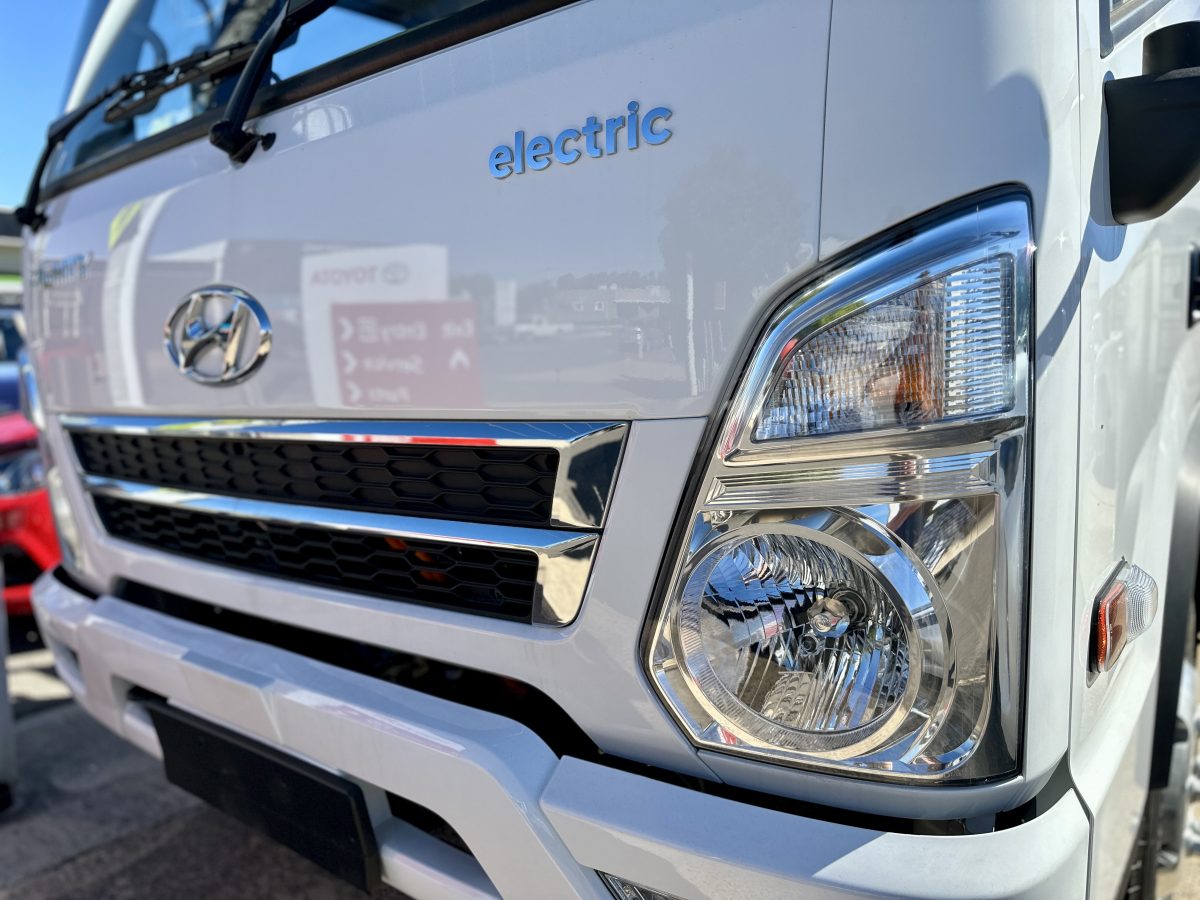
The EV Council has ranked the ACT poorly when it comes to electrification of freight vehicles. Photo: James Coleman.
The ACT leads the country when it comes to new electric vehicle registrations but it’s received deductions for a lack of equal incentives for freight vehicles to join the movement.
The Territory scored high for several metrics measured in the latest EV Council 2026 report – receiving an overall score of 7/10.
The EV Council noted the Commonwealth, NSW and ACT were “performing at the top of the class” while South Australia, Queensland, Tasmania and Northern Territory had gone backwards.
“The reasons for this divergence are multifaceted, but two broad themes stand out: tighter fiscal conditions, which have limited all governments’ capacity to support the EV transition, and, in some jurisdictions, continued resistance to forward-looking transport policy in favour of ongoing reliance on fossil fuels,” it stated.
The number of electric vehicles being registered was a big plus in the ACT’s ranking.
Climate Change, Energy, Water and Waste Executive Group Manager Fiona Wright said 44 per cent of new cars being registered in Canberra were battery electric vehicles.
“If you add plug-in hybrids to that number, over half of the new vehicle registrations in the ACT were able to be plugged in [as of September],” Ms Wright said.
“That’s about double the national average.”
The number of ultra-fast DC connectors in the ACT also markedly grew, meaning there’s now one connector for every 206 battery-electric vehicles in the Territory (from 224).
But the ACT still lacks meaningful contribution to freight electrification.
The EV Council labelled freight trucks as the “single biggest unclaimed opportunity left” in the transport electrification space.
“Heavy vehicles are a small slice of the fleet, an out-sized slice of emissions and fuel imports,” the report stated.
An open letter to the Commonwealth signed by 46 freight industry leaders called on a national fuel strategy to cut costs for operators, reduce import dependence and to position Australia as a leader in “clean freight logistics”.
“This is not one voice asking for change. It is an entire industry — aligned, ready, and asking Australian governments to move with them,” the April letter stated.
“Without a step-change in policy, we risk being left behind by every major freight economy in the world.”
It also called on state and territory governments to grant electric trucks consistent road access, more incentives for all electric heavy-vehicle classes, and to reform curfews to enable overnight electric freight deliveries.
Heavier vehicles that are being targeted to go electric in the ACT include buses and garbage trucks. Photo: Transport Canberra.
The ACT received its lowest score in the freight vehicle category – 2/10.
By comparison, Victoria received 7/10, NSW 6/10 and the Commonwealth 5/10. All other jurisdictions received scores of one or zero.
“NSW and Victoria are the only jurisdictions making a meaningful contribution to freight electrification, while jurisdictions need to seriously consider the fuel insecurity they are imposing on their constituents by continuing to rely on petrol and diesel,” the report stated.

Let us transport your needs! Contact us
The ACT has endorsed a global push to speed up the adoption of zero-emission heavy vehicles, with a commitment to enable 100 per cent of zero-emission new truck sales by 2040.
But the EV Council noted the Territory doesn’t have a strategy to accelerate fleet turnover, has minimal available financial incentives and hasn’t made changes to allow for more electric heavy vehicle road access.
Light, heavy and articulated trucks account for about 1 per cent of registered vehicles in the ACT.
An ACT Government spokesperson said fast electric vehicle (DC) charging hubs presented a chance to better support this space.
“[Work is underway] to identify viable locations [for such hubs],” they said.
“These facilities would be able to support freight vehicles and other commercial vehicles that don’t have access to depot charging.”
They pointed out that, despite the ACT’s low score for incentives for fleets and businesses to go electric, there were options already available.
“ACT businesses have access to free advice on transitioning their vehicles to electric through the Fleet Advisory Service, as well as a rebate of up to $3300 for installing charging infrastructure,” the spokesperson said.
“A new action of the ACT Climate Change Strategy 2026-2036 will introduce zero emission vehicle expectations and transition planning for government contracts with significant transport components. This will also incentivise business fleets to transition their fleets to EVs.
“Transport is our highest source of emissions, and the new Climate Change Strategy acknowledges the need for behavioural change. We’ve also outlined that future action plans in the strategy will focus on additional measures to expand access to reliable, affordable and low-emissions transport.”