Do you believe that magic happens every Christmas Eve? Do you trust that there’s an old man who rewards your belief? Well, I’m 48, and I do.
My Father Christmas doesn’t live at the North Pole. He’s from Victorian London and comes to life every Christmas on page, screen and stage around the Western world. Yes, Scrooge, from Dickens’ A Christmas Carol, is my Santa.
I’ve wanted to be a psychotherapist since around the time I first saw the Muppet Christmas Carol at the cinema. I was 16, taking my little sister along. We both loved it.
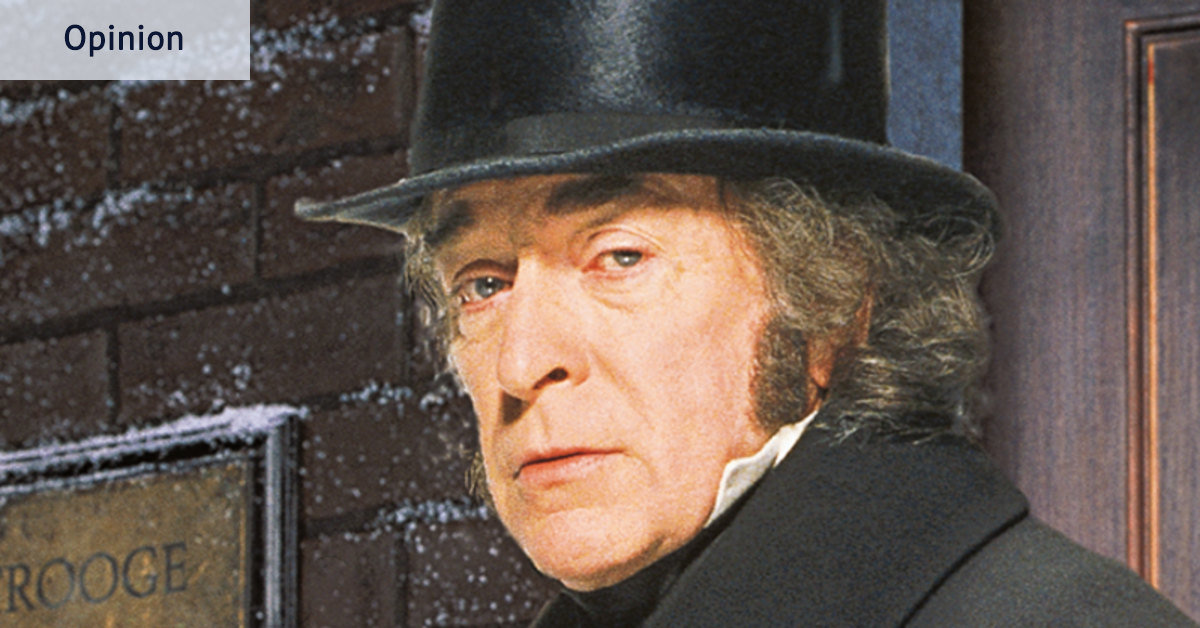
Michael Caine as Scrooge in the Muppet Christmas Carol.Credit:
As my first Ebenezer, Michael Caine’s overnight transformation transfixed me. I still get goosebumps as Christmas morning dawns. There’s still time! It’s not too late! That’s the best Christmas present a pale weedy teen worried about the world could wish for.
I’d learned at school the difference between a tragedy and a comedy – in both the hero realises they’ve messed up, but in the comedy it’s not too late to change. In the tragedy the hero runs out of time. I wanted to believe people can change, that it’s not too late. So I set my sights on psychotherapy as a career.
Do you want to know the secret I’ve learned from 20 years as a therapist? People don’t change. Don’t get me wrong – therapy is the best medical treatment I know. I’ve helped ease more suffering through listening and talking to people in a room with a chair and a sofa than I have with a script pad or in a hospital. But not by changing anyone. Not even by helping them to change.
Because we humans don’t change. We adapt. This is why New Year’s resolutions and most self-help books don’t work. You’re trying to change, but your environment is the same. No nervous system, from worms to humans will change if nothing around it seems different.
Your nervous system needs to believe something has changed, to adapt. It needs a profound experience. Something haunting, perhaps. Most people I know, myself included, have a face seared into their mind from a moment that told them life had changed, that it was time to adapt. A loved one clutching a letter. A mirror reflecting a desperate hangover face. A hospital farewell. “I’ll never forget the look on that face”, people will say.
We’re haunted by faces; the powerful change most likely to get your brain and body to adapt – and therefore grow and heal – is relational. We’re social creatures. Change the who, and we adapt.