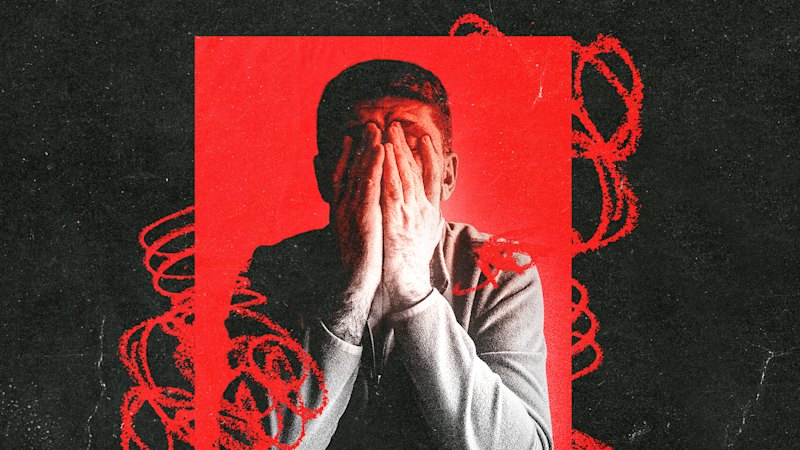
“The effects of anger on the body are like the effects of stress – you can’t tell them apart,” he says. “You produce the same stress hormones like adrenaline, your temperature increases, and your heart rate and blood pressure go up.”
Going over the events that made you feel angry again and again can make it harder to control negative feelings.Credit: iStock
How can I stop feeling angry?
There’s no easy fix, despite what Google or social media might tell you, Denson says.
“A lot of anger management resources online aren’t based on good evidence. Journalling is sometimes recommended for reducing anger, for instance, but there’s also evidence that it can make rumination worse. Exercise is another suggestion but although it’s good for heart health it may not help reduce anger quickly because it increases rather than decreases physiological arousal.”
A better bet, he says, is mindfulness – the practice of focusing on your thoughts, emotions and how your body feels in the present moment.
“It works by teaching you not to overreact to situations and to become an observer of your feelings rather than being caught up in them. It helps you reappraise things in a more detached way – just as if you were an observer standing on the outside,” says Denson.
His latest research, analysing more than a hundred studies across different countries, found that people who were naturally more mindful were less likely to be angry or aggressive.
Loading
“But mindfulness is a skill you can learn, and our study found that people who learn mindfulness can also better manage anger and aggression. Exactly how it works isn’t clear but some evidence suggests it helps reduce the stress chemical, cortisol, and enhance production of serotonin, a neurotransmitter that helps with regulation.”
It can also be an antidote to that anger-stoking habit, rumination, where you rehash negative thoughts and memories over and over again.
“Rumination can maintain anger over a very long time, which makes it more likely for people to slip into aggressive behaviour,” says Denson. “It manifests itself in multiple disorders in different guises – brooding in depression, worry in anxiety and focusing on anger and revenge in response to provocation.”
What should you avoid?
Going easy on alcohol is another tip for controlling anger because it’s often involved in sparking anger, he says.
“Alcohol disrupts the rational part of our brain – the prefrontal cortex that helps with concentration, decision-making and impulse control. This is why people get ‘alcohol myopia’ where their focus becomes narrowed and they don’t see the nuance in situations. Alcohol also makes people ruminate on things that provoke them.”
If you’d like to be more mindful, Denson recommends apps like Smiling Mind or Headspace. The Black Dog Institute also has good information on mindfulness. However, mindfulness alone may not be enough for everyone, he stresses – some people will also need help from a qualified mental health professional.
“Problem anger can be complex and when it occurs after experiencing a traumatic event, mindfulness may be ineffective,” says Metcalf.
“Some of us, for instance, are more prone than others to seeing the worst in a situation – they’re the ones likely to see a bump from a supermarket trolley, or being cut off in traffic, as deliberate, not accidental. It’s known as having a ‘hostility bias’ and is more common in people who’ve experienced trauma in their lives, including survivors of natural disasters, first responders, veterans and adults who’ve experienced trauma as children,” she says.
The University of Melbourne is now testing a smartphone app designed to help with problem anger after trauma, using strategies to help tackle how we think about difficult situations.
Make the most of your health, relationships, fitness and nutrition with our Live Well newsletter. Get it in your inbox every Monday.