
Crime writer Eve Thomson wants readers to know this sobering truth about court cases
November 15, 2026 — 5:00am
You have reached your maximum number of saved items.
Remove items from your saved list to add more.
No gift articles left
You’ve used all of your gift articles. 3 more will become available on the 1st of every month.
Close
As a sometime crime novelist myself, I do my best to make sure the legal detail in my books is authentic, but authors who also work – or have worked – as lawyers have a bit of a jump on outsiders like me.
That said, readers probably expect more of them: their courtroom scenes must be true to life, their legal arguments plausible, and the professional lives of their characters depicted within the bounds of reasonable possibility.
Here, three women – two lawyers and a former one – share how their careers have influenced their writing.
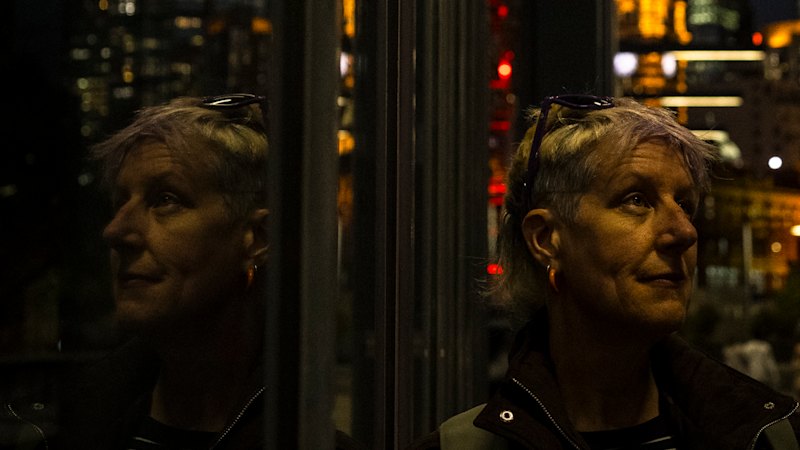
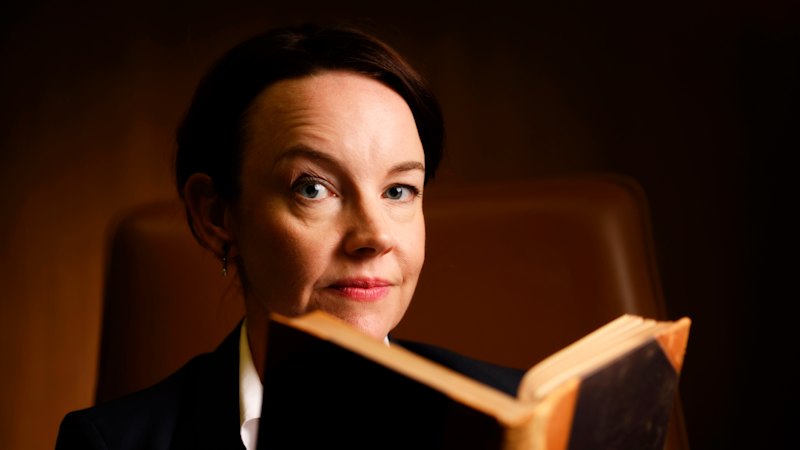
Eve Thomson, 47
“Obviously, when I read crime novels I get frustrated if the legal side of things isn’t right. The novels I love – including the non-crime ones – are those that you can see have been well-researched and you get that sense of truth.
At the end of each chapter in my book, Smother, I include a scene from a cross-examination, or an examination, of a witness. You get each character’s and each witness’s perspective, and then the judge’s ruling at the end. It allows the reader to play along and pretend that they’re a juror, and decide whether the conduct of each person is deserving of punishment or not.
I put a lot of work into trying to make those [scenes] correct and entertaining but it can be tricky to put forward a set of facts that hooks the reader but is also believable from a lawyer’s perspective. So they’re not going to be 100 per cent accurate.
I suspect some misapprehensions have come about from American television series, with lawyers walking around the courtroom and banging on the table in front of the judge – that would never happen in Australia.
And, probably, people think it’s a bit more exciting than it really is. Someone who’s watched American courtroom dramas – or even Australian courtroom dramas – might be horrified by the quagmire of procedural issues that happens before a case goes to trial.
It’s often the length of the process that takes its toll on individuals. It’s hard to explain to them why it’s taking so long to resolve what they see as a black-and-white matter.
What I’ve tried to transfer into books is how humans immediately react in those moments when something’s happened, but how being ground down in a process can affect them, too.
My novels are ‘crime adjacent’ in that often there’s no actual crime committed but they’re about a legal case. I’m interested in how, in civil law in particular, there’s a bit more grey and you can examine the moral choices people make and how the law decides who should be responsible versus who the reader thinks should be responsible.
I do all the writing I can in the time I have available: it’s 20 minutes before the kids get up in the morning, it’s being the last person to go to bed at night. It’s not easy but it’s something I’ve always loved. I find it quite relaxing to sit down and do some creative writing, as opposed to writing that’s bound by what’s happening in my case and with my clients.”
Joanna Jenkins, 62
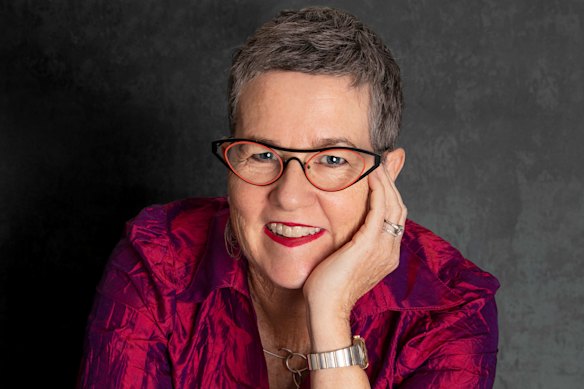
“The first book I wrote was How to Kill a Client. I wanted to write about what it was actually like in a law firm. There are such vast amounts of money to be made; you’re sitting in meetings with people who are kind of … sociopathic. I was trying to work out what genre the book should be, then I thought, ‘I know: I’ll kill one of the f—ers!’
I think women probably have more subtle ways of killing people. There’s something very indirect about the way women wreak revenge.
That book sparked many conversations. Other lawyers were obsessed with working out who was which character. But in some ways it’s more offensive than that: I was taking a number of people and popping them together into a Frankenstein figure.
A lot of very creative people go into law just because they are told by their parents that they’ve got to have a job – and what they really want to do is write a novel or a musical. It gets beaten out of you as you become more grey and besuited. But if you’re really lucky you can break out and do the things you’ve always wanted to do.
Being a lawyer is very stressful. It can be interesting but sometimes it’s not. Writing is a very solitary thing. I do miss the ‘team sport’ associated with being a lawyer. But not enough to want to go back to it.
Being a lawyer helps with the practical aspects of the craft of writing. It teaches attention to detail, you write a lot of words and become tolerant of withering criticism – because you get that from clients. So getting edited is a doddle, really!
I never write courtroom scenes, mainly because courts are actually quite boring. My central character is a lawyer but she’s into working out what happened in a kind of resigned, obstinate and reluctant way, rather than pursuing it in a courtroom drama.
I reckon lawyers on television could sometimes be sued for negligence – they always solve the case by accident, with someone walking in the night before the last day of trial.”
Lisa Ellery, 51

“There are so many things that people don’t realise about crime. Psychopaths are very rare. Most people are not criminal masterminds. Most crime isn’t the serial-killing type. Many people who commit crimes are victims themselves.
It wasn’t until I was in my 40s that it occurred to me I could try writing crime. A friend suggested that I read some West Australian crime authors. I read a couple of Alan Carter and Dave Warner books and I thought, gee! I hadn’t realised that West Australians wrote crime; I thought it was Americans!
So I started writing a novel, Private Prosecution. I practised criminal law for seven years at the beginning of my career. All the stuff you expect to be the hard part of writing a crime novel – the legal procedure and the tricky terminology – was easy. I knew my knowledge wasn’t up-to-date; I had to look up the legislation a fair bit and I knew what I did and didn’t know.
The legal training definitely helped me to structure a crime novel because you can’t have plot holes any more than you can have gaps in the evidence in a real situation.
Editor’s pick

In Hot Ground the protagonist was a police officer instead of a lawyer – that was not so easy. I had to really brush up on my knowledge of how police do their job. I had to actually ask for help from the police – they said, ‘You’re a defence lawyer and you’d like our help?’ But the Kalgoorlie detectives were really fantastic.
There’s a huge appetite for reading about violence from people who are not exposed to it in real life. They’re fascinated by it. Someone described Private Prosecution as ‘cosy crime’, which is a fabulous euphemism for something that softens the impact of real-life violence.
I want my writing to be authentic and realistic but I don’t want to portray violence for the sake of people enjoying that – I want them to be horrified and shocked by it. I like to avoid violence against women as well.
Female killers are almost invariably victims. There is apparently an equal number of female and male psychopaths. But leaving those people aside, violence wouldn’t have become normalised for violent women if they hadn’t been victims in the first place.
In real life these things are really complex, but no one wants to read about that. When you write a crime novel, everything’s simplified.”
Get the best of Sunday Life magazine delivered to your inbox every Sunday morning. Sign up for our newsletter.
Continue this edition
The November 15 EditionUp next

- Opinion
We can buy anything we want at the click of a button. But it is costing us more in other ways
We all went from being customers to consumers. It’s no wonder so many stores are failing.

How a yellow dress, pink coat and a shipping notification helped me cope with my grief
It may seem trivial but “grief shopping” helped me through one of my darkest hours.
Previously

How Justine Clarke, 55, balances her ‘inner four-year-old’ with her grittier roles
The actor and Play School veteran will star in an ABC drama about one of the country’s most shameful chapters.
You have reached your maximum number of saved items.
Remove items from your saved list to add more.
No gift articles left
You’ve used all of your gift articles. 3 more will become available on the 1st of every month.
Close
More: