
An artist’s impression of the new lyric theatre, which is expected to attract shows Canberra doesn’t normally host. Image: ACT Government.
A very different city awaits Canberrans over the next five years, with numerous projects in the pipeline set to transform the CBD.
Walkability, liveability, connectivity and open spaces are the focus of ongoing infrastructure projects in the city centre, with benefits that will reach well beyond the city limits.
By 2031, more than 15,000 people are expected to live in the broader city precinct, and close to 50,000 will work there, fundamentally changing how the heart of the city functions and feels.
Infrastructure Canberra Director-General Gillian Geraghty says the city must respond.
“What we’ll see in 2030 will be a transformed city,” she says.
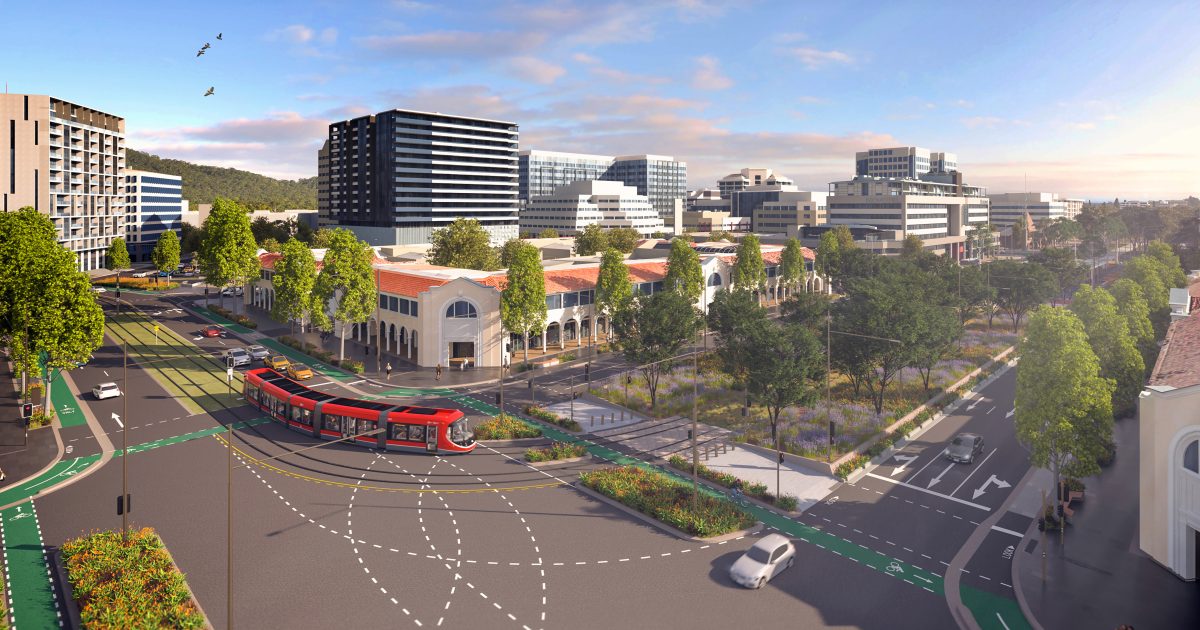
At the centre of that change is improved connectivity. A new light rail extension will add three stops, running from the current Alinga Street stop through to Commonwealth Park.
It’s a project designed not just for city workers or residents, but for people right across Canberra, making it easier to arrive in the CBD and move around on foot.
Culture and recreation are also key pillars of the city’s evolution. A new 2000-seat lyric theatre will rise alongside existing venues, expanding Canberra’s ability to attract major productions.
“That 2000-seat theatre is expected to attract shows that Canberra is not usually on the circuit for, providing Canberrans with a lifestyle opportunity,” Ms Geraghty says.
Nearby, a new Canberra Aquatic Centre in Commonwealth Park will replace the aging Olympic Pool, strengthening the connection between the city and the lake while offering year-round facilities.
“That will be a beautiful connection of the city to the lake and will provide Canberrans with an opportunity to really enjoy Commonwealth Park, one of Canberra’s most loved open spaces.”
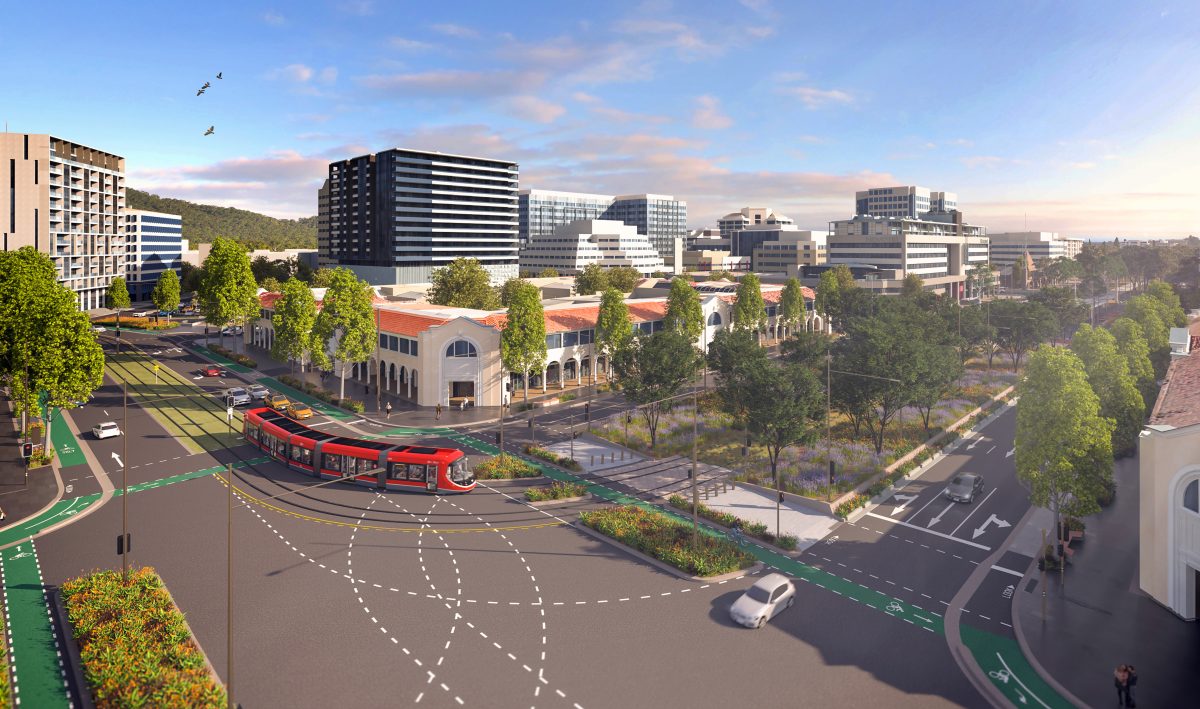
An artist’s impression of the new light rail extension. Image: ACT Government.
Infrastructure Canberra’s projects form only part of the picture.
The City Renewal Authority is delivering a new waterfront destination and mixed-use neighbourhood at Acton Waterfront, to bring more life to the lake’s edge. UNSW is establishing a new Canberra City campus in Reid, in partnership with the ACT Government, to facilitate innovation and growth in the defence and cybersecurity industries.
“That will bring new students, researchers and academics and a whole lot of activity to that part of town,” Ms Geraghty says.
Alongside this, private investment is accelerating, with new commercial towers under construction on Northbourne Avenue and London Circuit, and further development planned near the QT Hotel. Together, these projects signal strong confidence in the city centre as a place to work, study and live.
Ms Geraghty says ACT Government infrastructure projects consider climate, cultural and community needs and support diverse housing types and inclusive public spaces.
“Flexibility and innovation in design are the focus, with projects that aim to create vibrant and connected neighbourhoods, ensuring equitable access to essential services, transport and green spaces,” she says.
“The goal is to provide opportunities for people to move between green spaces and have access to nature and outdoor recreation.”
Pedestrians are also front of mind.
The aim is to create a city where active travel is embedded, with safe, accessible routes that prioritise vulnerable users, such as children and older adults, and a light rail network that makes it easy to arrive without a car.
“With the city under construction, pedestrians may find that it’s actually quicker and more pleasant to walk around than to drive and that’s something we’d like to see continue after the construction is over,” Ms Geraghty says.
Recent works, such as the raising of London Circuit, are already changing how people experience the CBD. The new connection allows pedestrians to cross Commonwealth Avenue and move easily between precincts.
Traffic will still move through the city, but with more calming measures and reduced speeds, supporting pedestrians and active travel to dominate the space.
Crucially, the benefits extend far beyond the city centre.
“The projects that we’re talking about, particularly the lyric theatre, aquatic centre and UNSW Canberra City, are projects that will support the whole of Canberra,” Ms Geraghty says.
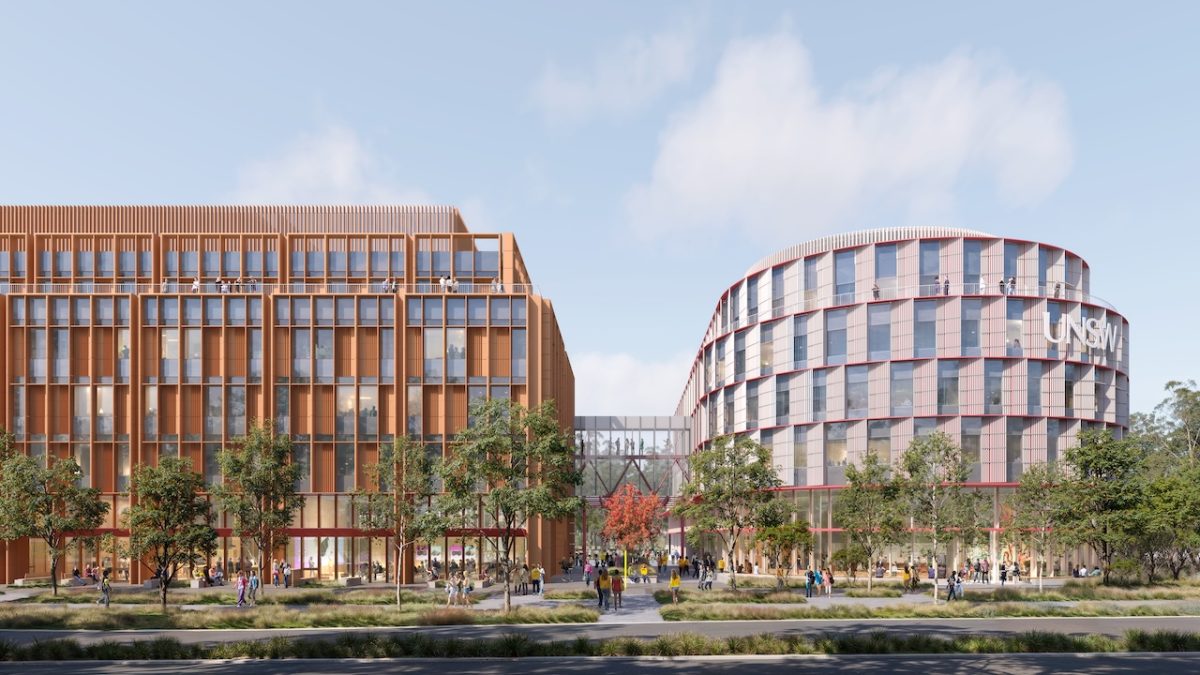
An artist’s impression of the new UNSW Canberra City in Reid will attract students and staff into the city. Image: UNSW.
She points to research showing that 78 per cent of theatre audiences live outside the city. UNSW Canberra City is estimated to attract around 6000 students and educators, and the aquatic centre will cater to everyone from learn-to-swim participants to those seeking exercise and recreation.
Acknowledging the disruption along the way, Ms Geraghty says work is ongoing to support local businesses and keep the community informed through the Built for CBR website, improved lighting and signage and city activities.
Ultimately, she says, it’s not only about what infrastructure is delivered but how it’s delivered.
“Infrastructure Canberra is working with teams that are locally based and representative of the community that we’re delivering for, so they care about the quality and the type of projects that they’re delivering,” she says.
“The ACT Government is working hard to make sure businesses and the community are well informed, and building excitement around these projects, which will have a positive impact on our city.”
Find what’s being built for you via Built for CBR.