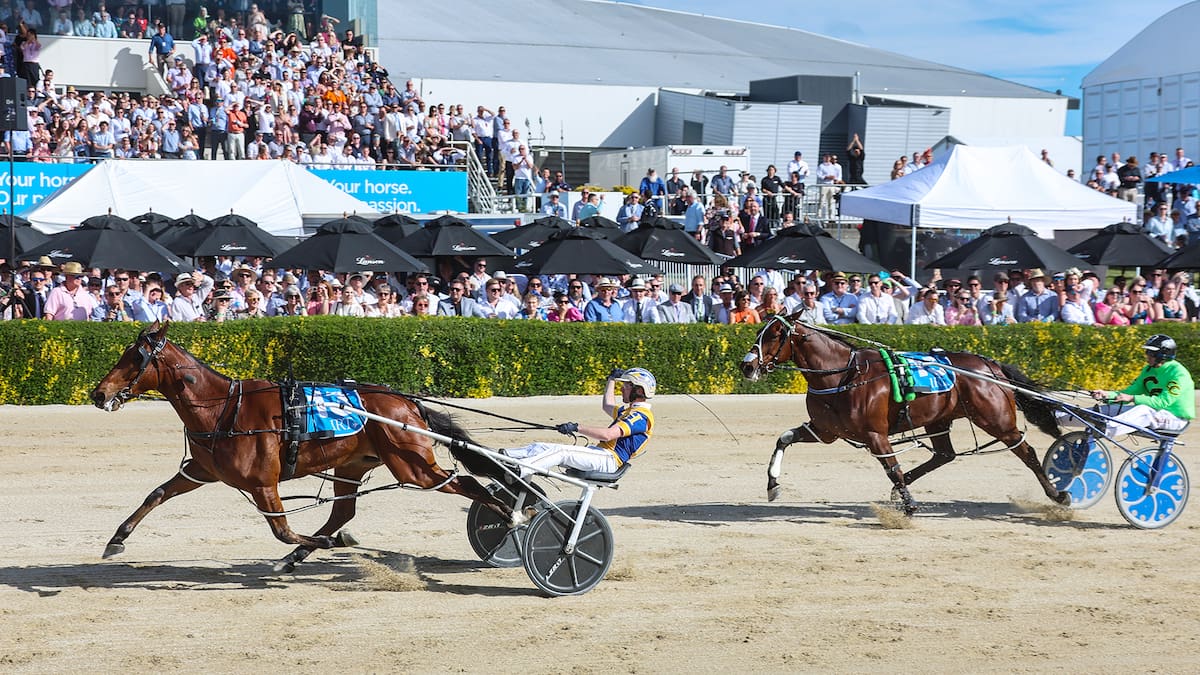

A more fitting farewell will come when the ground’s most recent residents, the Crusaders, host the Fijian Drua under lights at Addington, before moving to their new $683 million home at One NZ Stadium in the city centre.
The ground replaced Lancaster Park after the February 22, 2011 earthquake.
The “temporary” stadium build began in November 2011 by first demolishing two stands that were described as “badly damaged” at Rugby League Park. Construction began just before Christmas that year, and less than 100 days later, the Crusaders had a new home.
A vast 340 tonnes of steel scaffolding sat on 4500 cubic metres of concrete that amounted to one of the largest single concrete pours the city had ever seen. Four hundred workers sweated through 180,000 man hours to have the ground ready for its first match.

“The really big part of the build was the foundation, about six feet deep,” Gerry Brownlee, then the Earthquake Recovery Minister, says.
The speed of the project was staggering – but, looking back, Brownlee says it took too long to get started.
“We ended up with the Crusaders having this whole season outside of Canterbury. I think we could have probably got that up and running just a bit quicker,” he says.
“There was talk at the time that the Crusaders might have to go and base themselves somewhere else. One thing I heard that sparked me a little bit, I didn’t check it out too much, was that they might go to the North Shore, for example, where there was a facility available. That would have been terrible for Canterbury. So it was obvious we had to do something.”
Brownlee believes the venue has served its purpose – even if its service period is almost three times longer than anticipated.
“The initial plan was that something would be up and running within five years of the temporary stadium coming. So it [One NZ Stadium] should have been around for sort of 2017/2018, but for various reasons, it didn’t get that far.”
Former Canterbury Earthquake Recovery Authority (Cera) chief executive Roger Sutton believes the stadium has been “absolutely fantastic” and holds it up as a good example of “stuff we did fast and did well”.
“We did it Chinese-style, if you want a branding name, we just got on with it and did it.”

Game One
Crusaders v Cheetahs, March 24, 2012. Thirteen months after the Christchurch earthquake shook the city to its knees and closed its premier sporting venue for good, a temporary replacement welcomed 18,000 footy fans into the ground to see a 28-21 win for the Crusaders over their Free State rivals in round five.
The previous 13 months had seen the Crusaders take home games to Nelson, Timaru, London and Napier. The temporary stadium wasn’t glamorous, but it was their home ground and over the next 14 years, it became a fortress, with 124 games for 103 wins, 20 losses and one draw giving them a success rate of 83% at their temporary home.
The Crusaders’ highest score at the ground came in 2016 against the now-defunct Melbourne Rebels, winning 85-26. Their biggest winning margin was against the same opposition in 2019 with a 66-0 thumping. On the other side of the ledger, their worst defeat came in round one of this season against the ACT Brumbies, where a horror last 10 minutes blew the score out to 50-24.

Breaking Razor
The first title win at the temporary stadium was celebrated in traditional Scott “Razor” Robertson style. The 37-18 defeat of the Lions in 2018 was punctuated by the coach’s ceremonial breakdancing. Robertson’s routine went from Fortnite’s “Hype” move into an old-school Indian-step, followed by a 180-degree double dolphin dive with a two-step to handstand and windmills. Well, that was his ad-lib intention. What it lacked in execution, it made up for in enthusiasm.
Ooh Ah, Razor Ray! This was not his last dance. In 30 years of Super Rugby, the Crusaders have helped themselves to a gluttonous 14 victories in finals* – with eight coming at home and four of those at “Fortress Addington”.

Wyatt Crockett Stadium
The ground that was known for many years as Addington Showgrounds or Rugby League Park became AMI Stadium in 2012, a sponsorship that moved over from Lancaster Park.
It would then be called Orangetheory Stadium before ending up as Apollo Projects Stadium – but for one day only, it was known by another name. To celebrate Wyatt Crockett playing his 200th Super Rugby match in 2018, the ground bore the name of the tireless prop.

All Blacks v Ireland 2012
Dan Carter slotting a point-blank drop goal with 25 seconds left on the clock to give the 14-man All Blacks victory over a spirited Ireland should be the enduring memory of the first rugby test played at the ground – but it’s not.
The scrum before Carter’s heroics painted the picture – a thick cloud of steam hung over the 16 men who had exhaled it on a bitterly cold winter’s night.
It was so cold that even the visiting Irish media were complaining in the uncovered press box.
A week after heavy snow had blanketed Christchurch, the mercury sat below zero by kickoff, with a wind chill that dragged it down to -2C.
Perhaps the brain freeze got to New Zealand fullback Israel Dagg as he turned an attempted charge-down into a flying elbow to his counterpart, Rob Kearney. The yellow card he received from Nigel Owens would certainly be red today.
Ireland’s Johnny Sexton missed the shot at goal from halfway and the home side went on to construct a historic win that kept the All Blacks’ 107-year unbeaten streak against Ireland intact. Until 2016 at least.
The All Blacks would also beat France in 2013, Argentina in 2015 and South Africa in 2016, before losing their unbeaten streak at the stadium against Argentina in 2022.

Mitch Hunt
Dan Carter wasn’t the only one to knock over a buzzer-beating drop goal.
Mitch Hunt wrote his name into the history books when he came up clutch for the Crusaders in a 25-22 win over the Highlanders in 2017.
With the clock fully in the red at 82m 21s, Bryn Hall cleared the ball after the home team’s 19th phase and fired it to Hunt, who’d earlier replaced Richie Mo’unga.
The capacity crowd held their collective breath as they watched the ball sail towards the posts from about 45m out – on a slight angle.
Hunt wasn’t convinced he’d got enough of it, hopping around before hunching forward with hands on thighs.
Matt Todd called it early. The head-geared flanker raised his arms in victory as the ball flew over his head – long before referee Glen Jackson raised one arm and blew his whistle.
Todd was then the first to congratulate Hunt as his teammates enveloped him at halfway. In 103 Crusaders victories on this ground, that still stands out.

Kiwis v Kangaroos
It wasn’t quite the result that the hometown fans had hoped for when the Kiwis hosted their transtasman rivals, going down 22-10 to Australia in the 2024 Pacific Championships.
The New Zealand side had arrived full of confidence after their record-breaking win in the final the previous year against the same opposition. Still, the result was less important than the occasion.
Big-time international rugby league was back at its spiritual South Island home – or crib, if you will.
The turf might’ve been a lot less muddy and the seating a lot more structured than the grass embankments of previous tests – but the buzz was the same one that had been felt at Addington Showgrounds since the very first international match there in 1950.

Warriors v Knights
Anzac Day 2025, the last game of rugby league to be played at Rugby League Park.
The New Zealand Warriors ran out 26-12 winners – a predictable result in an otherwise unremarkable match.
What was significant was that the ground which held the first rugby league match in Christchurch in 1912 (a 5-4 win to Wellington over Canterbury) and had for so long been the home of the game would not host another match.

Club matches began there the following year with teams from St Albans, Addington, Linwood and Sydenham. Canterbury Rugby League (CRL) first leased the showgrounds in 1951 after the Canterbury A&P Association chose rugby league as its winter tenant ahead of union.

It would later become known as Rugby League Park in 1997 when CRL took a 40-year lease. Two fields, end on end, stretched from north-west to southeast. Grandstands flanked both sides of the southeast ground, while a grass embankment held spectators on the northwest.
It was never salubrious but always celebrated. The mud, the blood and the beers. Former players have had their ashes scattered on this ground – that’s the level of reverence that it holds.

The Boss
In February 2017, it was The Boss’s boardroom as Bruce Springsteen wowed a huge crowd of 30,000 with his trademark high-energy marathon performance.
A warm evening greeted an evening of warmth as Springsteen dedicated his 2002 song My City of Ruins to the victims of the 2011 earthquake who lost their lives and the emergency responders who saved so many more.
Three years after he’d played back-to-back shows in Auckland and dedicated My Hometown to “the people of Christchurch”, he was back to see them in person at a humble venue that seemed fitting for a hero of the working class.

Ed Sheeran
If there was ever an advertisement needed for a covered stadium, it was the concert that drowned half a dozen guitars.
Ed Sheeran was soaked through by the time he’d taken his final bow on a dreadful summer night in January this year. It was wet enough to have Noah reaching for his woodworking tools – but the show went on.
As the raindrops worked their way down concert-goers’ backs, they must’ve wondered how much better the gig would have been just a few months later at a fully enclosed One NZ Stadium.
Sheeran’s next visit – whenever that might be – won’t require so many ponchos … or guitars.

Sir Elton John
A crowd of 27,000 packed into Orangetheory Stadium to farewell the Rocket Man in 2023.
The Farewell Yellow Brick Road tour was touted as the veteran star’s last – but it wasn’t his first performance at the venue.
By the time he’d played his final show in Christchurch, it was a stadium – but his previous concerts in 1990 and 1984 were both at the Showgrounds.

At its worst, the temporary stadium was uncomfortable, unprotected and unfit to host big events. It was awkward to get to and clumsy to get out of. But it was never meant to be anything more than a short-term solution – much shorter than the 14 years that it has been used for.
At its best, it was exactly what Christchurch needed when it was needed – just as it was to Canterbury Rugby League beforehand and the A&P Association before that.
What it will be next is unclear. The future of major sporting and entertainment events in Christchurch is much more certain, and the wait is nearly over.
* including the two Super Rugby Aotearoa titles, which were New Zealand-only, due to Covid-19
Mike Thorpe is a senior multimedia journalist for the Herald, based in Christchurch. He has been a broadcast journalist across television and radio for 20 years and joined the Herald in August 2024.