
Opinion
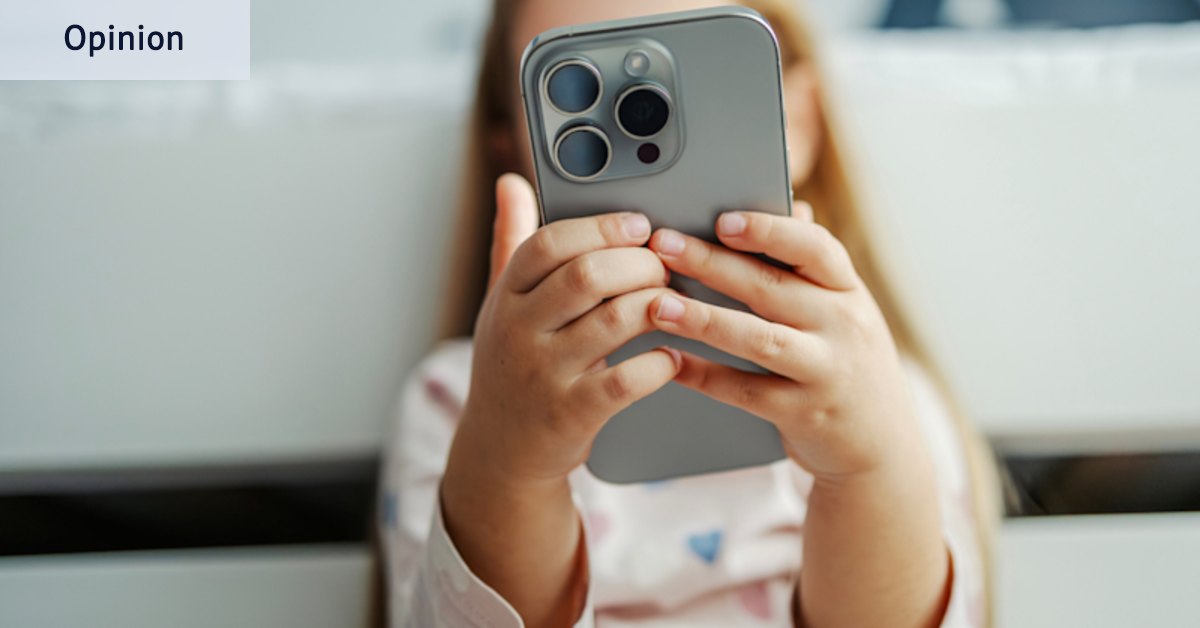
Screens are the devil, or so says a teacher I know who attributes rising behavioural problems in her classroom to the increased time kids are spending on screens at home.
The issue, she hypothesises, is that they are being babysat – from the time they are babies – by screens. It means they never learn to regulate their own emotions because any time they are bored, frustrated or distressed the parent distracts them with a device.
By the time they arrive in kindergarten, they have no self-regulation skills to cope IRL.
She’s not wrong.
The more children are on devices, the more likely they are to develop socioemotional problems, such as anxiety and depression, as well as aggression and hyperactivity. And the more they experience socioemotional problems, the more likely they are to use screens to self-soothe. It’s a nasty cycle.
These were the findings of a 2025 meta-analysis of data from more than 292,000 children worldwide.
Yet, new Bureau of Statistics data shows only one in four Australian children aged between five and 17 meet screen-time guidelines of less than two hours of sedentary recreational screen time a day (for kids aged between two and five, it should be less than one hour a day).
Separate research shows that three in four children younger than two use screens, despite the recommendation of no screen time.
If we’re being honest, the number of kids exceeding the guidelines is probably way more. That’s because there are parents, like me, who fudge their response, suspecting they’ll be judged for telling the truth.
The technical term for it is social desirability bias – the tendency to alter the “truth” on self-report forms to avoid negative judgment – and it’s very common.
So when the “getting to know your child” form came through to me from my children’s school, with a question about total screen time each day, I lied.
I answered, one hour when the truth at the time was more like 2½.
But here’s the thing: I used to feel guilty about it, and now I don’t.
This is why: guidelines can be blunt instruments, recommending the same thing across a population, regardless of individual behaviours or circumstances.
As parents, we’re often judged harshly by what we do (or don’t) do. Sometimes we just have to make our own judgment calls and “let it go”, as the saying went on the movie my daughters watched on repeat possibly before the age of two.
That is because context matters.
A key issue with screen use is that it tends to displace physical activity, regular and good-quality sleep, as well as face-to-face social interactions with parents and peers, where children learn how to interact and how to self-regulate.
Thirty per cent of two- to five-year-olds and 60 per cent of five- to 17-year-olds use screen-based devices in the hour before they go to bed, often leading to sleep issues and then drowsiness the next day.
My kids are highly active – they spend a lot of time with friends and with us, together as a family. We turn off screens 1½ hours before bedtime on school nights and don’t use screens to calm them down when they are distressed.
Sometimes they watch too much because they are cooked at the end of a long day. Sometimes it’s because they have two working parents who need to prepare meals, clean and eat food themselves.
They eat dinner in front of the telly more often than I’d like to admit.
But, just as often, they watch movies or play Nintendo with us. Longitudinal studies have found total screen time is associated with a lower quality of life, but watching TV and gaming with your parents led to a better quality of life.
That said, there have been recalibrations in our household as we try to find a balance that works. When we notice screens creeping into our lives too much, we dial it back.
And we largely banned the crack on YouTube, putting a parental pin lock on the platform and restricting time to a 15-minute burst while I do their hair in the morning or to shows where they learn something, such as ArtsHub. Because the content matters as much as the time spent on screens.
Violent content, brain-numbing content and heavy use of electronic games have a far more deleterious impact on socioemotional health than other types.
Online games do not stop when they log out, compelling kids to keep playing. Also, if they see their gaming avatar as an extension of themselves and use it to compensate for their perceived deficiencies (a lack of physical strength, beauty or social status, for example), it can become a significant risk to their socioemotional wellbeing.
So, yes, screens can be highly problematic. And yes, my kids sometimes have too much screen time. But context and content matters. So I’ve stopped bothering with guilt.
“Screen time is only one measure, and we seem to have become fixated on it,” says Associate Professor Joanne Orlando, a digital wellbeing expert.
A better measure to consider is what kids are doing when they’re using a screen, she says. That means choosing content that focuses on problem-solving, being creative or learning something new.
“These are fun but put a kid’s brain to work. I call it hard fun,” says Orlando, who recommends Sago Mini World for younger children and Procreate for older kids.
“The bottom line is if your child has lots of time not on a screen, plays with toys and sport, has a good imagination and good social skills, then that’s probably OK.”
Make the most of your health, relationships, fitness and nutrition with our Live Well newsletter. Get it in your inbox every Monday.
 Sarah Berry is a lifestyle and health writer at The Sydney Morning Herald and The Age.Connect via X or email.