

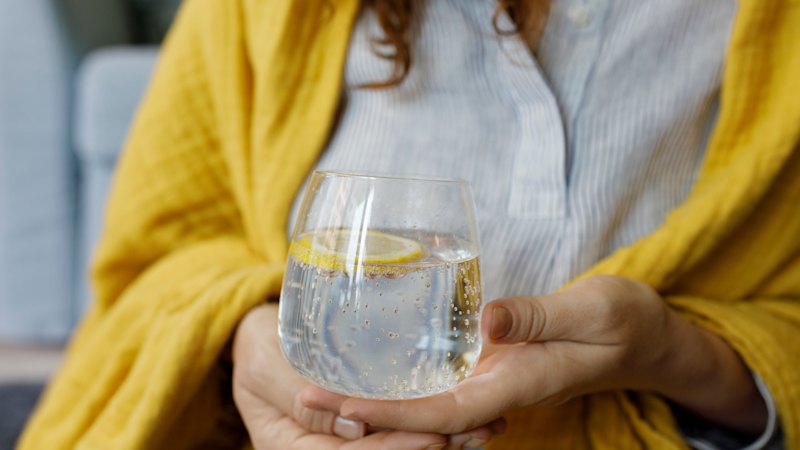
Still or sparkling? It’s not just a question asked at any good restaurant, it’s also something you might be wondering about when it comes to dental health.
Drinking sparkling or soda water is an overall healthier option than sipping a Coke, but does carbonation, even in water, have any negative impact on our enamel?
We asked experts to weigh in.
What’s the fuss with fizz?
Corbin Barry, dentist and founder of Sage Space, says drinking sparkling water in moderation is fine. “Plain sparkling water is generally not an issue. Its pH is around five to six, so it’s just at the verge of the erosion process.”
Sparkling water is mildly acidic due to the dissolution of carbon dioxide, altering the water’s neutral pH of seven.
“It is usually very weak in terms of the carbonic acid … so your saliva kicks in and can neutralise it pretty quickly.”
However, if the water has flavour additives, Barry says this can cause problems, particularly citric acid.
Chris Sanzaro, president of the Australian Dental Association, agrees and says to look out for citrus and sugar additives.
“Adding a slice of lemon, lime; squeezing their juice into the water or adding any flavours increases the risk of erosion significantly,” says Sanzaro. “Some flavours contain sugar, which can create decay. Nearly all flavours – sugar containing and sugar-free – contain some acid for flavouring, which can lead to increased tooth wear.”
Erosion is the softening of enamel, which is the first protective layer of your teeth. Without it, you are more prone to sensitivity, holes and chipping, says Barry.
“On a cosmetic level, erosion makes your teeth yellow,” he says. “The enamel, which is the area that is affected by erosion, is the white colouration, and then the next layer down, dentin, is yellow.”
Which drinks do the most damage?
If sparkling or soda waters are relatively non-offensive, what about other soft drinks?
According to Sanzaro, sugar-containing drinks are worst for our teeth. And their sugar-free counterparts are also quite acidic. The caffeine in energy drinks can reduce saliva flow, which is how our mouths neutralise their pH.
Because of this, Barry says people shouldn’t sip fizzy drinks over an extended period.
“Even an hour is probably too long,” he says, explaining that with every sip, our natural defensive line – saliva – becomes weaker.
How to minimise erosion
Barry says there are a few things you can do to minimise damage.
- Have your fizzy drink with a meal: “If you are eating, then you’re salivating”
- Use a straw, so the drink skips your teeth
- Swish your mouth with water afterwards
- Don’t brush within 30 minutes of drinking
For many people, completely cutting out a beloved drink, acidic or not, isn’t realistic.
“The biggest thing is continuing to live your life,” says Barry. “Try to make sure you’re sticking to more water and plain sparkling over anything with flavour and additives.”
Make the most of your health, relationships, fitness and nutrition with our Live Well newsletter. Get it in your inbox every Monday.
 Abby Seaman is a digital producer and lifestyle writer at The Sydney Morning HeraldConnect via email.