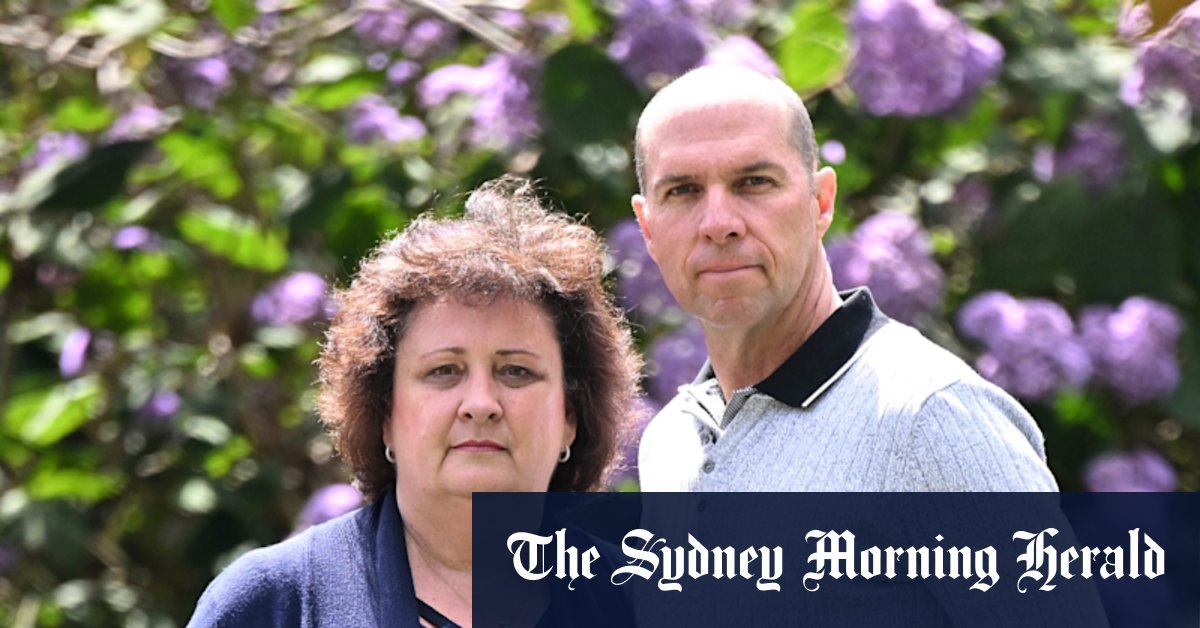
“By virtue of the fact the mentor connects with you, it gives the mentee hope,” Wayne says. “They are living proof you can live with your grief without it consuming you. Something one of my mentees said to meet at our first meeting has stayed with – ‘you get it, and you get me’.
“Feeling understood is a profound human experience.”
The not-for-profit foundation is funded through grants and donations, both commercial and private.
Haidee Murnane with her son Harper, who died in 2022 at the age of five.
For Haidee Murnane, being able to talk with someone who understood what she was going through was invaluable. Her son Harper died in 2022 when he was just five years old. He was diagnosed with Batten disease, also known as neuronal ceroid lipofuscinoses, a group neurodegenerative disorders which can first manifest as a loss of vision and then eventually lead to loss of motor skills and seizures and, eventually, death. He had been in and out of hospital for much of his short life.
When he passed, Haidee did not know where to turn.
“I had amazing family and friends but there was no one who I felt connected with, no one got what I was going through,” she says. “I got back in touch with The Royal Children’s Hospital palliative care service in Melbourne and told them how lost I felt and they were the ones who referred me to Ladybird [Care Foundation].”
Through the foundation, Haidee was matched with a mentor named Jess whose child had also died following a complex medical history. Haidee says nothing compares with being able to speak freely with someone who has also experienced such a loss.
“What was wonderful and sad was she understood the anticipatory grief of knowing your son would not have long life,” Haidee says. “She got it. It normalised my grief and my emotions. It made me feel I was not alone in the world.”
It takes a village to deal with grief
Haidee is about to start training to enter the peer support program so that she can help do the same for other parents. For family and friends, she says there are ways to help support a parent whose child has died in the months – and years – ahead.
Loading
“I really appreciated those people who checked in,” she says. “Losing a child, you learn very quickly some people cope by cutting contact because they are too afraid of saying the wrong thing.
“[I want to] still share his name and the stories of him because he is still my son. I want people to be able to ask those questions about how I am doing and being open to hearing the good, the bad and the ugly.”
Wayne agrees that one of the best ways to help parents who have lost a child is to keep talking about them.
“You do eventually reach a stage where you can confidently say the full number of children in your family when people ask – in our case two,” he says. “Even before they ask I will often follow it up with ‘one here and one in heaven’ with people I trust who will not back out of the conversation because it is uncomfortable.
“The mindset is that it will upset the family if you bring it up but people who have lost a child want to hear their child’s name spoken. You can do things like say: tell us a story about Emma?”
For Wayne and Maree, seeing the foundation help other families has also helped them deal with losing their daughter.
“It is a legacy for Emma and it is all about unconditional love,” he says. “She lived with profound disability and she suffered so much in her life, but she loved so completely and it sets the tone. Every time I make a mentoring call, it is something we do in partnership, Emma and I.”
Make the most of your health, relationships, fitness and nutrition with our Live Well newsletter. Get it in your inbox every Monday.