You have reached your maximum number of saved items.
Remove items from your saved list to add more.
I am six months away from getting a senior’s card, and I’m not unhappy about it. While promotions for hearing aids and make-up tips for the mature woman are unavoidable, I can choose to ignore the internalised ageism that risks taking up residence in my midlife psyche, perpetuating negative stereotypes.
Internalised ageism is when we believe we are the old dogs that can’t be taught new tricks. A Spanish study published last year cites psychological flexibility as a key factor to unshackling yourself from the mentally rigid tripwires of ageing. It is our inflexibility that could be our downfall as we struggle to embrace new ideas and double down on our old, rusted-on notions. The message is clear – don’t become stuck in your ways.
Yet as I proclaim I will not succumb to ageism, especially the internal type, my cognitive dissonance is standing next to me with her arms crossed and looking very judgmental. You see, I could be accused of being externally ageist myself.
This started as a young adult, when my image of a doctor was that of a man older than my father. Discussing intimate medical issues with a male doctor was terrifying enough, so a receding hairline and photos of grandchildren on his desk seemed, weirdly, to be important.
This equally applied to the dentist, solicitor, my bosses, the car mechanic, and whomever I voted for at an election. I was programmed to think the older, the wiser, but then came a tipping point: a time when my idea of capability was no longer based on age or years of experience, but on whether that individual was current and forward-thinking.
An example presented itself in my early 40s. Hubby and I were at a dinner party where one of the guests was a cardiologist. My husband mentioned he’d read an article on watches being developed that would one day check your blood oxygen saturation, perform an ECG, and detect a heart attack. The cardiologist, only a few years my senior, shut down the discussion with a swift and dismissive statement – poppycock!
Her response was abrupt and demonstrated a rigidity that was surprising in someone only halfway through her career. We were already strapping heart rate monitors around our chest and going for a run. On our drive home that night we swore that should the need arise to see a cardiologist, we would not be making an appointment with someone who expressed themselves like a character from Peter Pan.
Recognising and trusting the capabilities of those younger than me was an important factor in deducing that older with more experience does not necessarily equate to the best person for the job. My own kids have proved that to me time and time again. Who among you hasn’t had someone half your age get you out of a pickle with your smartphone?
So, after decades of visiting a GP many years my senior, who would stare blankly at me as I bombarded him with questions about my changing body, I decided to find a new GP – one who was trained this century and wore a smartwatch. I’m happy to report I found her, and she is the perfect balance, being a knowledgeable practitioner who will express her certainty yet shows openness for emerging medical advancements.
Rigidity is also a theme rife in some politicians, spinning their blustering denials like they are allergic to facts. Any wonder I applauded when Senator Charlotte Walker from South Australia was elected to public office on her 21st birthday? Walker is representing not only her state but her generation – the ones who get to inherit the fire that singer Billy Joel absolved the rest of us from starting.
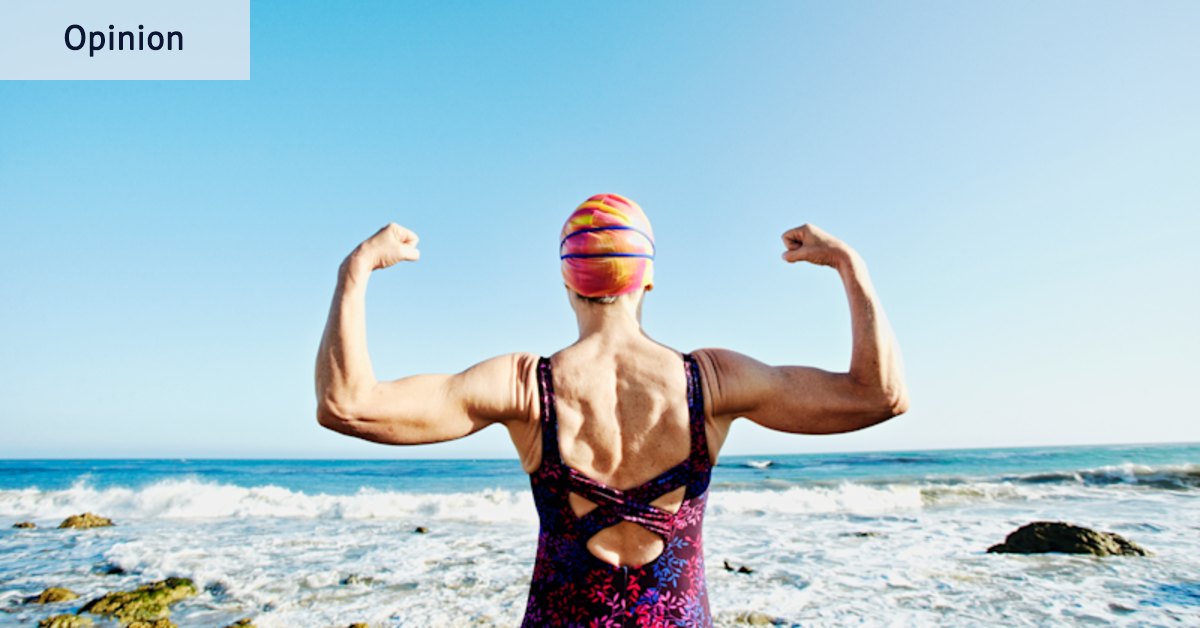
Getting older does not have to be the downward spiral I’ve been sold. Sure, some joints are aching, and I really miss oestrogen, but I’m not nearly done with growing up just because I’ll soon be able to ride a bus for free.
Yes, it is true, I traded my old doctor for a new one. On the surface, this does reek of ageism. But had my older GP not lost his curiosity, and embraced mine, I’d have stayed. As I was moving on anyway, choosing someone I’m unlikely to outlive made sense to future-proof my needs.
It is with this evidence I plead not guilty, your honour, as what might be considered ageism is just me seeking to engage with professionals who are psychologically flexible, and avoid those who have laminated their opinions. Especially when they may not be around long enough to see the consequences.
Jo Pybus is a freelance writer.
Get a weekly wrap of views that will challenge, champion and inform your own. Sign up for our Opinion newsletter.
You have reached your maximum number of saved items.
Remove items from your saved list to add more.