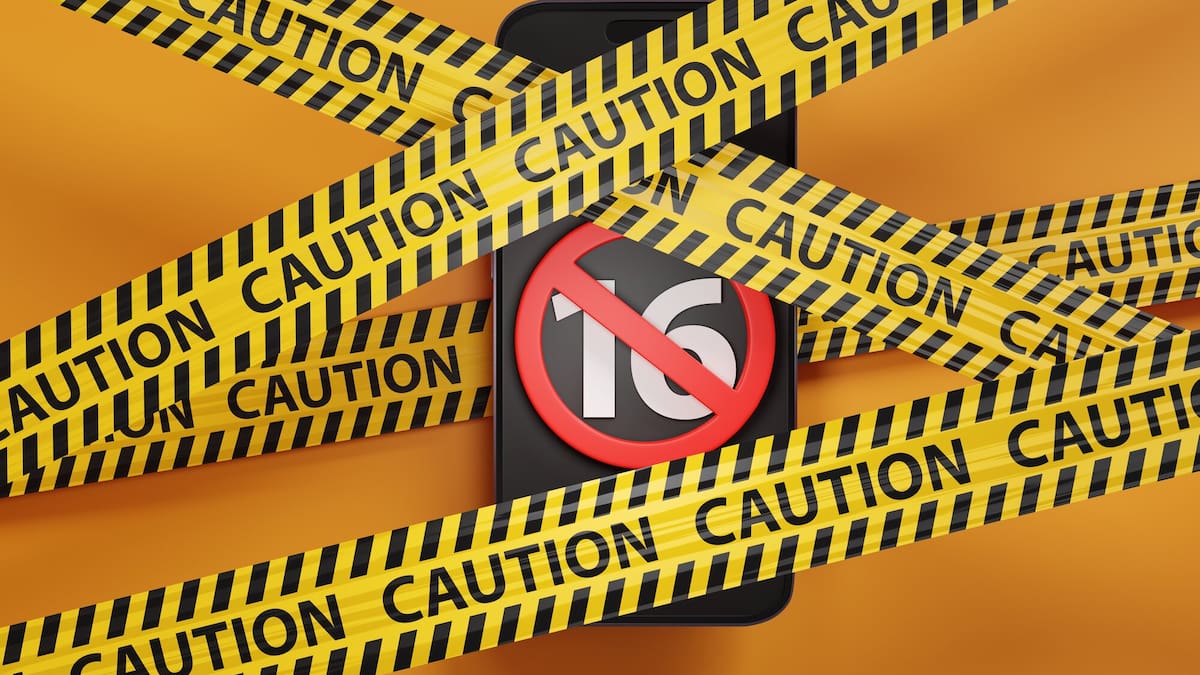
On April 20, the DIA listed an ad for “an experienced Programme Implementation Director” for “the establishment of the Phase One operational service model for the under‑16 social media restrictions”.
A quickfire process saw applications for the role – with a salary range of $163,000 to $182,000 and “four to six direct reports” – set to close on May 1.
The ad was pulled yesterday after drawing fire from the FSU – after retired District Court Judge David Harvey alerted the lobby group to its presence – and was replaced by a version describing the roles as “leading the development of policy and regulatory options” for a “potential new regime”.
Unlike the initial ad, there was no link to a detailed job description for a six-month fixed-term role for “a high‑profile, time‑critical programme that will inform how Aotearoa New Zealand protects children and young people online”.
On the Government side, none of the players was up for commenting in any detail.
The minister responsible for Internal Affairs, Act MP Brooke van Velden (whose party has opposed a U16 ban), referred questions to Education Minister Eric Stanford.
Stanford said, “Work is underway and we will have more to say soon. Questions around the Department of Internal Affairs’ recruiting should be directed to that agency.”
The DIA said, “The listing was removed briefly to adjust wording in the job description that was not accurate.”
Luxon: Legislation will be introduced before election
Prime Minister Christopher Luxon told media last week that the legislation would be introduced before the November election.
“We’re making really good progress. The legislation’s actually being drafted right now. As I’ve said before, we will introduce legislation before the election.
“On that, we’re following very much the Australian model. What’s called our PCO [Parliamentary Counsel Office] teams in Wellington are drafting that legislation.”
Asked, “So it won’t be passed before the election?”, the Prime Minister responded, “Our commitment was to introduce the bill into Parliament before the election, and that’s what we’ll be doing.”
Cyber legislation has been derailed by an election before. Labour introduced a bill for a digital services tax – a flat 5% tax on Big Tech firms’ New Zealand revenue – shortly before the 2023 election.
The bill did not have time to pass and was jettisoned by the incoming National-led Government.
A post-election process would leave a tight timeframe for a July 2027 implementation of an under-16 ban, even if the legislation was at the front of the queue.
Australia’s under-16 ban was passed in December 2024 and implemented in December 2025.

Australia: 7 out of 10 under-16s still on social media
Luxon said earlier that, by holding off, New Zealand could learn from Australia’s experience with its world-first legislation.
Australia’s regulator responsible for implementing its ban, eSafety Commissioner Julie Inman Grant, said in her first compliance report, issued in March, three months into the ban, that “a substantial proportion of Australian children under the age of 16 continue to retain accounts, create new accounts, or pass platforms’ age assurance systems”.
Her report continued, “Of the parents who reported their child had an account on each platform prior to 10 December 2025, around seven in 10 reported that their child still had an account on Facebook (63.6%), Instagram (69.1%), Snapchat (69.4%) and TikTok (69.3%). Around three in 10 reported that their child no longer had an account.”
Under-16s can use VPN (virtual private network software, masking their country of origin) to skirt the ban. A parent can also set up an account that an under-16 subsequently uses.
Enforcement hangs in the balance
There is no penalty for a parent or child who attempts to thwart the under-16 ban.
Social media platforms covered by the ban, however, face fines of up to A$49.5m ($59m) if they fail to take “reasonable steps” to determine a user’s age.
What constitutes “reasonable steps” is likely to have to be tested by a court case.
Inman Grant’s report said eSafety had now moved from a monitoring and compliance stance to investigations into five platforms: Facebook, Instagram, Snapchat, TikTok and YouTube.
“eSafety aims to make a decision about any enforcement action by the middle of 2026.”
Inman Grant will then learn whether the social media platforms are willing to roll over, or whether they will knuckle down for an extended legal fight.
“I don’t know why the Australian regime has been declared the gold standard,” the FSU’s Heather said.
“I don’t at all want to minimise the concerns of online harm and social media on teenagers. The problems are very real.”
But her organisation sees the Australian reforms as impractical, and a danger that adult free speech will suffer.
She said New Zealand already had a range of laws that could be applied to social media platforms if the Government wanted to bring Big Tech to heel.
Chris Keall is an Auckland-based member of the Herald’s business team. He joined the Herald in 2018 and is the technology editor and a senior business writer.