

“It’s best thought of as an occasional, rather than an everyday, spread because it is high in saturated fat.”
The key distinction is the type of fat.
Butter and spreadable butter typically contain more than 50g of saturated fat per 100g. Most vegetable-oil-based spreads come in at 10-18g per 100g – a meaningful difference when you’re spreading it on toast every morning.
Monro puts it plainly: “Evidence reviewed by the Heart Foundation shows that when plant-based oils replace butter in the diet, LDL cholesterol is reduced.
“This is one of the reasons replacing saturated fats with unsaturated fats remains a key recommendation for reducing heart disease risk.”
The ‘natural’ argument doesn’t hold up
One of the main drivers behind butter’s comeback has been the idea that it’s more natural than margarine. Registered dietitian Julia Sekula, a spokesperson for Dietitians NZ, acknowledges the appeal – but pushes back on the logic.
“Natural doesn’t automatically mean healthier. When it comes to spreads, the key nutrition difference is the type of fat they contain.
“Small amounts of butter can absolutely fit within a balanced diet, but if you’re using a spread every day on toast or sandwiches, choosing one lower in saturated fat is the better option.”
What you’ll find on NZ supermarket shelves
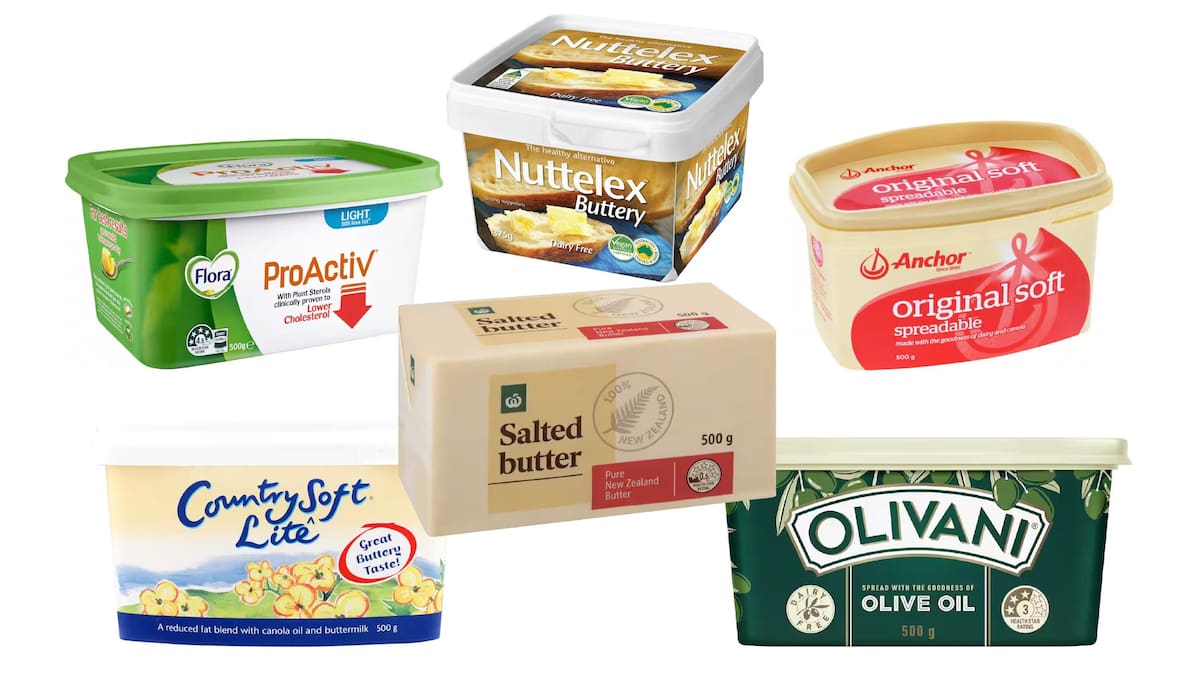
The spread fridge has become more complex. Alongside traditional butter and margarine, you’ll now find olive-oil spreads, dairy-free options, cholesterol-lowering spreads with added plant sterols, and products marketed as ‘buttery’ that aren’t butter at all.
“One thing that can be confusing is that some products labelled ‘buttery’ are not actually butter blends,” says Sekula. “Many of these are vegetable-oil spreads that contain small amounts of milk solids or buttermilk to give a creamier flavour, but they are still primarily oil-based spreads.”
On olive-oil spreads specifically – a category that tends to attract a health halo – they can be similar in nutritional profile to a canola or sunflower oil-based spread, but with a different flavour profile. But take note, the name on the front of the pack can sometimes give the impression that olive oil is the main ingredient, when it may only be part of the oil mix.
How to read the label
The most useful number on any spread is the saturated fat per 100g, found in the nutrition information panel. Sekula’s advice: compare products using the 100g column, and look for a lower saturated fat and sodium level.
Check the ingredients list too — ingredients are ordered by quantity, so the main oils will appear near the top. If canola, sunflower or olive oil leads the list, you’re looking at an unsaturated-fat-dominant product.
The NZ spread fridge, ranked
Using saturated fat per 100g as the primary measure, here’s how common NZ products stack up:
Better everyday choices
Less than 15g saturated fat per 100g
- Flora ProActiv Light – 8.6g
- Meadowlea Lite – 10.9g
- Flora Light – 11.8g
- Country Soft Lite – 12.5g
- Olivani Cholesterol Lowering – 13.2g
- Olivani Avocado – 13.4g
- Flora ProActiv / Flora ProActiv Buttery – 13.4g
- Olivani Lite – 14.5g
- Meadowlea Buttery / Meadowlea Original – 14.9g
Moderate choices
15–20g saturated fat per 100g

- Flora Original – 15.8g
- Flora Buttery – 15.9g
- Country Soft Spread – 16.8g
- Nuttelex Buttery – 16.9g
- Olivani – 17.6g
- Nuttelex with Olive Oil – 17.8g
Use occasionally

- Anchor Original Soft Spread Light Dairy Blend – 22.7g
- Anchor Original Soft – 26.7g
- Tararua Super Soft Spread – 70g (significantly higher than most other products in this category)
Are spreads an ‘ultra-processed’ food?
Spreads are often grouped into the ultra-processed category, however, that label on its own doesn’t tell the full story, says Sekula. Many everyday foods in our diets, are processed to some degree and that processing can play a useful role.
In the case of spreads, Monro says; “Replacing foods high in saturated fat with unsaturated fat alternatives is a key recommendation for supporting heart health”.
Which means, the fact that spreads are typically designed to be lower in saturated fat than butter, while still delivering the same functionality, can be a positive aspect of using them.
And for those who prefer less processed foods, natural choices like avocado, or simply using no spread, are always an option. But there isn’t strong evidence to suggest spreads need to be avoided altogether, particularly when they are helping to reduce saturated fat intake in everyday eating.
How to fit spreads into your life
“If you use a spread most days, choose one that is lower in saturated fat,” says Sekula. “Butter can still be enjoyed occasionally, but it’s better thought of as an occasional option rather than the everyday default.”
Monro adds that heart health ultimately comes down to the whole picture.
“It doesn’t come down to one specific food. What matters most is the overall dietary pattern, including healthy fats from foods like nuts, seeds, avocado and oily fish, alongside plenty of plant foods.”
If you want a simple rule of thumb, flip the pack over, find the saturated fat per 100g, and aim for less than 15g for everyday use. The front of the pack is marketing. The nutrition panel is information.
Herald contributor Nikki Birrell has worked in food and travel publishing for nearly 20 years.


