On the morning of July 16, when Argentina took on England at the World Cup, Nathan Lewin and his group chat of mates gathered at his place at 4.45am for breakfast with a side of soccer.
Three years earlier, life looked very different. Lewin’s marriage had ended, and he found being home quiet and isolating.
“I had a household with my wife at the time and two kids. That all changed when we separated … the house was hard to come back to, especially being by myself,” Lewin says. “It’s tough because without reaching out yourself, you do feel very alone.”
The 42-year-old found himself lonely and socially isolated. But Lewin isn’t alone – a rising number of Australians, particularly midlifers, are also feeling disconnected.
A 2026 report from Ending Loneliness Together, released ahead of Loneliness Awareness Week, found that one in two people living in Australia reported some form of social disconnection.
Michelle Lim, chief executive and scientific chair of Ending Loneliness Together, explains the two ways the report measures social disconnection: loneliness, a subjective feeling when relationships do not meet your needs, and social isolation, measured by the number of people you speak to.
“Those two variables make up what we call social disconnection,” says Lim. “We know from years of research that loneliness is bad for health and wellbeing, and social isolation is bad for health and wellbeing. But when you have both, it’s not good.”
The breakdown by generation revealed that young people aged 18 to 25 are the loneliest, but least socially isolated. However, Australians aged 45 to 54 are the most likely to experience both loneliness and social isolation.
Lim, who is in this midlife age group, theorises that being sandwiched between caregiving responsibilities might cause social disconnection.
“So you are caring for children. But you’re also taking care of older people.
“After reflecting on it, I thought, how much time do you really have to invest in the relationship that you really want to invest in? Some people might also be going through divorce and marriage breakdown. So there are various things that might add to it,” Lim says.
During his marriage breakdown, Lewin found reaching out to friends a struggle.
“I did have my friends. I still had my core friendship groups, but when you’re in my age group, most of your friends have paired up and have their own family. So I think I felt like a bit of a burden,” says Lewin.
“I’ve had to learn to change my mindset. I’ve learnt that if people are willing to give you their time, then they value you, and it’s not a burden for them.”
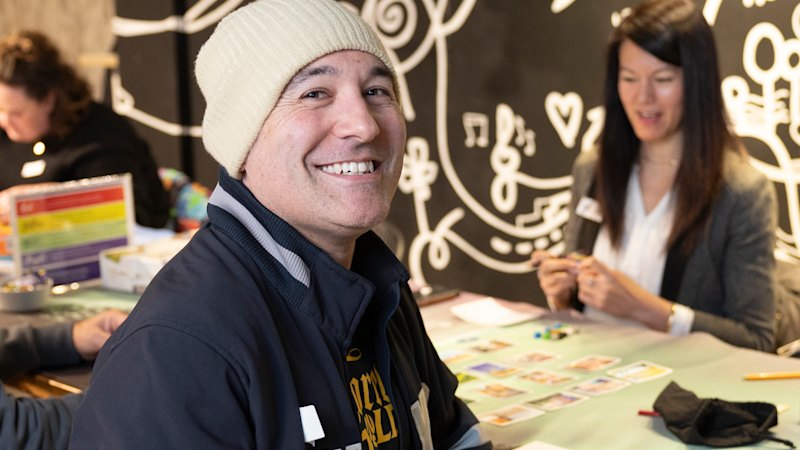
Lewin faced his loneliness head-on by hosting a free social board game night for adults at the Little Big House community centre in Summer Hill, in Sydney’s inner west.
“I wanted to build my connection and give back to the community. And yes, I might have been a little bit selfish initially in my needs, but I’m pretty proud of what it’s blown out to be now,” he says.
The report supports Lewin’s idea, finding that regularly attending community events reduces the risk of social disconnection by 89 per cent.
And Lewin has become somewhat of a local celebrity. If he goes to the local cafe, nine times out of 10, he will be stopped by someone he knows.
“It’s guaranteed I’m going to have someone there that I can chat with, which is a really lovely feeling to have, and it makes that home isolation a little less daunting,” Lewin says.
Marlee Bower, a senior research fellow at the Matilda Centre for Research in Mental Health and Substance Use at the University of Sydney, says community is important for a range of reasons. “Communities are especially important during major life events, periods of illness, financial hardship, bereavement and disasters, when people cannot always cope alone.”
According to Bower, midlife can brew up a “perfect storm” for social disconnection.
“People may be balancing demanding work, financial stress and the dual roles of raising children and caring for ageing parents … This can leave little time or energy to make or maintain friendships. It can also be a period of relationship breakdown, bereavement, worsening health or children leaving home.”
Her research into the impact of social determinants has shown that broader factors affect social health.
“Unaffordable or insecure housing, poverty, long or unpredictable working hours, limited transport and neighbourhoods without walkable, welcoming or affordable places to meet. The rising cost of living means that even going out for a cup of coffee is unaffordable for many Australians,” says Bower.
“This is why we should be careful not to treat loneliness simply as an individual failure to socialise. It is often the systems and environments around people that prevent them from socialising in the first place.”
Persistent loneliness and social isolation have been shown to lead to worse mental and physical health, including a greater risk of depression, anxiety, trouble with sleeping, immune deficiency and cardiovascular disease. It can also make recovery more difficult when health issues arise, Bower explains.
Lim says the World Health Organisation has made loneliness a public-health priority, yet funding in Australia is minimal.
“We don’t have significant investment. This is an intersectoral area. It affects your health, your social services, your housing, education. There’s just been no strategy whatsoever to really make a difference … I think the solution is much more macro,” Lim says.
Bower agrees that on a macro level, governments can reduce the conditions that create loneliness and invest in social infrastructure.
At a community level, she argues for more accessible places for relationships to develop through regular shared activities.
“Healthy relationships require time, trust and sometimes the ability to navigate rocky times, conflict and repair,” Bower says.
“The goal is not simply more social contact, but meaningful, safe and supportive relationships and communities in which people feel they belong.”
Make the most of your health, relationships, fitness and nutrition with our Live Well newsletter. Get it in your inbox every Monday.
 Abby Seaman is a digital producer and lifestyle writer at The Sydney Morning Herald.Connect via email.