Until last decade, dementia was regarded as a grim lottery. If you made it into your twilight years, you’d wait and see if it came for you. If you carried a gene linked to Alzheimer’s, it was your destiny. Medical science could offer no treatment and there was nothing you could do as an individual to lower your risk.
This fatalism wasn’t borne of ignorance. The world-leading National Institutes of Research laid out this dispiriting position at its Preventing Alzheimer’s Disease and Cognitive Decline conference in 2010.
“There is currently no evidence considered to be of even moderate scientific quality supporting the association of any modifiable factor … with reduced risk of Alzheimer’s disease,” it said.
Today, it’s a very different story. We’re no longer considered powerless hostages to neurodegeneration as we age: at least 45 per cent of dementia risk can be attributed to modifiable factors, according to latest World Health Organisation (WHO) guidelines.
In Australia, that figure rises to 50 per cent based on our health data, according to Professor Kaarin Anstey, the only Australian on the World Health Organisation’s dementia guidelines panel. “I think it will increase because there are some risk factors that researchers are aware of that are not there yet,” she said. “The list will get longer.”
Senior Australian of the Year Professor Henry Brodaty, of the University of NSW’s Centre for Healthy Ageing, has helped drive enormous change in dementia awareness, from “half a page in textbooks” in the 1970s to the world’s largest dementia research conference, attended by more than 10,000 this year.
“If you think there’s nothing you can do to prevent dementia, think again – because there’s plenty you can do,” he said.
Many of the preventative measures are good advice for general health: eat well, don’t smoke, cut back on alcohol, and exercise regularly. Some, like menopause hormone therapy, are more complex. But others are less obvious and carry even more weight.
Hearing loss and high cholesterol are the two biggest known modifiable factors in dementia, according to the Lancet Commission, each representing a potential 7 per cent drop in risk if addressed.
“Hearing loss contributes to a cascading effect of decreased social engagement, mental wellbeing and physical activity, which can increase the risk of cognitive decline and dementia,” said the WHO guidelines.
When left untreated, it’s thought hearing loss may expose people to higher cognitive load and potential brain shrinkage. It’s a similar story for those with untreated vision loss, a newly recognised risk factor for dementia.
Cholesterol’s role in health has been subject to heated debate. But having high levels of low-density lipoprotein (LDL) cholesterol in your blood puts you at risk of vascular damage and an increase in amyloid and tau proteins in the brain. Likewise, high blood pressure, stroke, diabetes and obesity can cause inflammation and cell damage, bumping up susceptibility to dementia.
The good news is all these conditions are treatable, with solutions ranging from lifestyle changes and medication to glasses and hearing aids.
Associate Professor Dr Marita Long, a GP and honorary medical advisor at Dementia Australia, believes a dementia risk assessment should be incorporated into general practice for Australians at middle age.
“When patients come into my consulting room, they might ask for a skin check and wouldn’t be surprised to get their blood pressure or heart checked, but they wouldn’t really know about brain health,” said Long. “I’m not trying to drive fear about dementia, but if you talk to your doctor, there are a lot of things you can be doing.”
That includes considering medication for high and borderline high cholesterol and blood pressure in midlife, even if it’s not subsidised. “It’s about having shared decision-making with patients,” Long adds.
At Neuroscience Research Australia (NeuRA), Anstey and her team developed a free and clinically validated 10-minute online risk assessment called CogDRisk, which gives users a dementia risk score based on their medical history, lifestyle, diet and sleep.
“I would like to see it much more widely used and ideally integrated into GP software,” she said. Midlife is the prime time to make changes, as this is when two-thirds of the risk factors for dementia come into focus.
Your brain is not insulated from the rest of your body when it comes to dementia risk, nor the world around you. And what you put into your body matters.
A healthy and balanced diet is protective, as it may reduce inflammation and support brain function, as well as lowering the risk of chronic diseases.
According to the WHO, the strongest evidence points to Mediterranean and Dietary Approaches to Stop Hypertension (DASH) diets or the hybrid Mediterranean-DASH Intervention for Neurodegenerative Delay (MIND) diet. That means plenty of fruit and vegetables, nuts and legumes, whole grains, and some fish, with limited consumption of red meat, saturated fat and sugary foods.

This is the style of diet followed by all the experts the Herald spoke to for this feature. Anstey, who follows the MIND diet, which includes cooking with olive oil and having berries a few times a week, is also concerned about what we shouldn’t be eating.
“The impact of ultra-processed food on our health and brain health concerns me,” she said. “I understand that people are so busy and don’t have time to cook, but we would see an improvement in health if we could reduce reliance on unhealthy fast foods.”
There’s reason for concern: older people who ate the highest amount of ultra-processed foods, such as processed meats, soft drinks and snack foods, had a 58 per cent higher risk of dementia than those who ate the least in a large Harvard University study published in June.
Popping pills is not a shortcut: the WHO guidelines strongly recommend against taking supplements of vitamin B and E, omega-3 polyunsaturated fatty acids and multivitamins or minerals to reduce dementia risk.
Smoking is a red flag because it causes vascular damage, oxidative stress and inflammation. There’s no safe level: quitting is the only recommendation to cut your risk. Australia has low rates of smoking, but vaping is a new frontier on which more research is needed.

Brodaty quit smoking after his father died of a heart attack with early onset Alzheimer’s at the age of 59 in 1979. In a lifestyle overhaul aimed at avoiding heart disease, Brodaty also became vegetarian, started exercising and became more mentally and socially active. Though he didn’t know it at the time, these changes would help lower his elevated risk of early onset Alzheimer’s.
“I’m now 79,” he said. “I’m higher risk, there’s no doubt about it. But I had a brain scan after a fall recently and was glad to see it looked clear.”
For years, it was believed light or moderate drinking could have a protective effect against dementia: a welcome consolation prize for many. However, this theory has been debunked, with data skewed by flawed study methods. Heavy drinking is linked to dementia, likely through inflammation, oxidative stress and a reduction of white matter in the brain. Cutting down to low levels is the minimum recommendation.
“We don’t really know if there are safe levels of drinking,” said Long. “Looking at alcohol consumption is important.”
Conversely, evidence in favour of taking regular exercise to prevent dementia has grown, with the WHO ranking it a “strong recommendation” to prevent cognitive decline. That includes aerobic activity for 150 to 300 minutes a week and resistance or strength training twice a week. Suggested reasons for this benefit include improved neuroplasticity, anti-inflammatory effects and cardiovascular benefits.
Physical activity is also a gateway to improving other risk factors, according to Anstey, and can be as simple as walking or joining a group.
“If people are getting the chance to be physically active, they usually feel better and sleep better,” she said. “Physical activity helps our mood and can also be social so it has many benefits.”
It’s important to note some people will invariably develop dementia despite taking every precaution and living healthily.
That was the case for former psychiatric nurse Robb Ritchens, 67, from Williamstown in Melbourne, who was diagnosed with Lewy body dementia two years ago. In this form of the disease, proteins called Lewy bodies build up in nerve cells and interfere with brain function. The plaques and tangles commonly associated with Alzheimer’s may also be present.
When Robb began experiencing visual hallucinations – a common symptom of this type of dementia – he suspected it was a mental health issue like those he’d witnessed in patients while managing programs at work.
“Initially, the diagnosis came as a bit of a shock,” he said. “I had never heard of it and I didn’t know what to do.”

He threw himself into research, poring over studies, reading books and attending seminars. Robb and his wife Donna, who are vegan and have always kept healthy and active, focused on ways to manage his symptoms and live well with the condition, such as avoiding stress and staying connected with friends and family.
“Being social is important,” said Robb. “It’s almost therapy. I try to catch up with people regularly. I love going to live music with friends. It’s about trying to have meaningful relationships with people, having fun and trying to create memories. I don’t give up.”
Listening to music has been linked to reduced agitation, depression and anxiety in people living with dementia.
Sleep has been identified as important in reducing the risk of dementia, with deep sleep likened to a garbage truck or dishwasher because it may have a role in eliminating metabolic waster from your brain.
But sleep problems are common among people living with dementia. Robb takes sleeping tablets because his hallucinations become especially active at night, which was leaving him exhausted during the day. He also sketches the characters who appear in his hallucinations and writes about his experiences in his journal.
“He uses a lot of humour and wit,” said Donna. “He loves being around his children and grandchildren. He’s got to keep doing the things he loves.”
As a Dementia Australia advocate, Robb also provides support to others and talks about his lived experience to improve awareness and understanding.
“Now I’m very well versed, and I can tell people it’s nothing to be scared about,” he said. “I don’t want to lose myself. I want to be remembered for who I am, not defined by my illness.”
Preventative healthy lifestyle measures don’t become obsolete at diagnosis, according to Brodaty. “I still hear stories where people go to the doctor and are told they should get their affairs in order as there’s nothing that can be done,” he said. “We now think there should be talk about re-enablement, about how to live positively, how people can live well for many years.”
Built around a pedestrian-friendly village centre with a dedicated parking scheme for seniors, the lower north shore region of Lane Cove has one of the lowest age-standardised rates of dementia in Sydney, according to Census data.
Its council was the first in NSW to join WHO’s Global Network of Age-Friendly Cities and Communities in 2014. It offers residents a wide assortment of activities, ranging from choirs, music groups and dance to crafts, aquarobics and gardening.
Social and cognitive activities like these, along with challenges like puzzles or learning a new language, are believed to protect against dementia, as they can help build cognitive reserve and resilience in the brain. They also reduce depression, another significant risk factor for dementia.
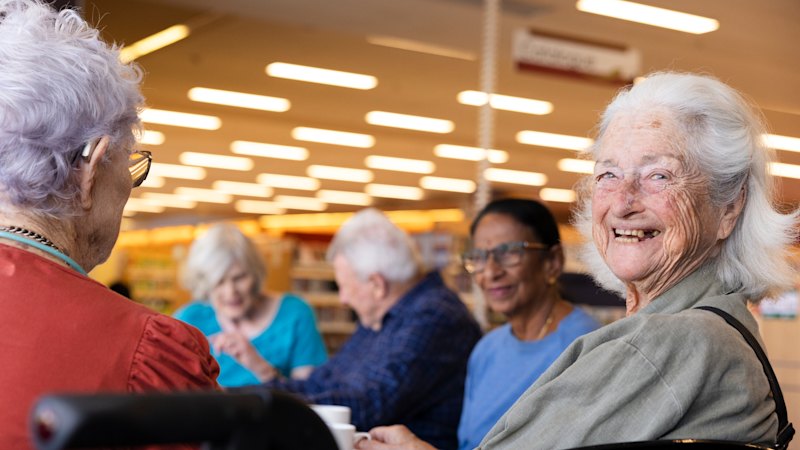
At the weekly Chatty Chairs program at Lane Cove Library, a group of seniors gather for conversation over tea and biscuits.

Jean Joss, 90, a former biology professor, says she has been a regular since it began. “It’s really interesting what people know and say,” she said. “I love it here, especially the library and watching the people around me.”
Uniting Aged Care wellness officer Mona Akello brings aged care residents, including some with dementia, to the program each week. “It’s a highlight – they look forward to it,” she said. “It gives them a sense of being in the community. It’s the feeling, the joy, the vibe.”
Cognitive reserve can give people the ability to continue functioning well despite negative changes in the brain.
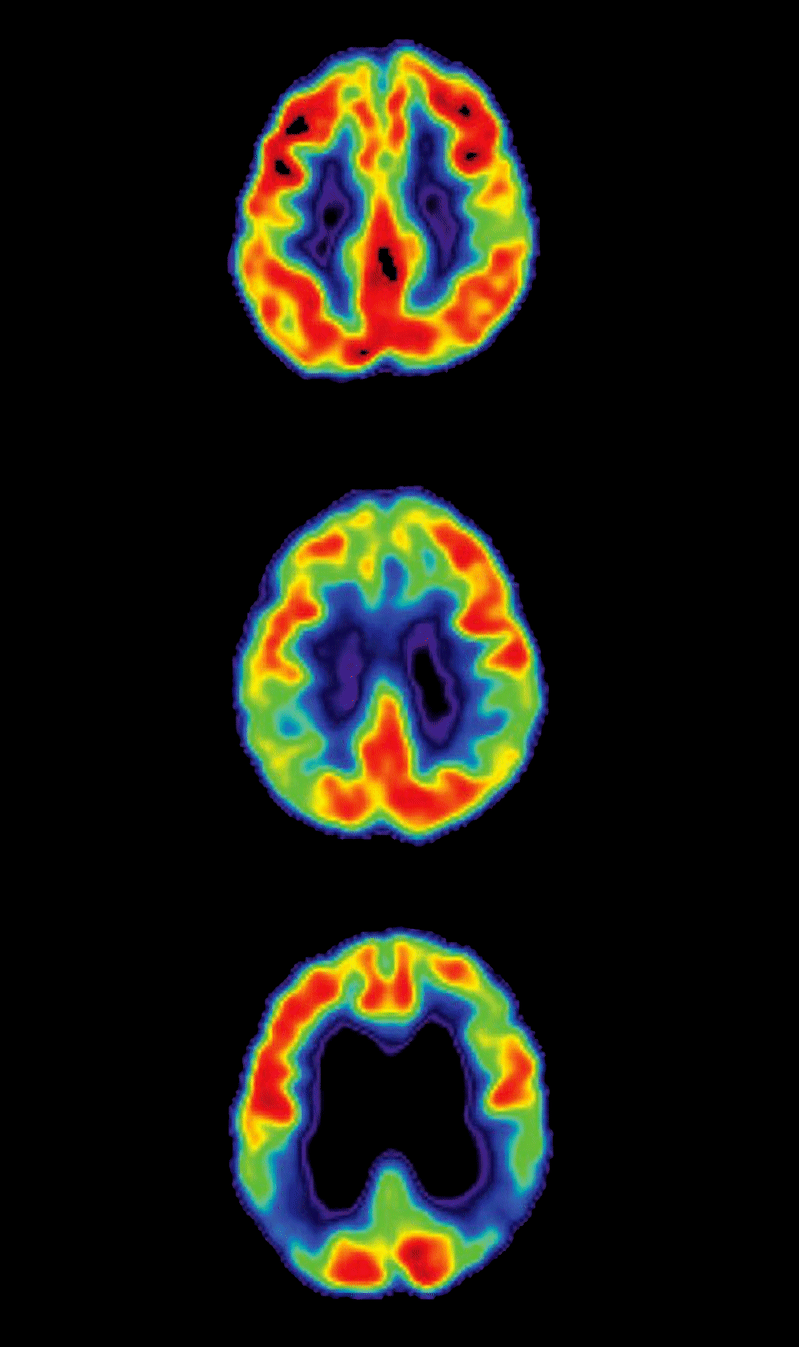
“No one after the age of 80 has a brain that’s completely free of pathology,” said Brodaty. “About half of people post-mortem have enough pathology for diagnosis, but they are cognitively functional.”
A well-documented case is Sister Mary, a nun who achieved remarkably high cognitive test scores up to her death at the age of 102 in the Nun Study, which monitored the brain health of hundreds of North American nuns over 30 years. A post-mortem autopsy revealed her brain was riddled with the telltale tangles, plaques and lesions of Alzheimer’s disease.
While dementia becoming Australia’s leading cause of death made headlines in 2024, it’s been No.1 for women for a decade. That cannot be explained by women’s higher life expectancy alone.
That’s led to a focus on biological differences, including the potential role of female hormones and menopause on women’s risk of developing dementia.
A hotly contested debate is simmering over whether menopause hormone therapy (MHT) could reduce the risk of dementia.
Anstey says inequality in dementia prevalence has been a neglected area, with a lot of research failing to divide risk by sex or gender.
“Experiencing early menopause is associated with an increased risk of late-life dementia in observational studies,” she said. “The reproductive period – the time between menarche and menopause – seems to be associated with cognitive outcomes in later life – that is longer exposure to endogenous [naturally produced] estrogen seems protective.”
However, research findings are mixed, from those concluding MHT can increase risk to others indicating there may be a window of opportunity to benefit for women who take it early enough.
The new WHO guidelines illustrate the dichotomy: MHT is not recommended for reducing the risk of cognitive decline or dementia in post-menopausal women aged 65 and over. But when it comes to women aged under 65, it’s much less certain: there is “insufficient evidence to advise for or against the use of [MHT].”
“There’s a lot of interest in women’s reproductive health so in the next couple of years I hope to see much clearer findings about women’s reproductive health and how it affects the brain,” said Anstey. “Once we understand that we will be able to intervene much better.”
New breakthroughs in drug treatment and testing for dementia have created hope for a cure on the horizon. But it’s too early for complacency.
Long points out newly approved monoclonal antibodies are only suitable for a relatively small proportion of people with Alzheimer’s disease.
“I do get worried that people think this is going to be a magic cure, which it isn’t,” she said. “Prevention is better than cure. But when there’s no cure, prevention is everything.”
Start the day with a summary of the day’s most important and interesting stories, analysis and insights. Sign up for our Morning Edition newsletter.