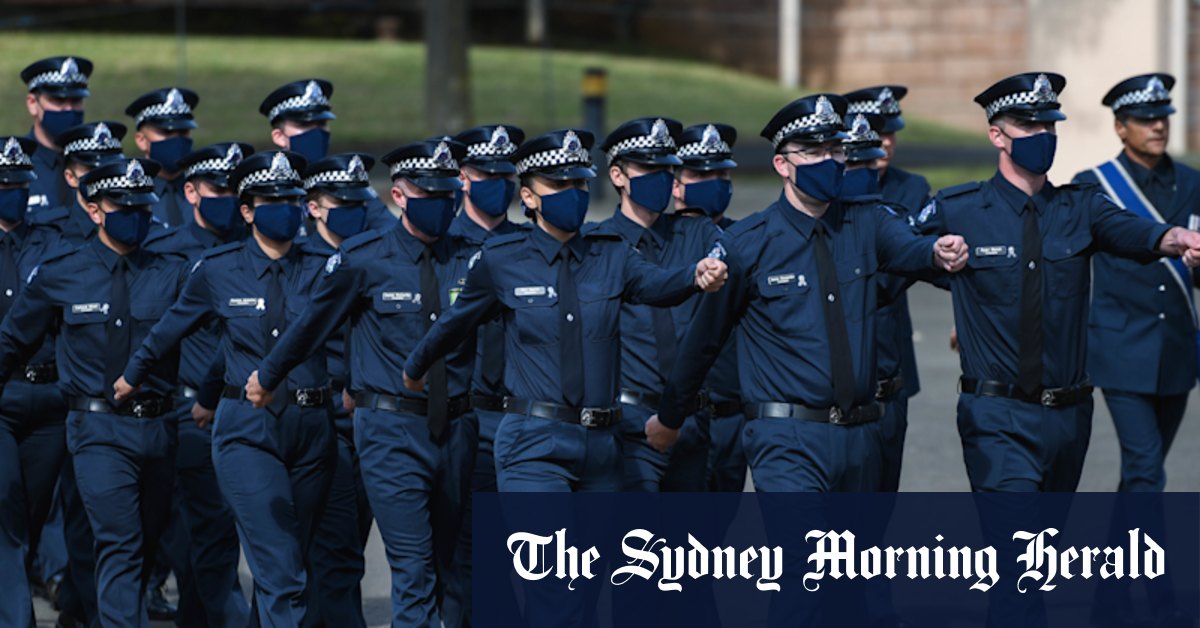
Earlier this year, the force scrapped minimum education requirements and waived the entrance exam for candidates with an ATAR of 65 or above and functional English. It also scrapped a mandatory one-on-one appointment with a psychologist.
Victoria Police Association secretary Wayne GattCredit: Paul Jeffers
Dr Anita Munoz, chair of the Royal Australasian College of General Practitioners Victoria, said the group had “safety, efficacy and medico-legal concerns about how shifting the responsibility … affects our members”.
“Risk assessments are inherently uncertain and clinically unreliable in predicting future risk,” she said. “They are point-in-time assessments, not predictions. GPs are concerned they may be forced to defend clinical decision-making in legal settings, potentially years later.
“A single appointment with a GP can’t predict psychological suitability for an officer’s extensive roles and responsibilities, and GPs aren’t here to absolve the force of its responsibility for professional recruitment.”
In response, Victoria Police said GPs were not being asked to work outside of their scope of practice, and only a very small number of GPs have so far refused to conduct the assessments.
The move has also caused concern among some veteran detectives and rank-and-file officers.
“All they [police command] want is bums on seats,” said one veteran detective, who cannot be identified publicly to protect their position.
Victoria Police said GPs would be guided by detailed instructions and comprehensive medical guidelines when completing the assessments. This includes reviewing a candidate’s mental and physical health over a five-year history.
“General practitioners adhere to stringent professional requirements which will ensure Victoria Police’s high standards of entry are maintained,” a police spokesperson said.
“Victoria Police has full confidence in the ability of GPs to make sound, professional judgments, as they do so in many other industries and professions.”
Candidates are expected to still have their hearing and eyes tested by specialists.
The move would be a dramatic shift from Victoria Police’s processes several years ago, when candidates underwent three psychological tests.
“We have a fairly high failure rate,” then-commander Shane Cole, head of Victoria Police’s health and safety division, told the Herald Sun in 2018. “Policing is such a different role – you need to have a certain set of traits and abilities.”
Wayne Gatt, head of the Police Association of Victoria, told The Age that the union would be “the first to scream if I thought it was a lowering of standards that put us at risk”.
“GPs are in a good position to screen for context around mental health because they know the applicant, they have a history with that person,” Gatt said.
He said internal police data showed the number of people receiving approval had remained steady at about 83 per cent.
“What has changed is the length of time it takes to get there, from six to nine months to two months,” he said. “In 2025, people don’t wait, they go elsewhere – they just go and do another job or they pick up and go to Queensland police.”
He said that passing the entrance requirements was only the first “gateway” and the rigorous, high-stress training at the police academy was also key to weeding out inappropriate candidates.
Loading
Earlier this year, the length of time a recruit spent in academy training was cut from 31 weeks to 25 as part of the force’s attempt to boost its staff numbers on the street.
A uniformed officer, who asked to remain anonymous, said declining standards and performance was a problem across the board and there had been an overall “loosening standards of entry, and then standards of training, and then standards of on-road policing”.
“Such a huge change in process is not supported by any tighter controls at the academy … of course that won’t lead to any poor outcomes,” the officer said.
He said there were “a heap of recruits who are concerns as an officer when things get a bit hot on the street”.
“Our recruitment in the past 12 to 18 months has been some of the worst quality I have seen,” he said. “This is not an easy job, and an offsider who is a liability makes it a lot harder and dangerous for everyone.”
Victoria Police said it was also deploying “clinical teams” to the academy to identify and respond to any issues that might arise with recruit mental health during training.
On Monday, Chief Commissioner Mike Bush announced a wide-ranging restructure at Victoria Police in a bid to suppress the recent violent crime wave and improve the public’s image of and respect for the force.
At that press conference, Bush said Victoria Police was more than 1000 officers under strength and there were 700 officers on WorkCover.
Start the day with a summary of the day’s most important and interesting stories, analysis and insights. Sign up for our Morning Edition newsletter.