Masterclass
What pork do I choose?
If you’re making porchetta, you’ll need to visit your butcher and have a conversation. Hopefully, you’re in the habit of doing this anyway. These aren’t cuts of meat you can simply pluck out of a supermarket cabinet; the dish requires specific shapes and sizes. Thankfully, butchers are usually happy to help out (but don’t drop in at the peak of the Christmas rush and expect a long chat). Describe what you’re planning to cook, and they may even mock up what the roll might look like before you buy the meat.
Many recipes call for belly-only porchetta. But when I’ve made it in the past, I’ve found it underwhelming – too small a portion for the effort required and too fatty overall without the leanness that a piece of loin brings to the porchetta party.
Traditionally, porchetta is made from the belly and loin of the same animal (and sometimes from the whole animal, or a combination of offal and meat), but you have other options. If you prefer something thinner than loin, you could use a pork fillet or two. If you want something less lean, try a piece of pork neck. You could even use a combination of cuts for this “central” meat, which will ultimately be wrapped in pork belly.
Overall, allow about 380g of pork per person. This is a big portion, but you’ll definitely want leftovers, and not having enough would be a tragedy.
Female pork?
I prefer using female pork (sow) for this recipe because it has a milder flavour. Male pork can sometimes carry an odour and taste known as “boar taint”, caused by naturally occurring hormones. While this is a matter of personal preference – and it’s completely fine if you are not sensitive to it – I find that sourcing pork from butchers who specifically supply sow makes a noticeable difference to the final flavour of the porchetta.
Crackling 101
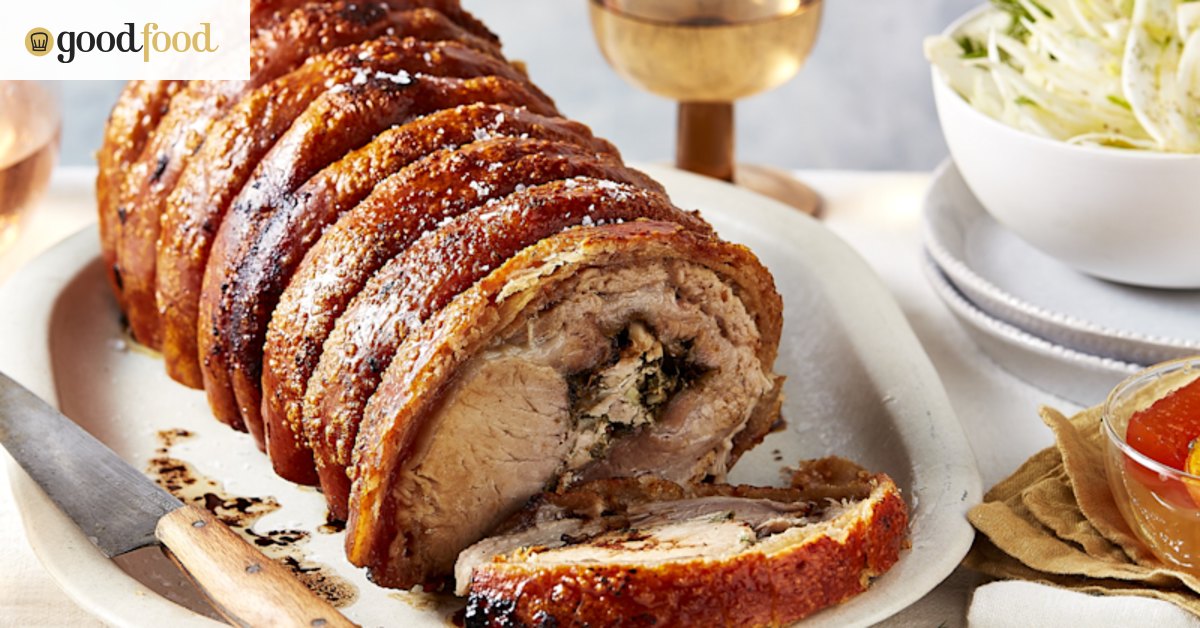
Despite being notoriously difficult to achieve, the science of crackling is simple. Small amounts of super-heated water vapour in the pork skin burst through the surface, creating tiny “craters”. Thousands of these craters give the skin a crisp surface we call crackling.
For me, the key step is drying the skin out with salt overnight. This reduces the amount of moisture in the skin, allowing what remains to vaporise more easily. Skin that is too wet becomes leathery and doesn’t form crackling.
Many cooks start their roast on high heat to dry the skin, then drop the temperature. I find that this creates large air bubbles but less overall crispness. I prefer the opposite approach: a slower, lower initial roast, followed by a blistering hot finish under the grill.
Small amounts of super-heated water vapour in the pork skin burst through the surface, creating tiny ‘craters’… we call crackling.
Lastly, the key to perfect crackling is high heat and watching it like a hawk. Because porchetta is round, you need to rotate it to ensure all-over crackling. A few balls of aluminium foil will help with this. If you’re using a rotisserie, you won’t have this problem.
Where people fail with crackling is losing their nerve. So my best tip is not to worry about burning it. In fact, to get perfect all-over crackling, you often have to push it until it’s charcoal-black in spots. Ever wondered how Cantonese barbecue shops get perfect crackling pork belly every time? That’s the secret. Keep going until it’s crackled all over, then scrape off any blackened parts like you’re scraping burnt toast. Underneath the burnt parts is more crackling!
What do I serve it with?
You can choose one of two routes with porchetta. The first is the celebratory route, where the porchetta is treated like a classic roast, and the meat is accompanied by sides such as Italian mustard fruits, shaved fennel salad, roastedpotatoes or a potato salad, mustard, chutney, pickles and salsa verde – all excellent options.
The other route is a more street food scenario, where the thinly sliced meat and crackling are served as a panini, the focaccia or ciabatta moistened with some of the drippings, and pickles or a piquant sauce, such as salsa verde, are added to cut through some of the richness.
I lean toward the celebratory porchetta approach, but it doesn’t hurt to offer panini as well for anyone who wants a sandwich. Don’t skimp on the sides, though. Many a great roast has failed by the cook focusing so much on the meat that they have neglected to consider what someone might want to eat it with for a complete experience.