
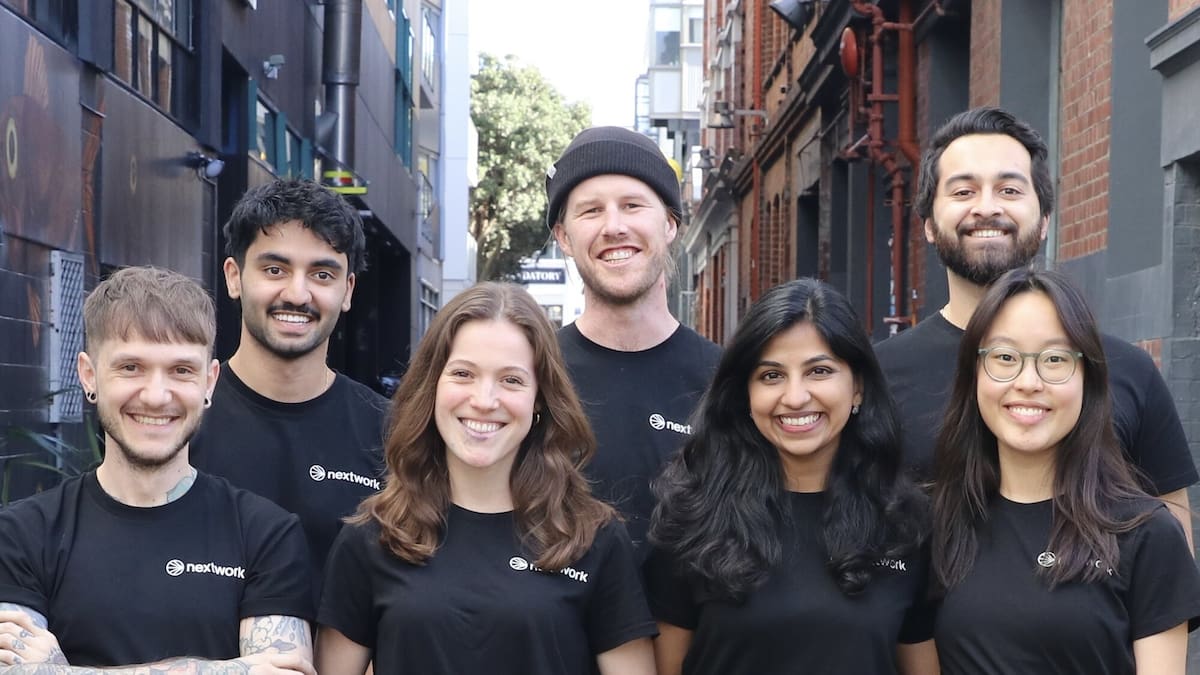
The new funds will go towards software engineering (the eight-person firm is hiring for two new roles) plus the US shift.
“Before relocating, we were running a global company 18 hours out of sync with our largest market,” Winton said.
“That’s fine at the beginning, but if you’re building for a workforce shift driven by AI, you need to be close to where that shift is happening.
“The US already represents a significant portion of our user base, and being in Austin makes it easier to meet learners in person, recruit experienced engineers, and build relationships with investors without operating overnight.”
Austin has emerged as a tech hub over recent years, in part thanks to hosting the South by Southwest (SXSW) tech festival.
Creating an online portfolio of your AI work
NextWork teaches AI skills online through a hands-on, project-based approach, and gives its users a platform to showcase their work.
Winton says it fills a trust gap by putting verifiable skills on public display.
Winton says in a former role, she became frustrated with online course certificates and “badges”, some of them offered by Big Tech firms, which she saw as lightweight and carrying no credibility with employers.
“I kept seeing the same pattern. Learners would spend thousands and take months of their life to get a certificate that no one in the industry was taking seriously.
“The learners who had the biggest breakthroughs were the ones who could point to something they built along the way; a portfolio.”
No one is paying NextWork thousands.
The firm is in a “pre-revenue” phase, Winton says.
“Our product is free because we’re focused on scale and product love first.”
AI: Friend or foe?
Many software firms have come under valuation pressure lately, with fears that the big AI firms could offer modules that replicate their features or upstarts will be able to mimic them at low cost through “vibe coding”.
Is Winton worried that the very technology NextWork teaches could eat its lunch?
“AI tools can replace parts of learning, not the full experience. Community, accountability, peer-to-peer connection, friendship, and network effects are all strong moats against an overnight AI app,” she says.
“Zooming out, the problem we’re solving is that 59% of the workforce will need to be upskilled by 2030,” she adds, quoting the World Economic Forum’s Future of Jobs Report 2025.
“So I say, bring on as many competitors and AI apps as we can. This is bigger than us, This problem needs to be solved and I welcome everyone to be part of the solution.”
No pressure
“The age of AI promises a new Renaissance where human potential is no longer siloed by specialization. In the AI age every person can be a Michelangelo because AI will provide abundant tools to do anything we want in the digital or physical domain,” said Shakti VC founder and MD Keval Desai said in a statement.
“Achieving this future requires only two things: Imagination and the mastery of AI. While the imagination is up to us, NextWork provides the mastery. This is Amber’s vision and we have never been more excited to invest in a founder and the future that she is building.”
Chris Keall is an Auckland-based member of the Herald’s business team. He joined the Herald in 2018 and is the technology editor and a senior business writer.