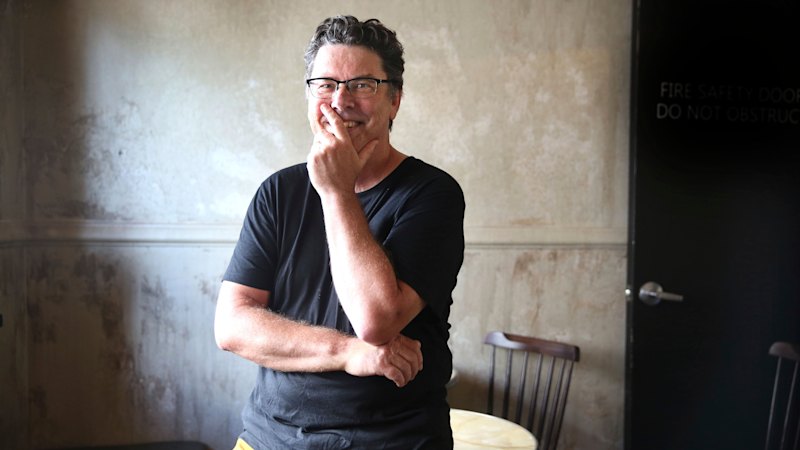

“I’m fascinated by how people can have such fervent opinions before they’ve really looked into an issue,” he says. “That really gets me. So, I decided to do my due diligence and become entitled to have an opinion of my own.”
An Otago University law graduate with a master’s in international environmental law and policy, Lang works for the Energy and Climate Intelligence Unit, a non-profit organisation that supports informed debate on energy and climate change issues in the UK.
In 2019, he founded the world’s first Net Zero Tracker. Designed to separate credible emission reduction strategies from greenwash, it analyses pledges made by all nations, as well as 1800 cities and regions, and more than 2000 of the world’s largest listed and private companies.
This week, he launched his new project, Climate Trunk. “If you had to explain climate change in 10 seconds,” reads the topline on his first release, “what would you say?”
Conceptually, the idea was inspired by a quote he liked, that not fully understanding an issue is like having a tree in your head with no trunk. “I thought that was a great metaphor for such a multifaceted topic,” he says.
As Lang points out, there’s no shortage of climate information. In fact, we’re drowning in a tsunami of it.
To cut through the clutter (and dispel some of the misinformation inevitably thrown into the mix), he’s distilled key touchpoints into a series of interconnected infographics that are visually engaging and easy to digest.

The first four covering the “really big picture” – It’s Real, It’s Us, It’s Bad and It’s Fixable – have now gone live. A new infographic will be rolled out each week for the next two years, paired with a concise explainer. The data will also be updated regularly, reflecting the pace of change.
The Climate Trunk website takes the visual metaphor one step further, featuring a series of interactive “tree rings” radiating out from science at the trunk’s core.
Called the Big Picture series, the infographics are a deceptively simple way of communicating complex ideas, designed to show not only the scale of the challenge but where progress is possible and how our own actions can influence change.
One image explains the difference between net zero (residual CO2 emissions counterbalanced by CO2 removal) and carbon neutral (existing CO2 emissions compensated by carbon credits). Another illustrates your “carbon shadow” which, unlike your carbon footprint, you can grow without guilt.
“It’s Real”, one of the first four to drop, shows how the global temperature has escalated dramatically compared to pre-industrial levels. Lang says the rate of heating is 27 times faster than when we emerged from the last Ice Age.
“But We’re Less Than 1%” shows that nations that fall into this category – and New Zealand is one of them – are collectively responsible for 30% of global CO2 emissions. That’s more than China.

“Climate change is a global collective action problem and you can’t have free riders,” says Lang. “The maths just doesn’t add up.”
While China remains the single largest emitter, fossil fuels are being displaced by clean energy, generating a surplus that’s exported to the likes of India, Pakistan and Vietnam.
China’s solar power industry grew 45% last year, more than the rest of the world combined. On the other side of the ledger, emissions from petrochemicals are increasing, driven by the rising production of plastics.

The situation in the United States is both volatile and complex. Donald Trump has overseen the closure of more coal-fired power plants than any other US President, and the number of companies setting net-zero targets is increasing.
However, investment in clean energy has plummeted, following the repeal of nearly US$550 billion ($940b) in government funding.

Achieving net zero, primarily by transitioning away from fossil fuels, is the only way to stop global heating, argues Lang, who says the term has been widely politicised and used disingenuously by corporate PR. His Net Zero Tracker shows there’s still a wide gap between intent and integrity.
“Net zero means cutting emissions as far as possible, then counterbalancing what’s left with durable carbon removals. It’s physics and chemistry, not a political slogan or an accounting framework.”
We can’t offset our way to net zero, either. “Carbon credits are basically a promise that you’ve done something, but it’s all about monitoring, reporting and verification. So if you plant trees, they might go up in smoke, as they did in California, for example, but that’s after the fact you’ve already counted them against all your other emissions.”
It’s a topic Lang covers in some depth in Kiwis in Climate: Voices for Climate Solutions, a collection of essays by more than 30 climate professionals, published last month, presenting views across politics, business, farming and science.
To limit global heating to near the guardrail of 1.5C above pre-industrial levels, CO2 emissions should reach net zero by the early 2050s, according to the Intergovernmental Panel on Climate Change. All greenhouse gases, such as methane and nitrous oxide, need to follow about two decades later.

“In practical terms, turning down the human CO2 emissions tap means electrifying everything we can and rapidly phasing out coal, oil and gas,” Lang writes, “with the goal of shutting it off almost entirely later this century.
“It also means ending deforestation – which contributes 5 billion tonnes to the annual emissions total – transforming food systems and slashing emissions in ‘harder-to-abate’ sectors like cement, steel and aviation.”
Lang pushes back against claims in certain political sectors that this kind of “woke capitalism” is a pathway to economic suicide. In 2025, US$2.2 trillion was being directed into clean energy technologies and infrastructure.
More than 80% of the global economy is now covered by net zero targets, most of which are enshrined in law or formal policy.
In the UK, which has a goal of net zero by 2050, emissions were halved between 1990 and 2022 while the economy grew by 79%, according to official Government figures.
In contrast, Lang notes, New Zealand’s emissions have risen 9% since 1990. Current projections show a potential shortfall of 84 million tonnes against our 2021-2030 emissions reduction target set under the Paris Agreement.
At today’s carbon price of $40-$50 per tonne, that equates to $3-$4 billion in offshore purchases, with collateral damage to the credibility of our “clean, green” reputation.

At last year’s COP30 global climate summit, New Zealand was given the “Fossil of the Day” award for weakening policies on methane, which accounts for almost half of New Zealand’s overall greenhouse gas emissions, largely from agriculture.
It’s the fourth time we’ve received that ignominious honour in the past five years.
Even with the United States falling off the pace, global investment in clean energy is outpacing investment in fossil fuels two to one. The current oil crisis, driven by the conflict between the US, Israel and Iran, has also sharpened the focus on energy sovereignty and control over domestic supply.
To mark the 10th anniversary of the 2015 Paris Agreement, Lang’s Energy and Climate Intelligence Unit looked back at what analysts were then forecasting to see how it’s measured up to reality. Their report found uneven but “irrefutable” progress.
Solar capacity has exceeded 2015 forecasts by around 1500%. Renewables had overtaken coal’s share in the global electricity mix for the first time, with clean energy now accounting for more than 90% of all new power capacity. In 2024, electric vehicles hit 20% of new car sales globally, years ahead of schedule.
Lang says modelling shows New Zealand could avoid more than $3b per year in fossil fuel imports by the early 2030s, rising to around $10b per year by the early 2040s, as transport, industry and heating electrify.
“Who would have thought that more than 80% of the global economy would have a net-zero target six years after Paris? We are literally standing on the precipice of this transition away from fossil fuels. The deep irony is that politics is moving in the wrong direction, just as the economics [of net zero] finally work. It’s unbelievably idiotic.”
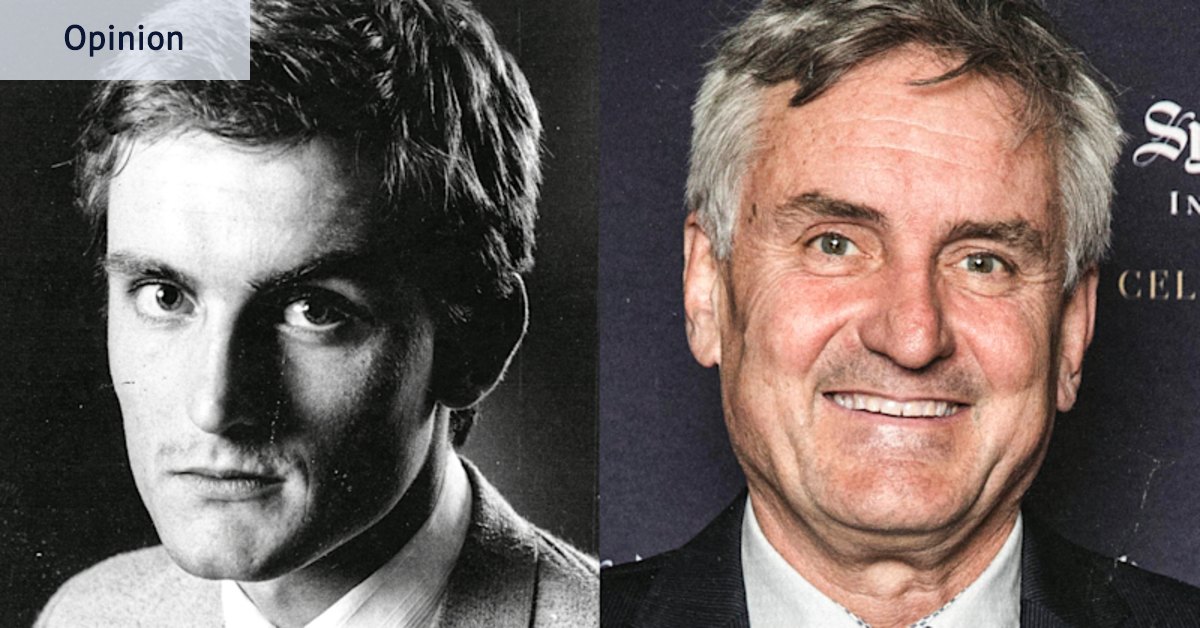
Lang’s own inflection point came when he moved to London with his parents in 2013 after his stepfather, former National MP Lockwood Smith, was appointed as New Zealand’s High Commissioner to the UK.
At University College London, where he completed his master’s in international environmental law and policy, he noticed the courses were sparsely attended. “The ratio of [master’s] students doing commercial law compared with those doing environmental law or human rights was quite stark.”

His first start-up, Swigit – a riff on “swallowing ignorance” – was a database of dinner-table topics designed to help people understand hotly contested issues. Free trade versus fair trade. The Israel-Palestine conflict. Also built in was a “flip it” mechanism to challenge the confirmation bias that leads to entrenched views.
That one didn’t quite get off the ground. After finishing his master’s, Lang started writing a blog called The E-nvironmentalist, at a time when the rise of social media was becoming increasingly entwined with the politicisation of the climate debate.
Today, he prefers to describe himself as a humanist. “For me, climate is not an environmental issue. It’s a deeply human and economic issue,” he says. “The planet is going to be fine, even if we heat the world by 5C, but humans are not.
“Even at say, 2C, our societies are going to be deeply affected. All those issues we care about, like food security, poverty, inequality and energy security, are buckets with holes in them. Climate change is that hole. And unless we plug it, they will keep leaking.”
The Energy and Climate Intelligence Unit, where Lang is now based, was founded by Richard Black, a former environment correspondent for BBC News. His book, Denied: The Rise and Fall of Climate Contrarianism, was published in 2018, the same year Lang came on board.
Funded through philanthropy, the unit positions itself as an advocate for evidence, providing independent analysis to support informed debate on climate change.
Much of its work is aimed at what Lang describes as the “sensible centre”, as well as those on the right side of the aisle, who tend to be more resistant to strong climate action.
“A little country like New Zealand has a choice,” he says. “We can either double down on fossil fuels, as the current US administration is doing, or follow the path taken by China and other emerging economies by shifting to electricity-powered systems, choosing energy sovereignty and investing in the competitive industries of the future.
“As the late climate scientist Stephen Schneider said, when it comes to climate change, the two least likely outcomes are that it’s the end of the world or that it’s good for us. So there’s a lot of middle ground.”
Joanna Wane is a senior lifestyle writer with an interest in social issues and the arts.