You have reached your maximum number of saved items.
Remove items from your saved list to add more.
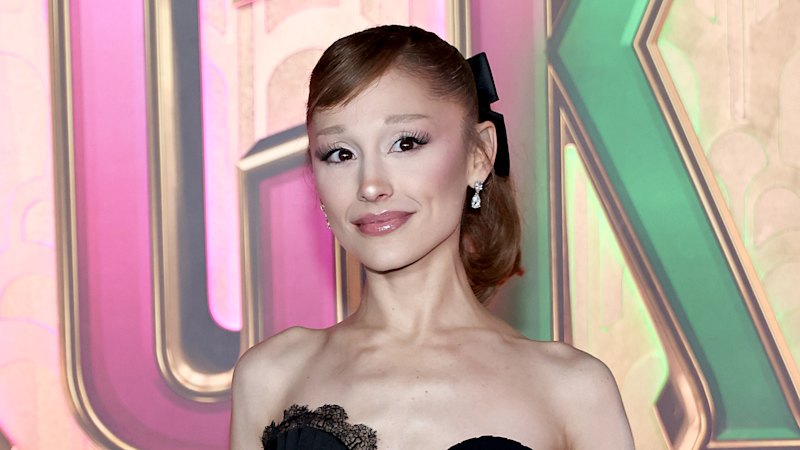
Fan of Ariana Grande or not, you’d be hard-pressed to find anyone who hasn’t read at least one of the many headlines this week announcing the actress and musician “will be taking a step back from visibility after she completes the Eternal Sunshine tour” due to “ongoing public scrutiny” amid growing concern over her weight loss.
Grande isn’t the only high-profile celebrity whose changing body has drawn widespread discussion. Her Wicked co-stars, Michelle Yeoh and Cynthia Erivo, also sparked concern during the film’s media tour because of their weight loss, as have other celebrities, including Emma Stone, Demi Moore and Kelly Osbourne.
For many parents, the news of these shrinking celebrities has prompted conversations in households. Here’s how the experts recommend you handle those discussions.
Why shrinking celebrities can have a significant effect
It’s true that celebrities unquestionably influence young people in various ways, says Linda Williams, senior manager, clinical governance at ReachOut.
“Young people go through a range of changes during adolescence – including exploring their identities – and celebrities can play a significant role in this aspect of their lives,” she says.
This has only become more common thanks to social media, which Williams says, “makes us feel closer to celebrities than ever before”.
Body image ideals – including eating, exercising, grooming, and what body types are deemed aspirational – are upheld by celebrity culture, and because of this, can have a significant sway on its audience, including young people, says Danni Rowlands, director of education initiatives at the Butterfly Foundation.
“Celebrities dominate trends – fashion trends, beauty trends, appearance trends – and obviously when there are shifts in actual body size, that’s also obviously consumed as well,” she says.
“ The thin ideal has been upheld for decades and decades, but sadly, now what’s happening is we’ve got an extreme-thin ideal that’s being pursued … which for a young person can be really confusing as they strongly internalise what that means for themselves, particularly if their body isn’t aligning naturally with this popular-culture look.”
What first steps can parents take?
Rowlands says parents know their kids best, so in considering whether to broach the subject, using an approach that suits their personality, age and experiences should help guide the conversations that they have.
For example, if you have a younger child, or one who hasn’t heard the discourse around Grande’s health, it might be best not to raise the topic.
“We don’t want to plant seeds, and we don’t want to invite imagery into their lives if it’s not there. So obviously for young children, it’s probably not necessary to bring it up,” Rowlands says.
Williams agrees, saying that a tailored approach to talking to your young person about body image is a good idea, and that it should be based on what you think is appropriate for them and what they might respond well to.
“For some families this might look like being active and doing something like a regular local walk together alongside those conversations,” she says.
What if my children are big Ariana Grande fans?
If your child is a big Ariana Grande fan (known as “Arianators”) and has expressed concern about her health, is distressed by any content they have viewed, or raises the topic of Grande’s body or “shrinking celebrities”, it’s important to approach the discussion with empathy.
“Rather than making judgments or comments about Grande’s body, you might say something like ‘I hope she’s okay’ and ‘that’s good she’s taking time out for herself’,” says Rowlands.
“Active listening, validating your young person’s feelings, a non-judgmental approach, and not trying to fix the problem are often the most important tools parents and carers can use when communicating with your teen about body image,” Williams adds.
Considering when and where you have a conversation is also critical and can be as important as what is said. Casual, low-pressure settings like driving together are often more effective and if the conversation doesn’t go well, sometimes changing your approach or trying again later can help.
“It’s okay to try again at a later time if they’re not ready to talk or to try a different approach like sending them some info via text,” says Williams.
Role modelling by parents, especially regarding their own body image, is also important to consider, as children, regardless of their age, are still influenced by their parents’ behaviours.
“Young people see what you do, and they may adopt the same habits,” Williams says.
“This could be about not commenting on your own body, theirs or anyone else’s.”
If you or someone you know is experiencing an eating disorder, support is available from the Butterfly National Helpline on 1800 33 4673, online at Butterfly Foundation or ReachOut Parents, which offer free resources on the issue.
Make the most of your health, relationships, fitness and nutrition with our Live Well newsletter. Get it in your inbox every Monday.
You have reached your maximum number of saved items.
Remove items from your saved list to add more.