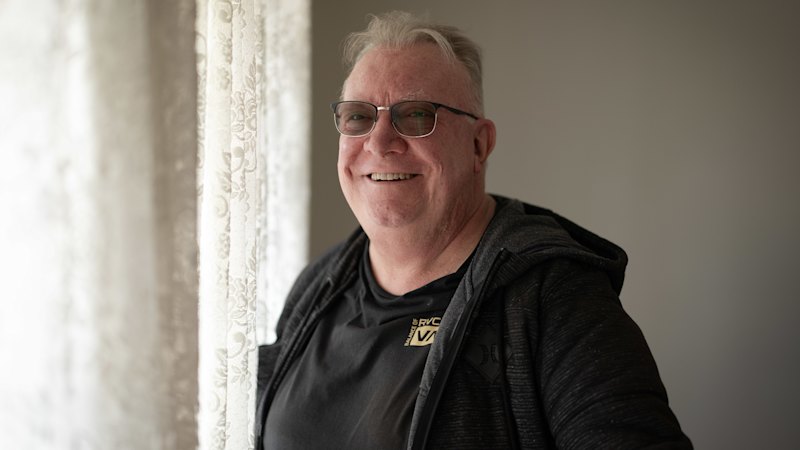
Bek Condello
You have reached your maximum number of saved items.
Remove items from your saved list to add more.
The pastor had always terrified me. He held himself in the highest regard, demanding to be addressed formally by his full title. It wasn’t just tradition; it was a sign of respect, and he made sure everyone understood that. One Sunday, when I was around six or seven years old, I remember walking into the community hall and my anxiety taking hold of me. I hesitated, just for a second, unable to force his full title past the lump in my throat when he greeted me. My silence was deafening.
That brief pause, that small moment of fear, was all it took to unravel everything. My father’s face twisted with fury. To him, my hesitation wasn’t just a child’s nervous mistake; it was a public humiliation, a direct insult to the pastor and, by extension, to him. Without a word, he grabbed me roughly and dragged me into the shared kitchen, where he beat me. People wandered in and out, ignoring my cries, casually preparing for the Sunday meeting, putting their pies in the pie warmer for the shared lunch later on, and preparing the grape juice for the communion.
Unfortunately, this was only the beginning. Every Sunday after that, the thought of seeing the pastor filled me with a creeping fear I couldn’t shake. I would rehearse how to greet him properly, repeating his full title in my head, terrified of getting it wrong again.
Before the first meeting on the Sunday morning, I could sometimes avoid him. The room was busy, with people arriving and settling, and I learned how to keep myself out of his path. But once the service ended and everyone gathered for lunch, there was no escape. The cult wasn’t that big, and my father would tell me to walk over to the pastor’s table and say hello.
I would scan the room, searching for some way out, but sooner or later I’d feel the pastor’s piercing blue eyes bearing down on me. My throat would close, my body locking in place and my mind would completely shut down. I couldn’t move, I couldn’t speak. I would stand there frozen, almost catatonic, until the pressure became too much, and I broke down in tears. But it wasn’t just fear of the pastor any more, it was fear of what would happen after.
It became a vicious cycle I couldn’t escape. Soon, the entire cult became aware of my disobedience. In between the morning communion and afternoon prayer time and second service, we would all share lunch together. The congregation would sit, silently watching as I was forced to approach the pastor at the lunch table. The cult’s expectant, silent gaze only added to my misery, compounding the trauma of each encounter.
My father was always watching, standing nearby with a dark, expectant look. He didn’t need to say a word. I knew what would happen.
BEK CONDELLO
With every week that passed, the beatings grew harsher, the torment more relentless. I felt trapped, unable to escape, completely exposed. And then it evolved. The pastor knew exactly what he was doing. Soon, every Sunday, he would go out of his way to find me and greet me, locking eyes with me in a precise, deliberate way that made my stomach drop. He knew I would stumble, that fear would choke the words in my throat, and he knew what that hesitation would cost me. He needed to break me, to feel like he was in control.
And my father was always watching, standing nearby with a dark, expectant look. He didn’t need to say a word. I knew what would happen. One Saturday, after this cycle had repeated for some time, we attended a cult barbecue held on the outskirts of the city at a national park. It was summer, the sun sitting high and flooding the clearing with warmth. People pulled up in their cars one by one, unloaded food, and drifted into small groups.
Tall, windswept pines framed the edges of the park, their needles shifting in the breeze, and the smell of eucalyptus hung in the air, mixing with the smoke from the barbecue. The ground was dry and dusty underfoot, scattered with wild grass and wombat droppings, dry and pale from the hot sun.
The adults stood around talking, with food in their hands, faces turned towards the light, conversations overlapping as the afternoon moved along. Children ducked and weaved between the tables, giggling and playing tag. But before long, I was once again caught in the web of an all-too-familiar ritual: the dreaded greeting of the pastor. But this time, without any warning, the pastor seized my tiny hand in an iron grip, his fingers pressing painfully into my skin, and began dragging me away from the gathering.
Panic surged through me, but no one intervened, no one even looked concerned. They just watched in brief, passing glances, before turning back to their conversations and plates of food. My parents barely looked in my direction. Their chatter quickly faded behind us, muffled by the thick wall of towering trees as he pulled me deeper into the pine forest.
The sunlight thinned, swallowed by branches overhead, and the air turned cooler, heavier. The smell of charred meat from the barbecue drifted away with the breeze and was replaced with the scent of dry pine needles and damp earth. I could still hear distant laughter from the picnic area, but it felt so far away, like it belonged to another world I was no longer a part of.
The pastor’s grip tightened as he yanked me along beside him, his voice low and threatening as he told me he would not return me to my parents until I said hello. He repeated it over and over, each word heavier than the last, like a slow, steady foreboding drumbeat. I was terrified, sobbing, my throat clamping more tightly closed with each ragged inhale. And still no one came.
No one questioned why a grown man was dragging a small, frightened girl into the bush; they trusted him without hesitation. As time went on, and there was no end in sight, I became so terrified, so convinced I might never be taken back that, in that moment of blind panic, my spirit broke in me. I forced the word out, my voice barely more than a breath, snot rolling down onto my lips: “H-hello, Pastor.”
My chest burned, tightening like a vice, each shallow gasp scraping against my throat, raw from the sobs I couldn’t contain. But those single, pathetic words were enough for him. He loosened his grip, smugly satisfied. He had broken me. I was no longer prideful and I finally respected his authority. For me, it wasn’t respect at all, it was pure, desperate survival.
These were adults who should have stepped forward, who should have done something to shield a child standing in front of them in visible fear and distress.
BEK CONDELLO
When we finally returned to the barbecue, the stark contrast between the dense, shadowed bush and the bright, open picnic area hit me like a punch to the gut. The sun, so warm and welcoming earlier, now felt harsh and uncaring, casting a glaring light on everything around me. The laughter, once comforting in its familiarity, now sounded mocking, sharp, like a cruel reminder that I was just a piece of their performance.
Not one of them had protected me, and that was the moment the betrayal settled deeply in my broken spirit. These were adults who should have stepped forward, who should have done something to shield a child standing in front of them in visible fear and distress. Instead, voices carried on around me, conversation resumed, plates were passed along, and their eyes moved carefully away from mine, their faces smooth and unreadable.
No one asked if I was OK or offered a steadying word, and this felt deliberate, as though my terror had been quietly agreed upon. The pastor’s authority shaped what could be acted upon, narrowing the space for doubt or intervention until it disappeared altogether.
Over time, the cult members had learned to trust his judgment above their own instincts, to follow the direction he set without pause, and to move past anything that disrupted the order he maintained. Protecting me would have meant questioning him, and questioning him would have meant questioning God and being at risk of eternal damnation.
This control reached inward, reshaping how people learned to interpret harm and whether they trusted their own moral reflexes at all. Obedience became a way of being, practised and internalised.
You have reached your maximum number of saved items.
Remove items from your saved list to add more.