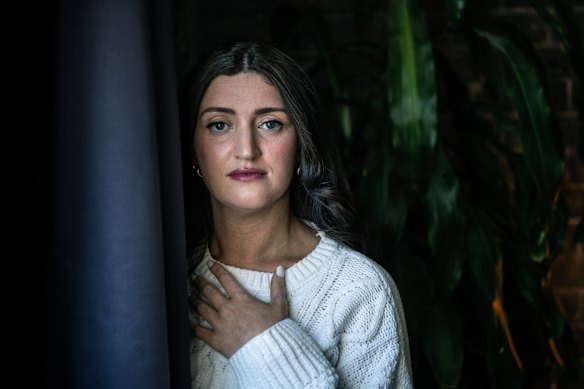
Dr Mujib Abid
You have reached your maximum number of saved items.
Remove items from your saved list to add more.
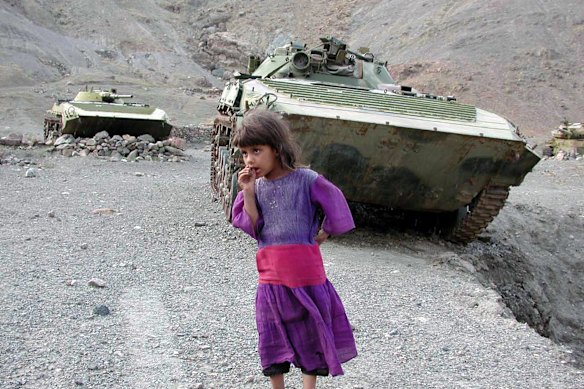
I grew up in Afghanistan during decades of conflict and political upheaval. The religious fanaticism of the 1990s civil war was no different from the violent imposition of Western liberalism in post-2001 American occupation. My country, which will celebrate its Independence Day this Wednesday, was yet still reeling from the aftershocks of a Marxist-Leninist political order in the 1980s that plunged the country into chaos.
In a sense, I grew up with violent and revolutionary political projects seeking to radically alter everyday life, their articulation (no doubt out of necessity) invoking Islam, and by invoking it so callously, implicating it, and reinterpreting it.
If at one point, it was to discover an Afghan derivative of socialism, at another it was to discover an Afghan derivative of radical Islam, and then it was to discover an Afghan derivative of capitalist neoliberalism. Others had attempted, in their own ways, to corrode the faith of my people, reduce it to politics, that too exclusively in its state form.
Thus, in interpreting and reifying the sublime, with all its depth, richness and beauty, they sought to reduce Islam into such crude categories as “fundamentalist” and “moderate”.
Where I find peace is within an Islam less corrupted by this forceful – and artificial – proximation with political ideology. It is what some have called traditional Islam. At the centre of it is Sufism, with its millennium-old history of practice and thought, indifferent to ideological crisis, above ideological crisis.
This is the beating heart of Islam. It ensures the radiance and beauty of a rich spirituality and mysticism seeps through the very fabric of Afghan society.
It is the faith of my grandfather, who recited the Dalā’il al-Khayrāt, one of the most cherished devotional prayer books in the Islamic tradition. It is the faith of my grandmother, a devotee of the Shah Samad Pir Yakhpush shrine, dedicated to the revered local Sufi saint. It is the faith of my first teacher in the village mosque, who taught me to read Hafiz, the 14th-century Persian poet. And it is the faith of the community around my village, which, in its austere and humble social spaces, nurtured a spiritual imagination that transcended the immediacy of politics and its stifling pessimism.
It is this transcendence that might just explain the resilience of my people. I find myself returning to this traditional Islam. I find refuge in the oeuvre of Farid ud-Din Attar’s Mantiq-ut Tair (The Conference of the Birds), Rumi’s Mathnavi ul Manavi (Spiritual Couplets), and Bedil Dehlavi’s Chahar Ansur (Four Elements).
Dr Mujib Abid is a postdoctoral research fellow with the Initiative for Peacebuilding at the University of Melbourne.
You have reached your maximum number of saved items.
Remove items from your saved list to add more.