

How a vaccine could prevent this debilitating women’s health condition

November 14, 2026 — 5:00am
You have reached your maximum number of saved items.
Remove items from your saved list to add more.
No gift articles left
You’ve used all of your gift articles. 3 more will become available on the 1st of every month.
Close
It’s a debilitating condition that affects millions worldwide and disproportionately affects women and girls, but Australian researchers may be one step closer to preventing and treating UTIs, thanks to a philanthropic grant administered by former New Zealand prime minister Jacinda Ardern.
Urinary tract infections are caused by bacteria – most commonly E. Coli – causing pain and the constant urge to urinate.
One in two women (and 20 per cent of men) will experience a UTI in their lifetime, with one in four women going on to experience a recurrent infection that can sometimes last for decades.

Researchers at the University of Technology Sydney received a $2 million grant from Ardern’s Matariki Fund to advance vaccine development, UTS announced on Friday. The grant-making Matariki Fund was established by Ardern with money from American philanthropist Melinda French Gates.
The team will first focus their efforts on the Pacific community, where access to proper healthcare can be limited and little is known about disease burden.
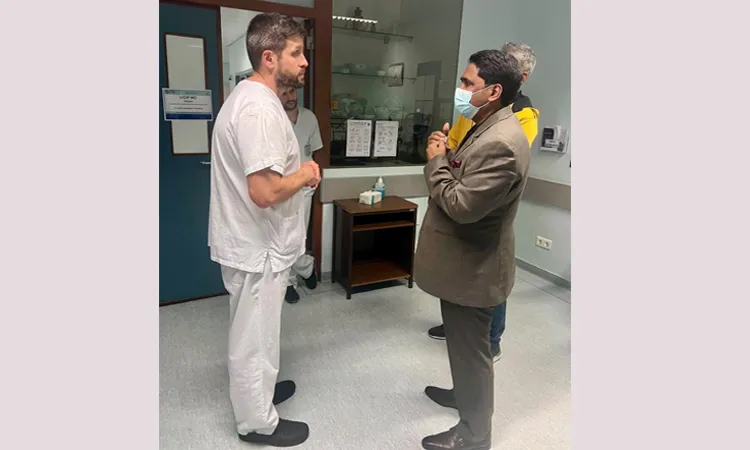
Professor Iain Duggin, director of the Australian Institute for Microbiology and Infection at UTS, is leading the project.
He is hopeful the vaccine will help combat chronic occurrences of infections in particular, and overcome growing antimicrobial resistance.
“What we want to do is develop a vaccine that works really effectively for women and girls in the Pacific region. And then if that works, move it globally to offer it to patients who are susceptible to UTI,” says Duggin.
“At the same time, we’ll be investigating burden of disease in the Pacific region and starting to understand what we need to do to effectively implement a vaccine when it becomes available.”
The vaccine, which is in the pre-trial phase, builds on existing mRNA vaccine research developed during the COVID pandemic.
Editor’s pick
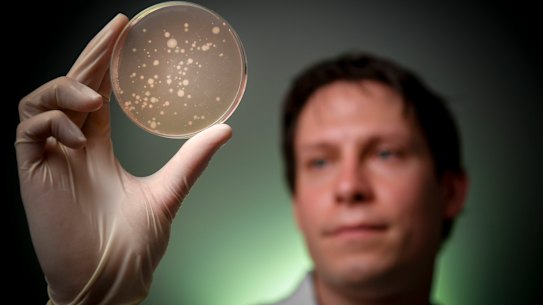
“This enables us to be more targeted and agile in our response to infections as they evolve, and we believe it can result in a more effective vaccine than anything currently available,” says Duggin.
Jemimah Ashleigh, 41, has struggled with UTIs since childhood, telling her parents she felt “fubbly” to describe the discomfort she experienced when aged five.
“I have been on almost lifelong medication to manage UTIs, and that’s consisted of over 1000 pills a year to keep this under control,” she says.
For Ashleigh, her UTIs are accompanied by pain urinating as well as fever, chills and sometimes vomiting.
“That means that for 24 hours you’re not leaving your bathroom, let alone your home,” she says.
“It’s debilitating and your life entirely stops.”
In 2024, Ashleigh got an embedded UTI – where bacteria can burrow into the walls of the bladder, evading standard antibiotic treatment – which led to a kidney infection and hospitalisation. But it was also the impetus for publicly sharing her experiences on social media.
“I felt like women should not be shamed for their medical conditions. I know that this is an iffy subject, but I also don’t mind if I’m the person that has to start talking about this.
“As soon as I would say I’ve got a UTI, I’m not well, I’d hear other women’s experiences and how alone and isolated they felt.”
Ashleigh had her first dose of Uromune, an oral spray vaccine available in Australia through doctor prescription, in 2024 which provided eight months of relief (small, early clinical trials have shown it has the potential to help some people who have chronic UTI).
Malcolm Starkey, head of the University of Sydney’s Urinary Tract Health Research Program, says the vaccine shows real promise but points out UTIs can be complex to diagnose and treat.
He says research, funding and therefore understanding has lagged due to the infection being one that primarily affects women.
“The diagnostics we use to detect bacteria rely on bacteria being in the urine,” Starkey explains.

Editor’s pick

But bacteria can be tricky and hide inside the walls of the bladder – sometimes returning a negative result even if a patient has clear symptoms of a UTI. This also means antibiotics – and vaccines – can have trouble finding bacteria.
While it’s often thought urine is sterile, researchers like Starkey are discovering that our urine has its own microbiome – which might leave clues as to how chronic UTIs occur.
One theory is that disruptions to this microbiome can present an opportunity for harmful bacteria to “invade” and cause infection, says Starkey.
Another is that chronic UTIs leave “signatures” on the body, these are long-term inflammatory responses without bacteria present, causing the debilitating symptoms patients report.
Ultimately, Starkey says vaccine development is one part of a broader strategy that should include government funding, education for health professionals, and community and clinical trials.
Make the most of your health, relationships, fitness and nutrition with our Live Well newsletter. Get it in your inbox every Monday.
You have reached your maximum number of saved items.
Remove items from your saved list to add more.
No gift articles left
You’ve used all of your gift articles. 3 more will become available on the 1st of every month.
Close
 Lauren Ironmonger – Lauren is a lifestyle writer at The Sydney Morning Herald.Connect via email.