

To family violence survivors, Woven Earth’s Kerryn Thrupp is their guardian angel

- Share this article
- Copy Link
- Twitter/X
Reminder, this is a Premium article and requires a subscription to read.

Eighteen months after escaping to a women’s refuge, an Auckland mother and her three young children have a place to call home.
The bunting in one of the bedrooms is proving problematic. It’s too long at one end, and the colourful, hand-sewn fabric triangles won’t sit right.
Slung over the
door is a fleece dressing gown in the same pale pink as a Hello Kitty backpack and rainbow duvet cover on the freshly made bed.
Children’s books are stacked on a toy cupboard and a tulle fairy dress hangs in the wardrobe.
Tucked next to a one-piece swimsuit and a Disney-themed Lego set is a butterfly Pillow Pet. It’s purple, like the scooter helmet and the mermaid doll with violet hair.
Tonight, a 5-year-old girl will be sleeping in this bed for the first time. Purple is her favourite colour.

When the delivery truck pulls up early that morning, the room, like the rest of the first-floor apartment, is an empty shell.
Working in pairs, volunteers swarm up and down the stairs armed with screwdrivers, batteries and picture hooks, bringing the place to life.
Bedrooms first, says Audrey, who spent yesterday packing boxes of supplies at the warehouse.
“Hopefully we can get them up quickly, then start doing the rest. We’ve lucked out today with a premade bed, but the cots next door need to be made up, so that’ll be a bit of fun.”
Over the next two and a half hours, calm emerges from the chaos as every corner of the house is dressed with meticulous attention to detail, from toiletries in the bathroom to potted herbs on the kitchen windowsill.

A vase of fresh flowers is placed on the table, next to a batch of homemade cookies. The washing machine has been plumbed in and given a trial run.
“It’s a bit of a flurry at the beginning,” someone says. “You think it’s never going to come together and then suddenly it just kind of appears.”
At 12.30pm, everyone gathers outside on the landing to welcome a family to their new home.
Quihana and her three young children have been bouncing around temporary accommodation for the past 18 months, after escaping to a women’s refuge with only the clothes on their backs.
To say they have nothing is no exaggeration. The single item on an inventory of their belongings is a set of plastic storage drawers from The Warehouse.

Struggling to take it all in, Quihana steps into the apartment, and one hand flies to her mouth. Then the tears start to flow.
“Here’s your little boys’ room,” says Kerryn Thrupp, the fairy godmother who has made all this possible, putting an arm around her shoulders.
“You said they like dinosaurs and trucks, right? There’s food in the fridge; you’ve got lasagne. So you don’t need to cook dinner tonight.”
Quihana isn’t the only one sobbing. It’s an emotional moment that Rachel, a long-term volunteer, has witnessed many times. The intensity of the experience still unravels her.
“We all cry,” she says. “It’s not that everything is perfect now, but from this afternoon, they’ve got a peaceful home. That’s all a woman wants for her children: a safe, warm, peaceful home.”
This is the 1121st house fully furnished by Woven Earth, Thrupp’s Auckland-based charity, which works with family violence survivors. Many have spent months or even years in a refuge or cramped transitional housing until finding more stable accommodation.

Thrupp is a survivor herself, with a harrowing story of being left homeless with her two preschool children after finding the courage to walk away from her marriage in Australia when it escalated violently.
After moving home to New Zealand, she was forced to return under the Hague Convention, and spent two years in a custody battle before the Family Court granted her application to relocate.
For a career woman with a master’s degree in communications and a string of corporate management roles on her résumé, starting over with nothing was soul-destroying.
When she asked Work and Income for help, she was told to find a rental near a school, ask friends for used tea towels and get quotes on a second-hand bed.

“I didn’t even have a car, and I had no friends because I’d spent the past few years in hiding,” says Thrupp, who felt punished for leaving. “On the day I left [the marriage], I was cut from the bank account, lost my home, lost my dog and lost all my possessions.
“I was reduced to a suitcase and a story – a horrible story that I had to tell over and over again. Without the support of my mum, the mountain would have been too high. I would definitely have gone back. There had to be an easier way.”
In 2019, Thrupp launched Woven Earth, writing up the website using Wi-Fi hotspots at cafes because she didn’t have a computer.
The first house she furnished was a referral from the family violence support service Shine. Thrupp now liaises with 84 organisations, including Starship, NZ Police, Women’s Refuge and transitional housing agencies.

While family violence typically affects women, Thrupp also works with grandparents who have taken tamariki into their care, victims of elder abuse, and young people who have left a troubled home and won custody of their siblings. The oldest person she’s helped was a 92-year-old man.
“Pensioners in their 60s and 70s who’ve lost everything and been abused by their relatives; they break my heart the most,” she says.
“But the horrific stories are more than balanced out by the amazing people I see in this world who actually care and want to change it. They really get stuck in.”
Thrupp gave herself 12 months to get Woven Earth up and running. By the end of that first year, she was off the benefit and able to pay herself a wage.

The organisation relies on a combination of donations, philanthropy, sponsorships and community goodwill to fund its operation, which recently moved into an expanded warehouse space in Silverdale to store all its supplies.
“We don’t take curtains, and we don’t take carpet,” Thrupp says. “That’s pretty much it.”
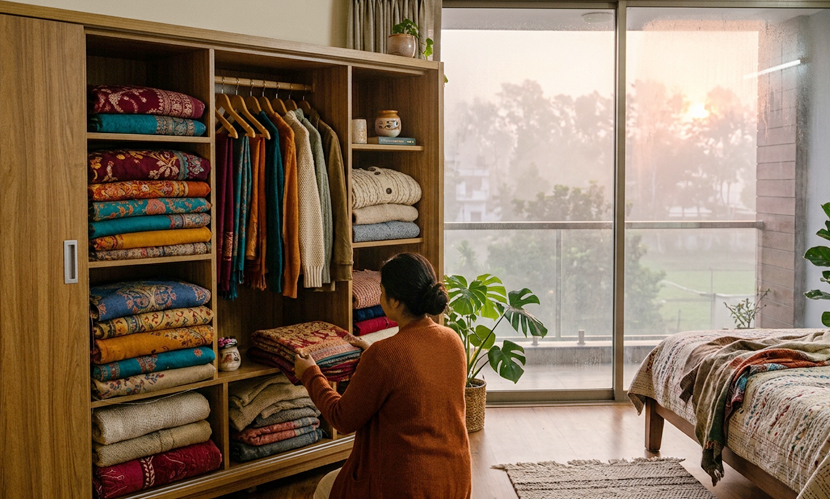
A florist donates fresh flowers, a men’s group makes hand-painted wooden toys, and other supporters regularly give baking, pot plants, fruit boxes, quilt blankets and knits. Donated furniture is barcoded so the person who gifted it can be told when it’s placed in a home.
Aside from items such as bedding, towels, kettles and toasters, most of the furnishings are second-hand. However, grants of more than $100,000 from the Annette Presley Foundation recently enabled the bulk purchase of new fridges, washing machines and vacuum cleaners for 100 homes.
Basics like that are essential – and unlike a loan from Work and Income, none of it needs to be paid back. That helps break the cycle of debt, says Thrupp, who conceived Woven Earth to give back some dignity to people who find themselves in reduced circumstances, as she once did.

Working with the family’s social worker or support person, she and her team personalise each house, right down to the children’s favourite colours.
“We’ll ask about their interests, their hobbies and what they might have lost along the way. This mum wanted two cots for her twins and a little step for the bathroom.
“We’ve had people say, ‘It’s as if they knew me.’ And the kids get so excited, tearing into the stuff. It turns moving from another trauma for them into something really magical in their journey, and they cherish it.”
Woven Earth furnishes up to four houses a week, although some are deliveries rather than a full set-up if the family has already moved in.
Patricia, the oldest of Thrupp’s team of 27 volunteers, is in her mid-80s. Her speciality is stocking kitchens. At one home she dressed the previous week, the woman’s only kitchenware was two knives, two forks and two spoons.
“I admire the mums so much because they are so brave and they’ve lost so much,” she says. “And their kids are beautiful. What we’ve done in the house lights up 100% when they come through.”

Entrepreneur Annette Presley, who grew up in South Auckland, experienced violence in her own home as a child.
She sees supporting Woven Earth through her foundation as a way to “pay it forward” – giving someone else the opportunity to make choices in their life and create a different future.
“To be able to have just one day where they feel loved and taken care of and that somebody really sees them and hears them, that can make a real difference.”
Close to 50,000 women and children are referred to Women’s Refuge each year, and it can take up to seven attempts for someone to finally leave an abuser.
For Quihana, who is estranged from her family, it wasn’t fear that held her back. “I knew I wasn’t all right,” she says. “And if I’m not all right, my kids won’t be all right. But if I left, where was I meant to go?”
Despite being on her own with three young children, she didn’t meet Kāinga Ora’s criteria for social housing. Senior support worker Fakalelu Vollmer says placing her clients has become increasingly difficult, and private rentals are unaffordable.
This apartment was found for Quihana through LinkPeople, a community organisation that provides affordable housing and wraparound services.
Sitting in the living room of her new home, she’s still feeling overwhelmed by the future that’s been created for her – “I don’t think the kids will sleep tonight” – and determined to make a fresh start.
“I’ve realised I don’t need someone else to make me feel like something in this world,” she says. “Sometimes a happy family is just a mother and her kids.”
Joanna Wane is a senior lifestyle writer focusing on social issues and the arts.
- Share this article
- Copy Link
- Twitter/X
Reminder, this is a Premium article and requires a subscription to read.